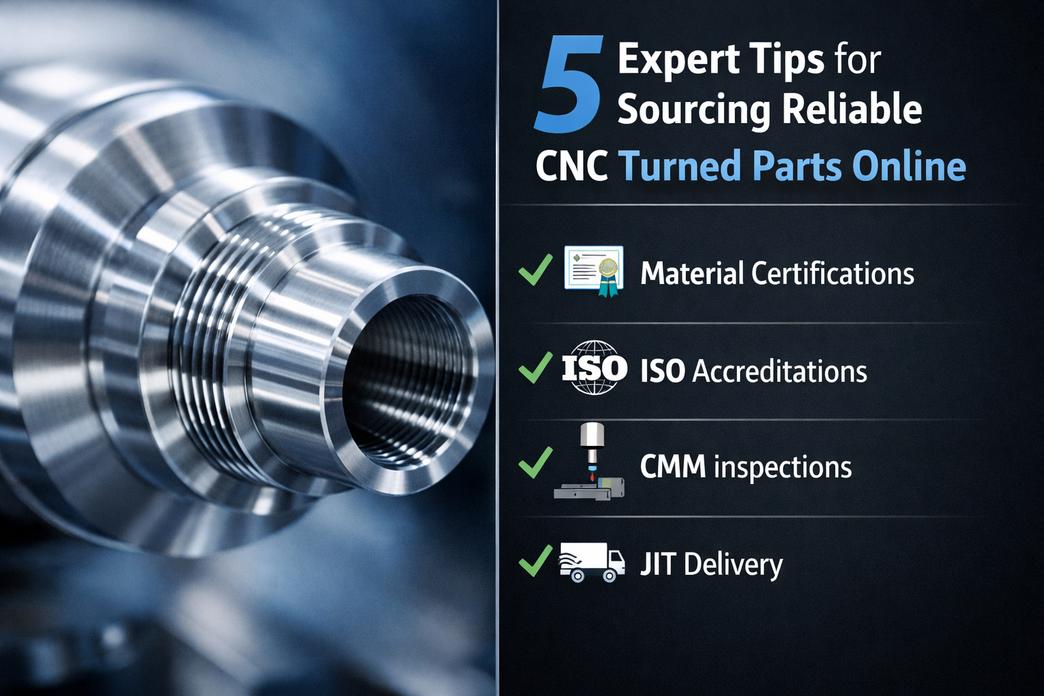
Shopping for cnc turned parts online can feel like dating apps for engineers—slick profiles, shiny photos, and big promises, but you won’t know the truth until the parts hit your dock. One bad batch with sloppy tolerances or mystery metal, and suddenly your production line is coughing like an old pickup in January. When bulk orders are on the table, price tags stop being cute and start being risky.
Here’s the rub.
You need proof—real machining chops, tight quality control, and delivery that shows up like clockwork. This guide cuts through the noise and shows you how to spot suppliers who walk the talk, not just talk a good game.
Concise Key Points for CNC Turned Parts
- Review material certifications and ISO accreditations
- Compare CNC Turning vs. Swiss Machining capabilities
- Verify CMM inspections and tolerance specifications
- Analyze surface finishes and JIT delivery readiness
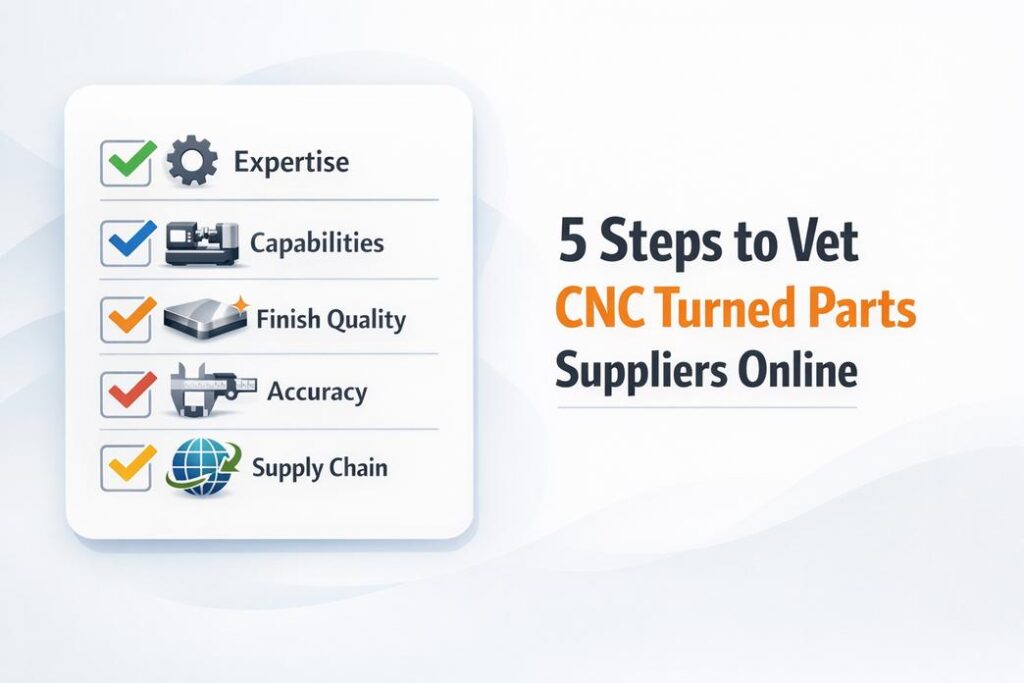
5 Steps to Vet CNC Turned Parts Suppliers Online
Finding reliable suppliers for cnc turned parts online can feel like scrolling forever. Specs look similar. Prices look tempting. Yet real differences hide in material control, inspection depth, and supply chain muscle. Here’s how to sort serious partners from the rest.
Step 1: Review Expertise in Aluminum Alloys and Stainless Steel Turning
When sourcing cnc turned parts, material skill matters more than a flashy website.
- Material expertise
- Aluminum alloys
- Knowledge of heat-treat grades for aerospace housings
- Control of chip formation during high-speed turning
- Stainless steel
- Mastery of corrosion-resistant grades for medical fittings
- Tool wear management in tough Material properties
- Aluminum alloys
- Turning capabilities
- Deep Machining experience with brass inserts and titanium pins
- Proven stability in long-run cnc turning parts production
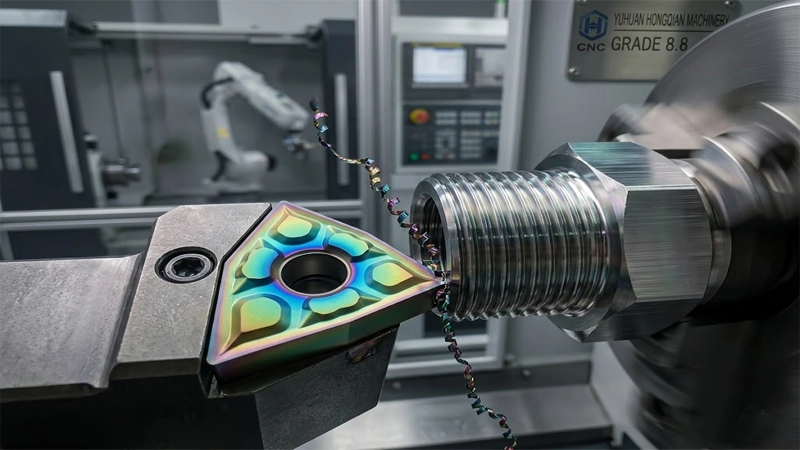
Look for proof of real Machining experience: photos of precision shafts, tolerance callouts, and application stories. Aerospace, medical devices, and automotive projects demand tight control of Material properties like tensile strength and corrosion resistance.
A supplier such as yuuhuan hongqian that clearly outlines alloy grades and process notes signals practical Material expertise, not guesswork. Strong cnc turned parts suppliers talk materials in detail, not just price per piece.
Step 2: Examine CNC Turning vs. Swiss Machining Capabilities
Not all cnc turned parts are produced the same way. Equipment shapes accuracy, speed, and cost.
- Machining processes
- CNC turning
- Ideal for medium-diameter bushings and threaded fittings
- Flexible setups for small to mid Production volume
- Swiss machining
- Excellent for long, slim shafts
- Superior support for tight-tolerance micro cnc turned parts
- CNC turning
- Part complexity
- Multi-axis live tooling for cross-holes
- Back-working features for complete machining in one cycle
- Equipment capabilities
- Bar feeders for automated runs
- Real-time tool monitoring
Suppliers serious about cnc machined turned parts usually share machine lists and tolerance ranges. Ask about maximum diameter, length-to-diameter ratios, and unattended shift capacity. For high-volume cnc turning parts, automation and stable Production volume planning keep pricing steady and scrap low.
Step 3: Compare Surface Finish Options from Anodizing to Electropolishing
Surface quality changes how cnc turned parts perform and how customers judge them.
- Finishing processes
- Anodizing for aluminum electronic housings
- Electropolishing for stainless medical connectors
- Passivation to boost Corrosion resistance
- Functional goals
- Improved wear life
- Reduced bacterial retention
- Better conductivity control
- Visual expectations
- Uniform color tone
- Clean edges after bead blasting
For aluminum cnc turned parts, confirm Material compatibility before anodizing. For stainless steel precision turned parts, check if Electropolishing meets Ra targets. A good supplier explains how each Surface finish affects tolerances and masking areas.
Clean documentation on coating thickness and final inspection shows mature Finishing processes. That’s crucial when cnc turned parts go into medical devices or visible consumer products.
Step 4: Verify Dimensional Accuracy and Tolerance Specifications
Precision separates hobby shops from professional cnc turned parts manufacturers.
- Quality control
- In-process checks during cutting
- Final audit before shipment
- Measurement tools
- Calipers and micrometers for routine checks
- CMM systems for complex geometries
- Inspection reports
- Recorded Tolerance specifications
- Traceable batch numbers
For tight Dimensional accuracy, request sample CMM layouts. Confirm how Precision machining standards align with ISO or industry norms.
Threaded cnc turned parts need extra attention. Ask about go/no-go gauges and thread profile verification. Small deviations in tolerance stack-ups can wreck assemblies fast. Clear Inspection reports reduce risk and protect your brand.
Step 5: Analyze Supply Chain for Just-in-Time Delivery and Global Sourcing
Even perfect cnc turned parts lose value if delivery slips.
- Production planning
- Capacity charts for peak seasons
- Buffer stock strategies
- Supply chain
- Stable raw material sourcing
- Backup suppliers for critical alloys
- Logistics management
- Export documentation support
- Air and sea freight options
- Supplier reliability
- On-time delivery records
- Transparent Lead times
Strong Global sourcing networks reduce exposure to material shortages. For customers running lean manufacturing, real Just-in-time delivery keeps inventory light and cash flow healthy.
A partner like yuuhuan hongqian that integrates machining, finishing, and shipping under tight Logistics management offers smoother scaling for cnc turned parts programs. From small pilot runs to mass production of turned cnc parts, stable Supplier reliability keeps projects on track.
In the end, vetting cnc turned parts suppliers online is about details. Materials. Machines. Finishes. Tolerances. Delivery. Get those right, and your cnc turning parts will perform exactly as promised.
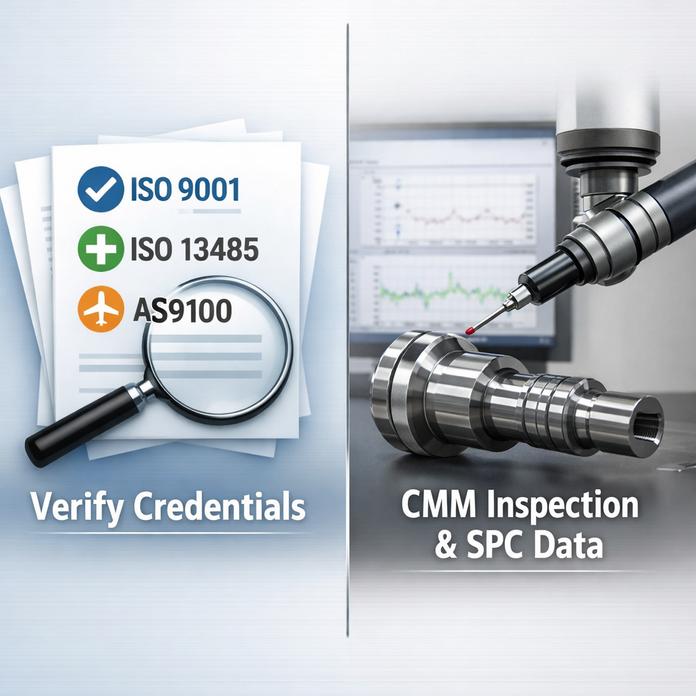
How to Verify CNC Turned Parts Manufacturer Credentials
Choosing a supplier for cnc turned parts is not just about price. It’s about proof. Solid paperwork, real inspection data, and visible machining strength keep your CNC turning parts consistent and stress-free.
Review Material Certification and ISO Accreditations
When sourcing cnc turned parts, dig into documentation.
- Material certifications
- Aluminum alloys
- Stainless steel grades
- Engineering plastics
Confirm traceability, heat numbers, and supplier batch records.
- Compliance standards
- ISO 9001 for general quality management systems
- ISO 13485 for medical machining parts
- AS9100 for aerospace CNC turned components
- Audit trail
- Internal supplier audits
- External registrar approval
- Documented corrective actions
If a shop producing cnc turned parts hesitates to share certificates, that’s a red flag. Real precision machining suppliers keep compliance files ready, especially for aerospace and medical tolerance work.
Inspect Quality Control via CMM Inspection and Statistical Process Control
Strong quality assurance keeps CNC turning parts stable over time.
- Equipment validation
- Calibrated CMM inspection systems
- Certified coordinate measuring machine operators
- Process monitoring
- Live SPC data tracking
- Documented statistical process control charts
- Verified process capability (Cp, Cpk)
- Reporting discipline
| Control Item | Target Value | Tool Used | Frequency |
|---|---|---|---|
| Dimensional accuracy | ±0.01 mm | CMM inspection | Per batch |
| Surface roughness | Ra 0.8 µm | Profilometer | 2 hrs |
| Process capability | Cpk ≥ 1.33 | SPC software | Weekly |
| Sampling rate | 5 pcs/lot | Inspection reports | Each lot |
Ask for recent inspection reports on cnc turned parts. Numbers tell the real story.
Evaluate Production Capabilities in Multi-axis Machining and Batch Manufacturing
Look at the shop floor.
- Multi-axis machining centers
- True 5-axis CNC capability
- Flexible batch manufacturing cells
Then check deeper:
1) Capacity and lead times
2) In-house tooling and tooling capabilities
3) Range of manufacturing processes—turning, milling, grinding
A supplier offering turnkey solutions for cnc turned parts should handle small prototype runs and high-volume production capacity without chaos. If their CNC machining setup supports complex geometries for robotics or industrial machinery, your CNC turning parts are in steady hands.
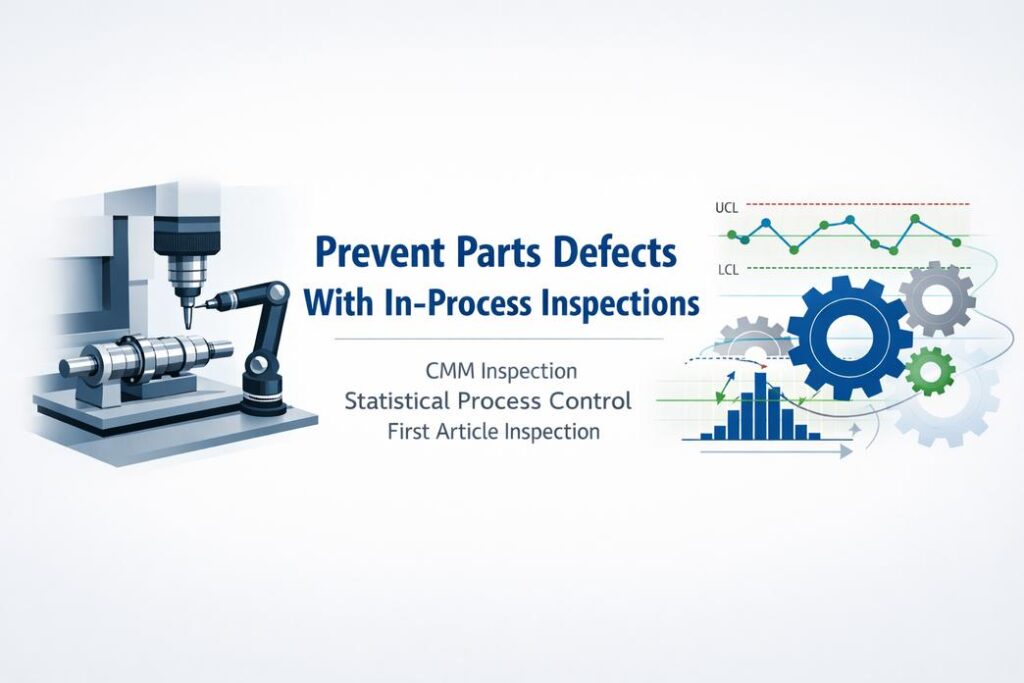
Prevent Parts Defects With In-Process Inspections
When producing cnc turned parts, small errors can snowball into costly scrap. Tight tolerances, surface finish demands, and thread specs leave little room for guesswork. Smart in-process inspections keep CNC turned components stable, accurate, and ready for final delivery without nasty surprises.
Implement CMM Inspection for Shafts and Cylindrical Parts
In high-precision cnc turned parts, controlling roundness and concentricity is non‑negotiable.
- Inspection focus
- Dimensional checks
- Diameter and length validation of shafts
- Runout control on cylindrical parts
- Geometric checks
- Geometric tolerancing for concentricity and cylindricity
- Straightness across full shaft length
- Surface review
- Surface finish verification before coating
- Dimensional checks
- Quality workflow
- Program the CMM inspection routine directly from CAD.
- Compare measured data with tolerance bands.
- Feed deviations back to machining offsets.
This keeps dimensional accuracy tight and strengthens overall quality control for cnc turned parts and other precision turned parts.
Leverage Statistical Process Control During Automated Production
Stable automated production depends on watching trends, not just single readings.
- Data monitoring structure
- Machine level
- Tool wear tracking in CNC lathes
- Offset drift in long runs of cnc turned parts
- Process level
- Statistical Process Control charts
- SPC alarms for out-of-control signals
- Outcome level
- Scrap rate
- Rework frequency
- Machine level
- Control actions
- Real-time monitoring dashboards
- Process capability analysis (Cp, Cpk)
- Root-cause review for variation reduction
By catching tolerance drift early, shops prevent defect batches in CNC turning parts and other machined components. That’s practical defect prevention, not theory.
Conduct First Article Inspection on Threaded Components and Fittings
Before scaling cnc turned parts into full production, lock down the basics.
Start with First Article Inspection on critical threaded components and fittings. Check:
- Thread pitch and lead for thread quality
- Major and minor diameters for dimensional verification
- Raw material paperwork for material certification
Then confirm drawing revision, tolerance stack-up, and special notes. A solid FAI report supports process validation and avoids repeating early mistakes.
When the first CNC turned parts pass cleanly, scaling up feels a lot less risky.
FAQs about Cnc Turned Parts
How do I evaluate a supplier’s capability for cnc turned parts?
Choosing the right partner often decides the success of your project.
A capable manufacturer should demonstrate:
1) Process strength
- CNC Turning and Swiss Machining for high-precision Cylindrical Parts like Shafts and Bushings
- Multi-axis Machining and CNC Milling for Complex Geometries and Threaded Components
- Precision Grinding for tight Tolerance Specifications
2) Material range
Aluminum Alloys, Stainless Steel, Brass, Titanium, Copper, and Engineering Plastics—each matched to Aerospace Components, Medical Devices, or Automotive Parts.
3) Quality discipline
Dimensional Accuracy backed by CMM Inspection, Material Certification, and active Statistical Process Control during Automated Production.
When these elements align, reliability becomes visible—not promised.
How do surface finishes affect cnc turned parts performance?
Surface treatment shapes both function and feel.
Different finishes serve different goals:
- Anodizing → protects Aluminum Alloys used in Electronics Enclosures
- Passivation / Electropolishing → refines Stainless Steel for Medical Devices
- Powder Coating → adds durability to Automotive Parts
- Bead Blasting / Vapor Polishing → improves appearance of Fittings and visible components
Beyond aesthetics, finishes influence corrosion resistance, wear life, and even assembly fit. A well-finished part not only performs better—it earns trust at first glance.
How can suppliers maintain quality and delivery stability in volume production?
Consistency under pressure defines a serious cnc turned parts supplier.
Quality control typically follows a layered path:
- First Article Inspection before Batch Manufacturing
- In-process CMM Inspection during production
- Final verification of Dimensional Accuracy and Material Certification
For delivery stability, attention shifts to operations:
- Inventory Management aligned with your forecast
- Just-in-Time Delivery to reduce storage strain
- Global Sourcing and Supply Chain Optimization to handle demand spikes
When Volume Production runs with discipline, even high-demand Aerospace Components or Industrial Machinery parts arrive on time—without compromising precision.
[Get a Free Quote from Yuuhuan Hongqian] Send us your CAD files today for a detailed DFM review and a competitive estimate on your next batch of high-precision CNC turned parts. Let’s turn your blueprints into reality—on time and within tolerance.