A Complete Guide to Custom Machining Steel Fittings
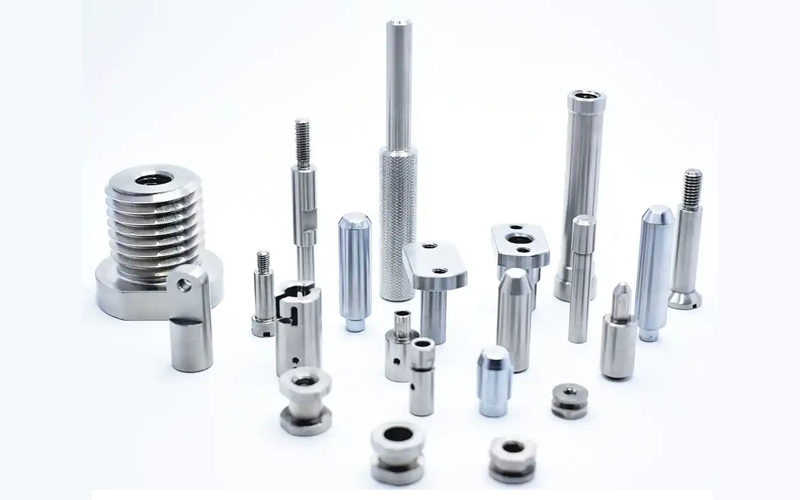
In today’s industrial world, piping systems are becoming more complex, more demanding, and more tailored to specific applications. While many standard fittings exist on the market, they often fail to meet special requirements in terms of size, pressure rating, tolerance, or installation environment. That is where custom machining becomes essential—especially for components such as carbon steel fittings, steel fittings, and customized solutions for fitting steel pipe.
This guide walks you through how CNC machining is applied in custom pipe fittings manufacturing, why carbon steel remains a leading material choice, and how engineers, purchasers, or maintenance teams can benefit from tailored solutions instead of relying solely on standard catalog parts.
Why Custom Machined Pipe Fittings Matter in Modern Industries
Different industries—from energy, construction, and chemicals to heavy equipment and hydraulics—rely heavily on pipe connections that can withstand pressure, vibration, corrosion, heat, and constant flow. Standard fittings cannot always meet the precise requirements of these systems.
When Standard Fittings Are Not Enough
Even high-quality mass-produced steel fittings may not fit unique project constraints such as:
- Non-standard pipe wall thickness
- Unusual angles or offsets
- Extra-heavy pressure requirements
- Compatibility with legacy equipment
- Custom thread types or special sealing surfaces
- Space-limited installation environments
In these cases, engineers turn to CNC machining to create perfectly matched, precision-engineered parts tailored to real-world conditions.
Why Carbon Steel Is Ideal for Custom Machined Pipe Fittings
Material Strength and Durability
Carbon steel remains one of the most widely used materials in pipe fittings. It offers:
- High tensile strength
- Strong wear resistance
- Superior toughness
- Excellent machinability
This makes carbon steel fittings ideal for demanding piping networks such as hydraulic systems, oil & gas facilities, compressed air lines, and industrial machinery.
A Cost-Effective Option
Compared with stainless steel or exotic alloys, carbon steel is significantly more cost-efficient—both in raw material and machining time. For projects requiring dozens or hundreds of customized fittings, this advantage becomes even more meaningful.
Perfect for CNC Machining
Carbon steel responds well to:
- Turning
- Milling
- Drilling
- Tapping
- Thread cutting
This ensures that custom steel fittings can be produced with high dimensional accuracy, excellent surface finish, and reliable sealing performance.
Common Types of Custom Machined Fittings
Many customers request custom machining because off-the-shelf fittings cannot solve their specific challenges. Below are the most common types of custom fittings produced for fitting steel pipe in various industries.
1. Threaded Fittings
Thread standards often vary across countries and equipment types:
- BSP/BSPT
- Metric threads
- UNC / UNF
- NPT/NPTF
- G
- RP
Machined threaded carbon steel fittings ensure:
- Accurate thread depth
- Smooth engagement
- Leak-free sealing
- No burrs or punctures allowed.
2. Welded + Machined Fittings
Sometimes pipes are welded first, and the ends require machining afterwards to restore roundness or precision. This process is common when dealing with:
- Flange connections
- Adapters
- Reducers
- Structural transitions
3. Complex Shapes
Some applications require fittings that do not exist in any standard catalog:
- Offset elbows
- Reinforced tees
- Special-angle connectors
- Multi-port blocks
CNC machining enables engineers to turn challenging designs into reliable steel fittings.
Step-by-Step Process of Custom Machining Carbon Steel Fittings
Step 1 – Technical Consultation
A successful custom product starts with clear communication:
- Application environment (temperature, pressure, medium)
- Mechanical strength requirements
- Material grade
- 2D drawings or 3D models file
- Surface treatment needs
- Detail technical deand
- Surface treatment demand .
This step ensures that the finished fitting matches the exact needs of the piping system.
Step 2 – Material Selection
Common grades for machining include:
- A105/1020/1035/1045/Q235/Q345
- Y15PB ,12L14,40CR,42CRMO,Y12PB
Material certificates (e.g., EN10204 3.1) are usually provided to guarantee traceability.
Step 3 – CNC Machining Process
Depending on the design, machining may include:
- Rough turning
- Precision turning
- Drilling & boring
- Thread cutting
- Milling surfaces
- Grooving or chamfering
- Deburring
For fitting steel pipe, maintaining concentricity, sealing surfaces, and tolerance control is essential.
Step 4 – Surface Treatment
Carbon steel is strong but requires protection from corrosion. Common treatments include:
- Zinc plating
- Black oxide
- Anti-rust oil
- Powder coating
Inspection & Testing
A reliable supplier will perform:
- Dimensional inspection
- Thread gauge testing
- Pressure / hydrostatic testing
- Surface roughness measurement
- Hardness testing
Every custom-made carbon steel fitting must meet strict standards before shipping.
Engineering Considerations for Custom Pipe Fittings
1. Pressure Rating
Wall thickness and material strength must support the maximum pressure of the system. Incorrect sizing may cause fatigue, leakage, or pipe bursts.
2. Thread Compatibility
Mismatched threads between fittings and pipe systems are one of the most common causes of leakage. This is especially important when producing custom threaded steel fittings for international clients.
3. Sealing Surfaces
Surfaces like:
- Cone seats
- O-ring grooves
- Flat sealing faces
must be machined accurately to prevent leaks.
4. Heat Treatment
Some custom fittings require additional heat treatment to improve hardness or stress resistance, ensuring long-term durability.
Real-World Applications of Custom CNC-Machined Fittings
Oil & Gas Industry
High-pressure flow lines demand customized carbon steel fittings with reinforced walls and precise sealing faces.
Hydraulic Systems
Hydraulic machinery often requires unique adapters to connect different standards (e.g., BSP to NPT), making custom machining indispensable.
Construction & Infrastructure
Projects with legacy piping frequently need custom steel fittings to replace outdated designs or achieve new layouts.
Heavy Equipment
Excavators, loaders, forklifts, and compressors often need special high-strength parts for endurance and stability.
How to Choose a Reliable Custom Machining Supplier
Selecting a trustworthy factory is critical. Consider the following:
1. Machining Capabilities
- CNC turning
- Multi-axis machining
- Large diameter machining
- Complex thread cutting
2. Quality Control
A reliable manufacturer should provide:
- Material certificates
- sale spray testing reports
- Dimensional inspection sheets
- Hardness inpection report
3. Engineering Support
Good suppliers can help refine drawings to improve performance, reduce cost, and ensure manufacturability.
4. Delivery & Flexibility
Fast prototyping and stable production capacity are important for long-term cooperation.
Future Trends in Custom Machined Steel Fittings
Smart Manufacturing
Automation, digital measurement, and AI ensure tighter tolerances and improved repeatability.
Increased Demand for Non-Standard Fittings
As industrial systems expand, the need for specialized components for fitting steel pipe will continue growing.
Higher Corrosion Resistance
More eco-friendly coatings and advanced surface treatments will become standard.
Integration of Welding + CNC Machining
Hybrid production offers better structural strength and more flexibility for customized shapes.
Conclusion
Custom machining plays a vital role in modern piping systems, providing performance, compatibility, and safety where standard parts fall short. Whether you’re working with carbon steel fittings, precision-crafted steel fittings, or tailored solutions for fitting steel pipe, the right machining partner can significantly enhance the reliability of your equipment.
With the increasing complexity of industrial applications, demand for customized CNC-machined pipe fittings will only continue to grow. Investing in high-quality custom solutions ensures long-lasting performance, fewer failures, and higher overall efficiency in any piping system.