Introduction
Brass fittings are essential components in plumbing, gas, and hydraulic systems worldwide. Their durability, corrosion resistance, and versatility make them ideal for a wide range of applications. Whether you are installing a water system in North America or supplying hydraulic solutions in Europe, choosing the right brass fitting ensures long-lasting, leak-proof performance.
In this guide, we cover common types of brass fittings, installation tips, compatibility with different piping materials, and frequently asked questions to help you make the best choice.
What Are Brass Fittings?
Brass fittings are connectors made of brass used to join pipes, tubing, or hoses. They are compatible with various piping materials including copper, PVC, PEX, stainless steel, and galvanized steel. Brass is known for its resistance to corrosion, high durability, and ability to provide secure, leak-free connections.
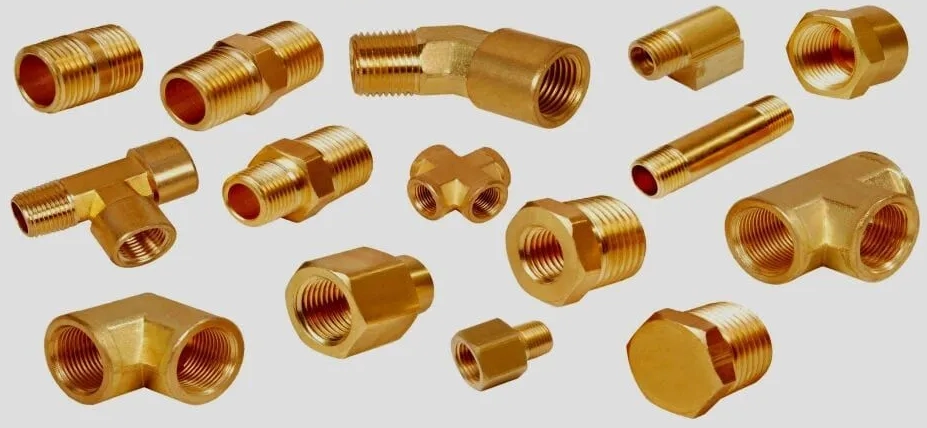
Common types include brass compression fitting, brass push-fit fitting, brass threaded fitting, brass coupling, brass adapter, brass elbow, brass tee, brass nipple, brass union, and brass reducer.
Types of Brass Fittings
Brass Compression Fitting
Compression fittings are cylindrical and consist of an external nut and an internal ring. They provide reliable, leak-proof connections and are ideal for applications where disassembly is infrequent. Perfect for plumbing, gas lines, and some low-pressure hydraulic systems.
Brass Push-Fit Fitting
Push-fit fittings are easy to install and do not require soldering or threading. Simply push the pipe into the fitting to create a secure, watertight connection. These fittings are popular for home plumbing, PEX piping systems, and quick repairs.
Brass Threaded Fitting
Threaded fittings provide strong mechanical connections by screwing directly onto the pipe. Using thread tape or sealant is recommended to ensure leak-proof performance. Threaded fittings are commonly used in gas, water, and hydraulic systems.
Brass Coupling
Couplings connect two pipes in a straight line. They can be threaded or compression-style and are widely used in both residential and industrial plumbing.
Brass Adapter
Adapters connect pipes of different materials or diameters. For instance, you may connect PVC to copper or PEX to stainless steel using a brass adapter. These fittings are versatile and essential for retrofitting and repairs.
Brass Elbow
Elbows change the direction of piping. Available in 45° and 90° angles, brass elbows help route plumbing or hydraulic lines efficiently while maintaining a secure connection.
Brass Tee
Tees allow a branch connection in a piping system. They can be threaded or compression type and are ideal for water distribution or hydraulic branching.
Brass Nipple
Nipples are short pipe sections with threads on both ends. They connect two fittings or extend piping in tight spaces.
Brass Union
Unions are removable fittings that allow easy disassembly of pipes without cutting. They are crucial in maintenance-heavy applications.
Brass Reducer
Reducers change pipe diameter, connecting larger pipes to smaller ones. Brass reducers are used in systems where pressure changes or flow control is needed.
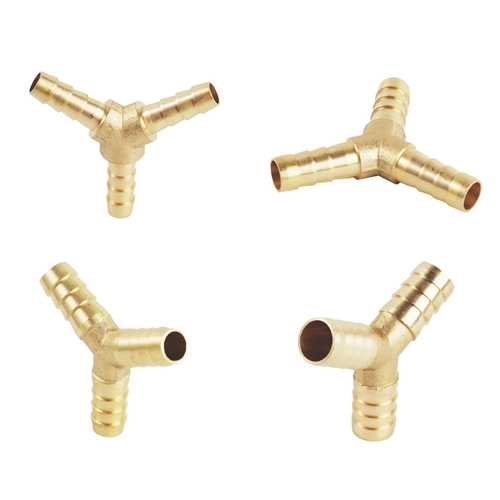
Red Brass vs. Yellow Brass
-
Red Brass: Higher copper content (~85%), stronger corrosion resistance, suitable for potable water. Reddish-gold color.
-
Yellow Brass: Moderate copper content (~65–70%), more malleable, easier to machine, yellow-gold. Common in fittings, valves, and adapters.
Do You Need Thread Tape on Brass Fittings?
-
Threaded Brass Fittings: Using thread tape or pipe sealant is recommended to prevent leaks in water, air, or gas systems.
-
Non-Threaded Brass Fittings: Compression and push-fit fittings do not require thread tape; they seal mechanically.
How to Join Two Pieces of Brass
-
Threaded Connection: Apply thread tape, tighten manually, then with a wrench.
-
Soldering/Brazing: Clean, flux, heat, and apply solder for leak-proof joints.
-
Compression Fitting: Insert pipe and tighten the compression nut.
-
Push-Fit or Crimp Connection: Tool-free installation, ideal for copper and PEX pipes.
Compatible Tubing Materials
Brass fittings are highly versatile and compatible with:
-
Copper Pipes – threaded or compression connections.
-
PVC and CPVC – require threaded or push-on adapters.
-
PEX Piping – crimp or push-fit connections.
-
Stainless Steel – threaded connections; use dielectric fittings to prevent galvanic corrosion.
-
Galvanized Steel – threaded connections; dielectric fittings recommended.
-
Cast Iron Pipes – use rubber or neoprene gaskets for leak-proof sealing.
How to Choose the Right Brass Fitting
-
Understand Your Application: Pressure, temperature, and environmental conditions.
-
Check Material Grade: Lead-free for potable water, high-strength brass for hydraulic systems.
-
Verify Quality Standards: ASTM, ISO, or other recognized certifications.
-
Choose Proper Type: Compression, push-fit, threaded, coupling, adapter, elbow, tee, nipple, union, reducer.
-
Ensure Compatibility: Match fittings to piping material.
-
Size and Dimensions: Correct sizing ensures proper sealing and efficiency.
-
Supplier Reputation: Certificates and track record matter.
-
Budget Considerations: Quality first, but options are available for cost-conscious projects.
Brass Fitting Size Chart
| Fitting Type | Common Sizes |
|---|---|
| 37° Flare | 1/16 – 2″ |
| Flareless | 1/16 – 2 1/2″ |
| Straight Thread | 1/16 – 2 1/2″ |
| Compression | 1/16 – 2″ |
| O-Ring | 1/16 – 2″ |
| 45° Flare | 1/16 – 2″ |