In the world of industrial procurement, the demand for ss pipe fittings has shifted dramatically in 2026. For decades, there was an unwritten rule “If you want it fast and cheap, buy brass. If you want it forever, buy stainless.” For years, we advised clients that while the raw material price of 304 or 316 stainless steel was lower than HPB57-3 brass, the “hidden tax” of machining made stainless the premium choice. Brass was the “speed king” of the CNC workshop. It was easy on the tools, allowed for lightning-fast cycle times, and guaranteed a 2-week turnaround. Stainless? It was the “stubborn” metal that ate carbide inserts for breakfast and doubled your labor costs.
But as we move through 2026, that rulebook hasn’t just been revised—it’s been thrown out the window. If you are still sourcing brass fittings based on 2020 logic, you aren’t just overpaying; you are losing your competitive edge.
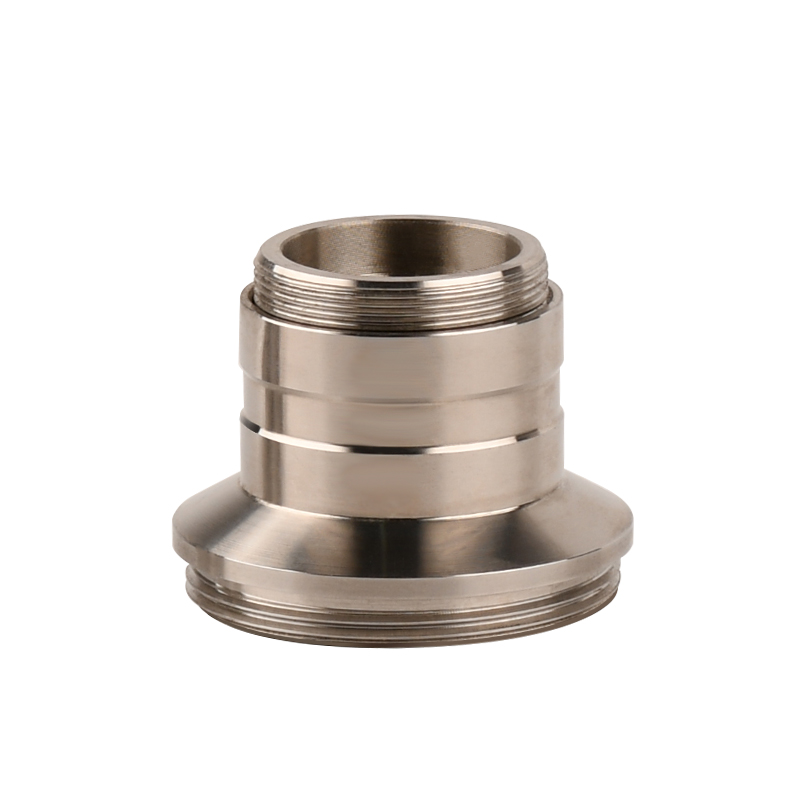
Here is the breakdown of why ss pipe fittings have officially become the most economical choice for modern systems.
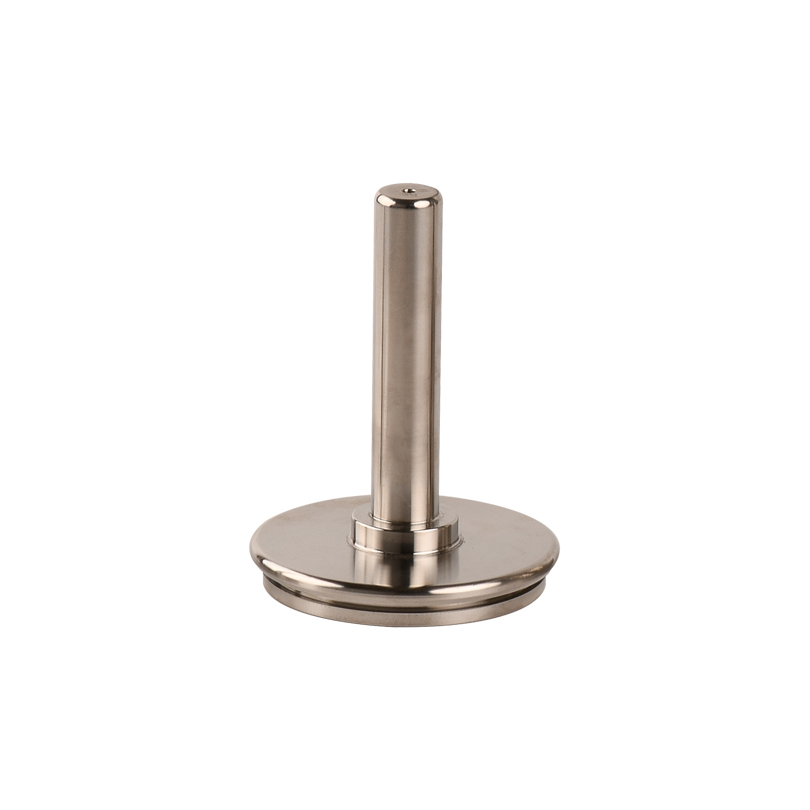
1. The Raw Material Reality: The $10,000 Copper Shock
To understand why the market shifted, we have to look at the London Metal Exchange (LME). Five years ago, standard HPB57-3 brass was trading in a predictable range, with copper hovering around $5,000 USD per ton. At that same time, 304 stainless steel sat comfortably at roughly $2,500 USD per ton.
It is can simple to caculate the costs as follow:
-
Brass: $5,000 (Raw Material price) + $2,000 (Cheap Labor/Fast Machining) = $7,000 Total Product Value.
-
Stainless: $2,500 (Raw Material price) + $6,000 (Expensive Labor/Slow Machining) = $8,500 Total Product Value.
Brass won on price every single time.
Fast forward to 2026. Copper prices are increasing rapidly and break up to $10,000 USD per ton barrier. Meanwhile, the global supply chain for stainless steel has matured and stabilized. Suddenly, the raw material for a brass fitting is 4x the cost of the equivalent ss fittings.
Even if you consider the extra time it takes to turn a stainless part, the massive gap in raw material costs has flipped the script. You can no longer “out-machine” a $7,500 price difference per ton. The “Base Cost” of brass has become a liability that no workshop can ignore.
2. The Automation Revolution: Killing the “Processing Gap”
The biggest argument against ss tubes and fittings used to be the labor-intensive nature of the work. Stainless steel is a “tough” cut; it work-hardens, it generates heat, and it requires constant operator monitoring.
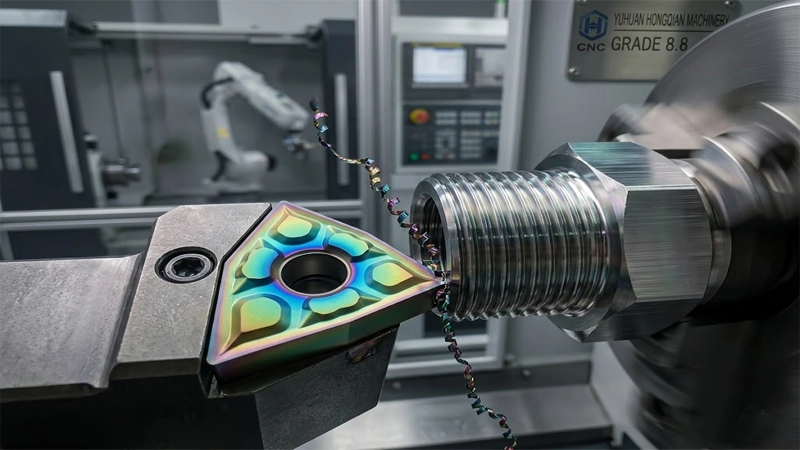
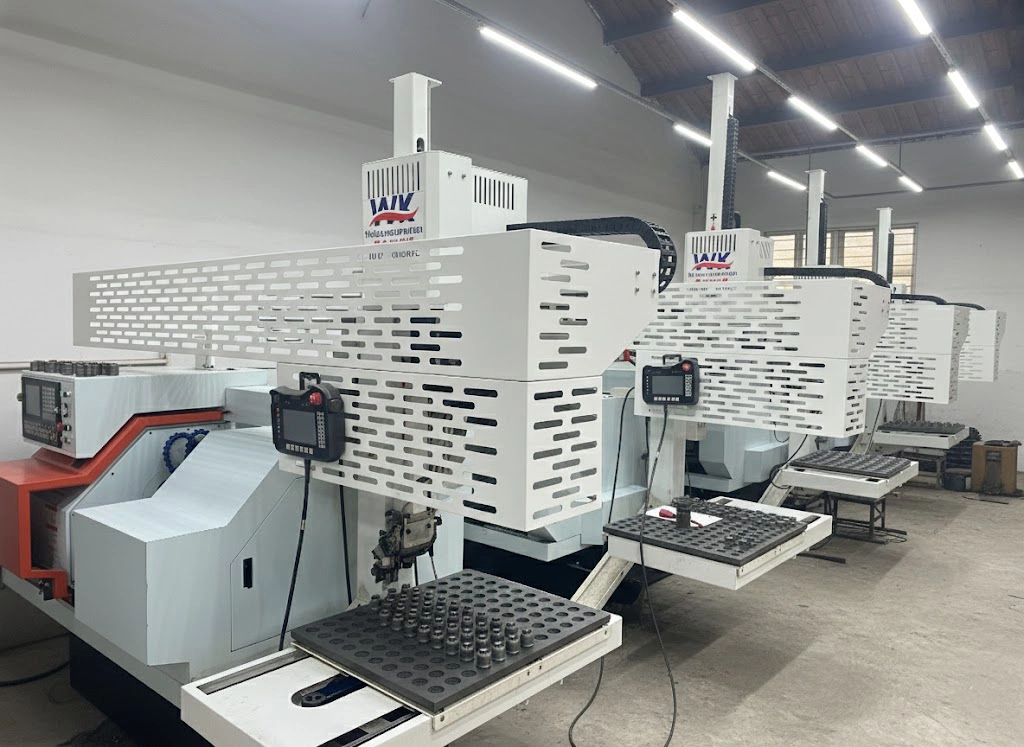
However, between 2024 and 2026, we witnessed a massive leap in CNC machinery parts and automation. At Yuhuan Hongqian Machinery, we’ve seen this firsthand. The introduction of high-pressure through-spindle cooling, advanced vibration-damping tool holders, and 24/7 automatic bar feeders has changed the “physics” of the shop floor.
How Automation Leveled the Playing Field:
-
Lights-Out Manufacturing: We now run cnc turning parts in stainless steel overnight without a single human operator. This effectively “deleted” the high labor cost that used to plague stainless production.
-
Tool Path Optimization: Modern CAM software and AI-driven tool paths (like our G32 segmented threading strategies) have reduced the cycle time difference between brass and stainless. What used to take 60 seconds in stainless now takes 40.
-
Consistency: Automated systems don’t get “tired” of the toughness of 316L. The rejection rate for ss fittings has plummeted, meaning you aren’t paying for “scrap metal” in your final invoice.
When labor is a fixed, automated cost, the winner is always the material with the lower base price. In 2026, that is stainless steel.

3. The “Lead-Free” Mandate: The Invisible Cost of Brass
If the market prices didn’t convince you, the regulators will. In 2026, global standards for “Lead-Free” compliance in water treatment and food processing have reached a tipping point.
Standard “Easy-Cutting” brass contains lead (it’s what makes it easy to machine). To make brass “Lead-Free,” you have to add bismuth or silicon. These alloys are not only more expensive than standard brass, but they are also harder to machine—approaching the difficulty of stainless steel itself.
The 2026 Procurement Paradox:
If you need a lead-free system, you have two choices:
-
Expensive Lead-Free Brass: High material cost + difficult machining.
-
SS Pipe Fittings: Lower material cost + high strength + naturally lead-free.
For any project involving potable water, chemicals, or food/beverage, ss pipe fittings are the only choice that satisfies both the CFO and the Compliance Officer.
4. Life-Cycle Economics: Beyond the Initial Invoice
Experienced engineers know that the “Purchase Price” is only 20% of the true cost of a part. The other 80% is the Total Cost of Ownership (TCO).
Why Brass is “Expensive” in the Long Run:
-
Dezincification: In many water systems, the zinc in brass fittings leaches out, leaving behind a porous “sponge” of copper that eventually leaks.
-
Softness: Brass threads are easily damaged during installation (over-torque) or maintenance. One cross-threaded brass valve can shut down an entire line.
-
Corrosion: In coastal or industrial environments, brass develops “green rot” (verdigris). SS fittings remain structurally sound for decades in the same conditions.
When you factor in the 2026 cost of a maintenance crew—which has risen sharply—the “set it and forget it” nature of ss tubes and fittings saves thousands in avoided downtime.
5. The “Recycling Trap”: Scrap Value vs. Cash Flow Efficiency
For decades, experienced buyers justified the high price of brass by pointing to its high scrap value. It’s true: brass turnings can often be sold back for 60-70% of the raw material cost. In contrast, stainless steel scrap yields a much lower percentage.
However, in the 2026 economic landscape, this “scrap logic” is a financial trap. Here is why:
-
The Upfront Capital Burden: To get that scrap value later, you must first pay the $10,000/ton copper premium today. This ties up massive amounts of working capital that could be invested elsewhere.
-
Inventory Risk: High-value copper inventory is a liability. If copper prices fluctuate while the material is sitting on your warehouse shelf, your balance sheet takes a direct hit. Stainless steel, with its stable and lower entry price, offers much higher Financial Predictability.
-
The Interest Rate Factor: In a high-interest environment, the cost of financing a “Brass-heavy” inventory far outweighs the eventual return from selling scrap.
The 2026 Reality: Smart CFOs are no longer looking for “high-value trash” (scrap). They are looking for “low-entry cost” efficiency. By switching to stainless steel, you reduce your upfront material expenditure by 70%, drastically improving your company’s monthly cash flow and reducing insurance and storage risks.
6.The “Million-Piece” Shift: What Smart Buyers are Doing in 2026
We aren’t just theorizing about these market shifts; we are living them. Over the past six months, Yuhuan Hongqian Machinery has seen a massive surge in inquiries that all share a single, urgent theme: “Can you convert our high-volume brass parts into stainless steel without increasing the unit price?”
We are currently processing multiple million-piece RFQs (Request for Quotes) from global distributors who are moving away from their traditional brass suppliers. The feedback from the field is consistent: brass is becoming a “profit killer.” When we speak with our peers in brass-only facilities, the story is the same—their order books are thinning out as customers demand the competitive edge that only ss pipe fittings can provide.In our Yuhuan facility alone, the production ratio has flipped from 60% brass to nearly 85% stainless steel in just 18 months
The most successful buyers we work with aren’t just looking for standard ss pipe fittings; they are looking for a partner who can re-engineer their existing brass blueprints for cnc machinery parts production in 304 or 316 stainless. They’ve realized that by switching now, they get a product that is:
-
More Cost-Effective: Thanks to our 24/7 automated cnc turning parts lines.
-
Superior in Lifespan: Eliminating the risk of leaks and returns.
-
Future-Proof: Naturally meeting all global lead-free mandates.
If you are waiting for copper prices to return to 2020 levels, you are losing market share. The transition is happening now.
7. Technical Comparison: SS vs. Brass in 2026
| Feature | Brass (HPB57-3) | Stainless Steel (304/316) | Winner in 2026 |
| Material Cost | Extremely High ($10000/ton) | Stable ($2500 – $3000/ton) | Stainless |
| Tensile Strength | ~350 MPa | ~500-600 MPa | Stainless |
| Corrosion Resistance | Moderate (Risk of Dezincification) | Excellent | Stainless |
| Machining Speed | Fast | Moderate (Improving with Automation) | Brass (Slightly) |
| Environmental Compliance | Requires “Lead-Free” Upcharge | Naturally Compliant | Stainless |

8. Sourcing the “New Standard” in Yuhuan
As a hub for global valve and fitting production, Yuhuan has seen the shift. We’ve transitioned our production lines to reflect this 2026 reality. We are no longer just making “premium” parts; we are making the new standard for the global industrial market.
Whether you are looking for complex cnc machinery parts or high-volume cnc turning parts, the focus is now on maximizing the material advantages of stainless steel without the “Swiss-type” premium prices.
By leveraging automatic bar feeders and optimized G-code cycles, we provide a level of precision in ss pipe fittings that was previously only available at 3x the cost. We’ve turned the “nightmare of the workshop” into a streamlined, cost-effective production flow.
Conclusion: Stop Paying the “Copper Tax”
In 2026, sticking with brass for your standard fitting needs isn’t “playing it safe”—it’s paying a “Copper Tax” that your competitors are likely avoiding. The crossover point has been reached: Stainless steel is now the smarter, cheaper, and more durable financial decision.
The logic is clear:
-
Save on raw materials (4x cheaper than copper-based alloys).
-
Save on compliance (Naturally lead-free).
-
Save on maintenance (Zero corrosion, higher strength).
Ready to Optimize Your 2026 Procurement?
At Yuhuan Hongqian Machinery, we specialize in the transition from expensive brass to high-performance, cost-effective stainless steel solutions. Don’t let 20th-century habits drain your 21st-century budget.
Stop overpaying for brass. Get a technical consultation and a 2026 cost-saving quote for your SS pipe fittings and CNC turning parts today.