Specify the wrong thread, and your whole project can go sideways fast. When sourcing threaded pipe fittings stainless steel, the BSP vs. NPT debate isn’t just shop talk—it’s the difference between a tight seal and a slow, budget-draining drip. One fits like a tailored suit; the other wedges in like a cork in a bottle. Mix them up, and you’re staring at leaks, downtime, and a warehouse full of parts that don’t play nice.
Here’s the rub.
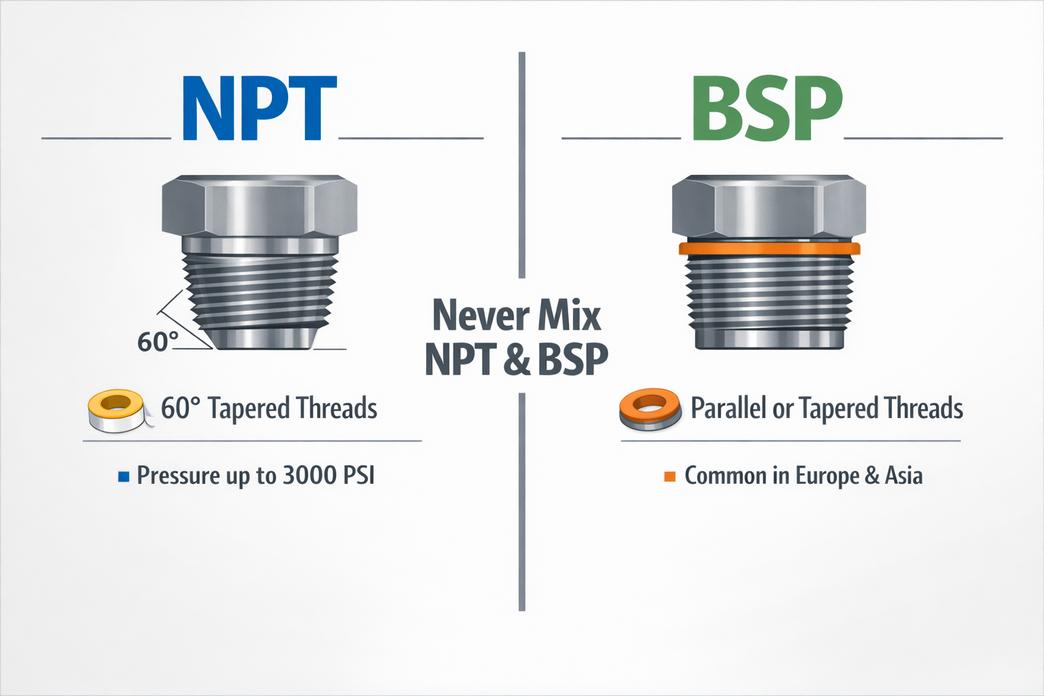
BSP runs the show across Europe and Asia with parallel or tapered profiles, while NPT dominates North America with its signature taper that seals by muscle and torque. On paper, the sizes look close. On-site, “close enough” can cost thousands. If you’re signing off on bulk orders, this choice isn’t technical trivia—it’s risk management in work boots.
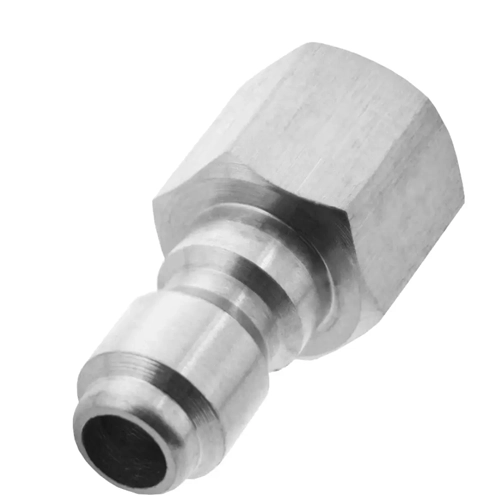
4 Common BSP vs. NPT Differences
Understanding thread standards can feel like shop talk, but it matters a lot when choosing threaded pipe fittings stainless steel products. A small mismatch in angle or pitch can wreck a seal. Let’s break it down in plain language.
Thread Profile: BSPP vs. NPT Tapered Profile in Stainless Steel Couplings
When selecting Stainless Steel Couplings for threaded pipe fittings stainless steel, thread geometry is the deal breaker.
- Thread Angle
- BSPP: 55°
- NPT: 60°
- Thread Form
- BSPP → Parallel
- NPT → Tapered Profile
- Functional Impact
- BSPP seals via gasket or washer.
- NPT seals by metal-to-metal interference.
- In stainless steel pipe fittings:
1.1 Parallel threads need flat sealing faces.
1.2 Tapered threads compress during tightening.
1.3 Over-torque may damage steel threaded pipe fittings.
Thread compatibility affects torque, reusability, and leak risk. Brands like yuhuan hongqian machine precise Thread Pitch tolerances so threaded stainless fittings align with ASTM and ASME specs without cross-thread drama.
Seal Methods on Brass Elbow Fittings – PTFE Tape vs. Thread Sealant
For Brass Elbow Fittings with Pipe Threads, sealing style changes performance.
- PTFE Tape
- Easy wrap
- Quick install
- Good for water lines
- Thread Sealant
- Chemical resistant
- Better for vibration
- Strong Leakage Prevention
★ Key tip: don’t stack tape and paste unless specs call for it.
In mixed systems using stainless steel pipe fittings and brass elbows, match sealant to pressure and media. yuhuan hongqian recommends torque control to protect fine threads.
Pressure Ratings for Carbon Steel Tees under NPS and DN Standards
For Carbon Steel Tees in fluid systems using threaded pipe fittings stainless steel, ratings depend on schedule and size.
| NPS | DN | Schedule | Pressure @20°C (bar) | ASTM Grade |
|---|---|---|---|---|
| 1/2 | 15 | 40 | 137 | A105 |
| 3/4 | 20 | 40 | 132 | A105 |
| 1 | 25 | 80 | 207 | A105 |
| 1-1/2 | 40 | 40 | 120 | A105 |
| 2 | 50 | 80 | 193 | A105 |
- Pressure shifts with temperature.
- DN and NPS are not identical measurements.
- Always verify Threaded Connections load limits.
Dimensional Variations in PVC Reducers – Inch to Millimeter Scales
With PVC Reducers, size confusion happens fast.
- Inch-based systems follow ASTM sizing.
- Millimeter Scales align with ISO/DIN.
- Outside diameter may look close but isn’t exact.
- Conversion basics:
1.1 1 inch = 25.4 mm
1.2 DN refers to nominal bore
1.3 Wall thickness varies by standard
- Conversion basics:
Mismatch causes stress on threaded pipe fittings stainless steel adapters. Always check Pipe Size charts before blending PVC and stainless steel pipe fittings in one run. That small detail saves hours on site.
Scenario: High-Pressure Hydraulic Connections
High-pressure hydraulic lines are no joke. One weak link and the whole setup starts acting up. From subsea rigs to chemical plants, threaded pipe fittings stainless steel solutions keep fluid where it belongs, steady and tight.
Selecting Alloy Steel BSPT Unions for Subsea Pressure: Oil and Gas Applications
In deepwater Oil and Gas projects, connection integrity sits at the top of the checklist. Alloy Steel and BSPT Unions are chosen for one big reason: survival under Subsea Pressure.
- Performance Priorities
- Pressure Resistance
- Rated for extreme bar levels common in offshore manifolds
- Compatible with hydraulic lines using threaded pipe fittings stainless steel adapters
- Corrosion Resistance
- Alloy composition handles saltwater exposure
- Often paired with stainless steel pipe fittings to reduce galvanic risk
- Pressure Resistance
- Threaded Fittings Integration
- Connection Interface
- BSPT taper creates metal-to-metal sealing
- Works alongside threaded pipe fittings stainless steel reducers
- Inspection Routine
- Torque verification
- Thread sealant check
- Surface wear review
- Connection Interface
- Material Pairing Strategy
- Primary Body: Alloy Steel for strength
- Auxiliary Lines: threaded pipe fittings stainless steel for corrosion stability
- Backup Seals: compatible compounds for hydrocarbon service
Brands matter when downtime costs a fortune. yuhuan hongqian supplies precision-machined unions that align smoothly with stainless steel threaded pipe fittings in subsea assemblies.
Using Carbon Steel NPT Couplings in Industrial Piping Systems
Inside large plants, Carbon Steel and NPT Couplings still hold strong in Industrial Piping.
- Application Map
- High Pressure Steam Lines
- Hydraulic Press Circuits
- Utility Fluid Transfer
- Sealing Logic
- Tapered Thread Engagement
- NPT thread interference forms seal
- Sealant enhances micro-gap closure
- Compatibility
- Connects directly with threaded pipe fittings stainless steel transitions
- Accepts stainless steel pipe fittings where corrosion risk rises
- Tapered Thread Engagement
- Installation Flow
- Clean male and female threads
- Apply approved sealant
- Hand-tighten
- Torque to ASME guidance
- Maintenance Cycle
- Visual crack check
- Thread wear inspection
- Pressure retest schedule
Many facilities mix carbon steel with threaded pipe fittings stainless steel to balance budget and lifespan. yuhuan hongqian keeps tolerances tight, so alignment issues don’t sneak in.
Ensuring Leak-Free Operation with BSPP Caps in Chemical Processing Equipment
In Chemical Processing setups, a small drip turns into a shutdown fast. BSPP Caps focus on true Leak-Free Fluid Containment.
- Sealing Structure
- Parallel Thread Form
- Requires gasket or O-ring
- Surface finish directly affects sealing
- Cap Material
- Stainless steel pipe fittings resist aggressive media
- threaded pipe fittings stainless steel caps common in acid lines
- Parallel Thread Form
- Equipment Interface
- Reactor Nozzles
- Pump Outlets
- Maintenance Ports
- Control Checklist
- ✓ O-ring chemical compatibility
- ✓ Torque within range
- ✓ No cross-threading
- ✓ Clean mating face
- Failure Prevention Layers
- Material Selection
- threaded pipe fittings stainless steel for corrosive fluids
- Carbon options only in mild environments
- Operational Discipline
- Scheduled replacement
- Pressure monitoring
- Material Selection
For plants aiming to cut leaks and sleep better at night, yuhuan hongqian offers BSPP caps that match precisely with threaded pipe fittings stainless steel assemblies, keeping systems tight and steady without the usual drama.
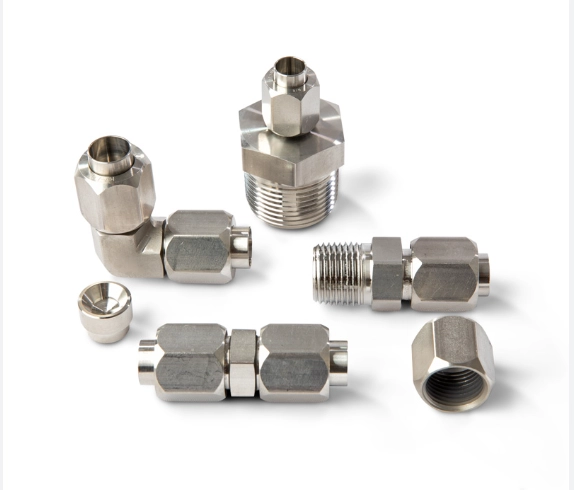
Installation Time: BSP vs. NPT
Fast installs matter on real job sites. From HVAC retrofits to water treatment upgrades, thread design changes the pace. Comparing BSP and NPT helps clarify where threaded pipe fittings stainless steel options save time, reduce rework, and keep crews moving without drama.
Quick-Connect Galvanized Iron BSPP Couplings: Faster HVAC Installations
When working with Quick-Connect Couplings in HVAC Systems, installers often break the process into practical layers:
- Thread Type Setup
- BSPP Threads (parallel)
- Easier visual alignment
- Reduced cross-thread risk
- Faster hand-tight engagement
- Compared with tapered designs
- Less torque guesswork
- BSPP Threads (parallel)
- Material Considerations
- Galvanized Iron
- Good rigidity for repeated assembly
- Stable sealing with washers
- Pairing with threaded pipe fittings
- Works smoothly in mixed systems
- Galvanized Iron
- Installation Speed Drivers
- Minimal back-off during alignment
- Washer-based sealing instead of thread deformation
- Predictable Connection Efficiency
In mixed-material setups—say galvanized lines meeting stainless steel pipe fittings—parallel threads help techs avoid constant readjustment. For crews juggling threaded pipe fittings stainless steel adapters and iron couplings, that straight alignment cuts minutes off each joint. It feels small, but across a rooftop full of units, it adds up fast.
NPT Stainless Steel Plugs and On-Site Thread Cutting Efficiency
With NPT Threads, the workflow tends to stack up like this:
- Machining Stage
- Tapered geometry
- Self-sealing under torque
- Requires accurate On-Site Thread Cutting
- Tool calibration
- Protects Thread Integrity
- Tapered geometry
- Component Fit
- Stainless Steel Plugs
- High strength under pressure
- Compatible with threaded pipe fittings stainless steel systems
- Engagement depth
- Influences seal reliability
- Stainless Steel Plugs
- Field Adjustment
- Apply sealant or tape
- Tighten to spec
- Pressure check
For industrial maintenance teams, tapered threads mean fewer sealing washers but more care during cutting. In stainless steel threaded pipe fittings, overtightening can gall threads. Done right, though, NPT saves time in high-pressure lines where deformation sealing is preferred. Crews used to stainless steel pipe fittings often like that solid, locked-in feel once torque is dialed in.
PVC Elbow Fittings Installation Speed Compared
Speed with PVC Elbows in Plumbing Systems depends on three practical layers:
- Material Handling
- Lightweight Plastic Fittings
- Quick positioning
- Low fatigue during overhead work
- Compatible with stainless steel pipe fittings through adapters
- Lightweight Plastic Fittings
- Thread Standard
- Inch vs metric
- Alignment differences
- Adapter requirement
- Connection to threaded pipe fittings stainless steel manifolds
- Inch vs metric
- Assembly Time Factors
- Hand tightening ease
- Risk of over-torque cracking
- Sealant curing time
PVC wins on weight and ease of installation. Still, when tied into threaded pipe fittings stainless steel backbones in water treatment plants, alignment standards matter. A mismatch slows everything down. When specs match, though, crews move quickly, tighten cleanly, and get the line flowing without second guesses.

Worst-Case Leak Scenarios Explained
Leaks in threaded pipe fittings stainless steel systems rarely start big. Most begin with tiny stress points, poor sealing habits, or surface mistakes that look harmless. In high-pressure lines using threaded pipe fittings stainless steel components, small errors stack up fast. Let’s break down how worst-case failures really happen in the field.
High-Tensile Stress Fractures in Carbon Steel NPT Valves
When Carbon Steel meets tapered NPT Valves, torque control is everything. In threaded pipe fittings stainless steel assemblies joined to carbon steel valves, mismatch stress can spike.
- Stress Concentration in Tapered Threads
1.1 Thread Interference
- Over-tightening increases radial expansion.
- High-Tensile Stress builds at the first engaged thread.
1.2 Material Limits
- Material Integrity drops under cyclic pressure.
- Micro-Fractures form before visible Leakage.
- Pressure and Torque Relationship
| Applied Torque (Nm) | Internal Pressure (bar) | Crack Initiation Cycles | Leakage Risk Level |
|---|---|---|---|
| 80 | 16 | >50,000 | Low |
| 120 | 25 | 20,000–30,000 | Medium |
| 160 | 40 | <10,000 | High |
- Field Reality
- Installers often “add a bit more.”
- In threaded pipe fittings stainless steel to carbon steel transitions, that extra push triggers fractures.
Manufacturers like yuhuan hongqian stress torque charts for this reason. Stainless steel pipe fittings connected to carbon steel valves need balanced loading, not brute force.
Sealing Failures in Brass BSPT Reducers: Gasket vs. Thread Sealant Issues
Brass BSPT Reducers seem forgiving, yet Sealing Failures show up when vibration and heat join the party.
Common leak paths:
- Poor Gasket compression.
- Incompatible Thread Sealant.
- Micro gaps along tapered threads.
Here’s how problems build in threaded pipe fittings stainless steel systems linked to brass adapters:
1) Temperature cycling softens sealant.
2) Vibration loosens engagement.
3) Seal shrinks, forming Leak Paths.
4) Joint Integrity drops.
Quick comparison:
- Gasket-based sealing
- Better for flat faces
− Risk of uneven compression
- Thread sealant approach
- Fills spiral gaps
− Sensitive to chemical exposure
In stainless threaded pipe fittings setups, mixing sealing methods without checking DIN or ISO specs is asking for drips.
Improper Torque on Stainless Steel BSPP Caps – Mill Finish Risks
With Stainless Steel BSPP Caps, surface condition matters more than most expect.
- Surface Interaction
1.1 Mill Finish Roughness
- Traps debris.
- Raises Contamination Risk.
1.2 Gasket Contact
- Uneven Surface Finish causes partial sealing.
- Leads to Seal Deformation.
- Torque Escalation
- Light torque → minor seepage.
- Excess torque → thread galling.
- Rework attempts → permanent damage.
- Failure Chain in threaded pipe fittings stainless steel
- Over-tightening stainless pipe fittings.
- Galling between mating threads.
- Sudden pressure spike.
- Cap distortion and leak.
In real jobs, technicians working with threaded pipe fittings stainless steel often skip lubrication. That’s risky. Even high-grade stainless steel threaded fittings need controlled torque and clean surfaces. Brands like yuhuan hongqian focus on finish consistency because small surface flaws in stainless steel pipe fittings can snowball into shutdown-level leaks.
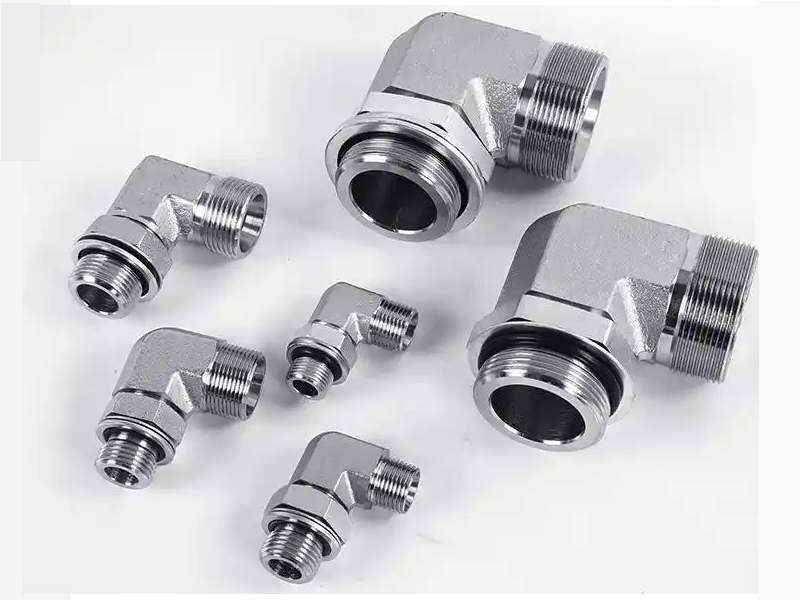
Which Thread Type Wins?
Choosing between BSPP and NPT can feel like arguing over coffee preferences—everyone has a favorite. In the world of threaded pipe fittings stainless steel, the details matter. Thread form, sealing style, and installation habits all shape performance and long-term reliability.
BSPP Threaded Fittings
When working with threaded pipe fittings stainless steel, BSPP stands out for precision and repeat use.
- Core Thread Design
- Parallel thread construction keeps the diameter consistent along the length.
- Known as a Straight thread, it avoids the wedging action common in tapered systems.
- Sealing Mechanism
- Seals by washer contact rather than thread distortion.
- Uses a Gasket for flat-face compression.
- Often integrates an O-ring seated at the face.
- This Seal by washer approach forms a reliable Mechanical seal.
- Seals by washer contact rather than thread distortion.
- Practical Impact in Stainless Steel Pipe Fittings
- Ideal for applications demanding repeated assembly.
- Reduced risk of thread galling in stainless steel threaded fittings.
- Cleaner disassembly during maintenance cycles.
- Why Buyers Lean This Way
- Works smoothly with ISO and DIN-aligned equipment.
- In food-grade or clean fluid lines, flat-face sealing keeps things tidy.
- Brands like yuhuan hongqian machine BSPP threaded pipe fittings stainless steel with tight tolerances, helping installers avoid guesswork.
NPT Threaded Fittings
NPT has its own loyal following, especially across North America.
- Core Thread Design
- Built on a Tapered thread profile.
- Officially known as National Pipe Taper.
- Sealing Method
- Achieves Seal by thread interference as threads compress together.
- Commonly paired with PTFE tape.
- Or sealed using Pipe dope.
- Without proper prep, there is some Leakage potential.
- Achieves Seal by thread interference as threads compress together.
- Performance in Threaded Pipe Fittings Stainless Steel
- Strong mechanical grip under vibration.
- Quick field installation for stainless steel pipe fittings.
- Widely compatible with ASTM and ASME piping standards.
- Real-World Preference
- Contractors favor it for general industrial lines.
- Works well in high-pressure systems when installed correctly.
- yuhuan hongqian supplies NPT threaded pipe fittings stainless steel that balance taper accuracy with smooth surface finish.
In short, both win—just in different rings.
FAQs about Threaded Pipe Fittings Stainless Steel
What makes threaded pipe fittings stainless steel suitable for high-pressure systems?
In oil and gas, chemical processing, and industrial piping, failure is not an option. Stainless steel fittings hold their ground because:
- Material strength – Stainless steel and alloy steel maintain shape under ASME pressure limits across multiple pipe schedule ratings.
- Thread sealing power – Tapered NPT or BSPT threads create tight metal-to-metal interference; plugs and caps lock in with controlled torque.
- Standards alignment – Produced to ASTM, ASME, or API requirements, matching NPS or DN dimensions in inch and millimeter systems.
Compared with PVC or brass in the same elbow or tee configuration, stainless steel resists heat and pressure swings with far less risk of distortion.
How do BSPP and NPT threads differ in stainless steel fittings?
A small thread detail can decide the fate of a plumbing system.
- BSPP (parallel thread)
- Requires gasket or O-ring face seal
- Common under DIN, ISO, JIS standards
- Often used in water treatment and HVAC unions
- NPT (tapered thread)
- Seals through thread interference
- Follows ASTM / ASME dimensional rules
- Widely used in oil and gas, chemical processing
Mixing a BSPP coupling with an NPT elbow without an adapter invites leaks. Alignment between thread type and standard is critical, especially in stainless steel to galvanized iron or carbon steel transitions.
What should buyers confirm before ordering threaded pipe fittings stainless steel in bulk?
Large projects in plumbing systems or industrial piping demand careful checks:
- Thread type: NPT, BSPT, BSPP, metric thread, or UNF must match the installation design.
- Size standard: Confirm NPS vs DN, pipe schedule thickness, inch or millimeter tolerance.
- Material match: Stainless steel with carbon steel tees, brass reducers, or galvanized iron couplings may require isolation planning.
- Surface finish: Polished, brushed, mill finish, pickled, or passivated depending on corrosion exposure.
- Certification: ASTM, ASME, DIN, or ISO documents verifying pressure rating.
One overlooked detail in a single union or cap can stall an entire line. Careful verification protects both schedule and reputation.