Introduction: Why CNC Machining and TIG Welding Must Be Managed Together
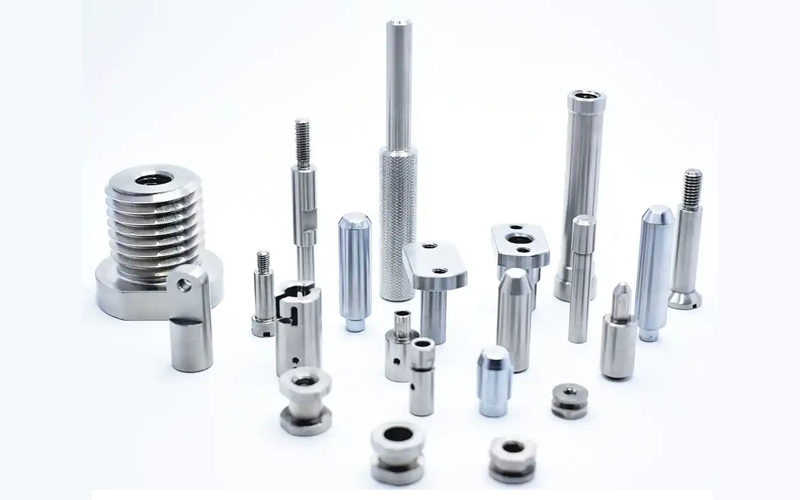
In modern industrial manufacturing, stainless steel components often require both CNC machining and TIG (argon arc) welding to meet functional, structural, and aesthetic requirements. Especaily elbow fitting , tube fitting , pipe fittigs.While these processes are frequently treated as separate operations, experienced manufacturers and buyers understand that machining and welding are deeply interconnected.
For overseas B2B buyers, the real challenge is not whether welding is performed in-house or outsourced—but whether the entire process is controlled, predictable, and accountable. Poor coordination between CNC machining and TIG welding can lead to dimensional deviations, rework, delayed shipments, and inconsistent quality.
This article explains how a controlled and integrated CNC machining + TIG welding approach helps reduce risk, control total cost, and ensure stable delivery—especially for stainless steel parts used in industrial equipment, fluid systems, and structural assemblies.
Understanding TIG Welding (Argon Arc Welding)
What is TIG welding?
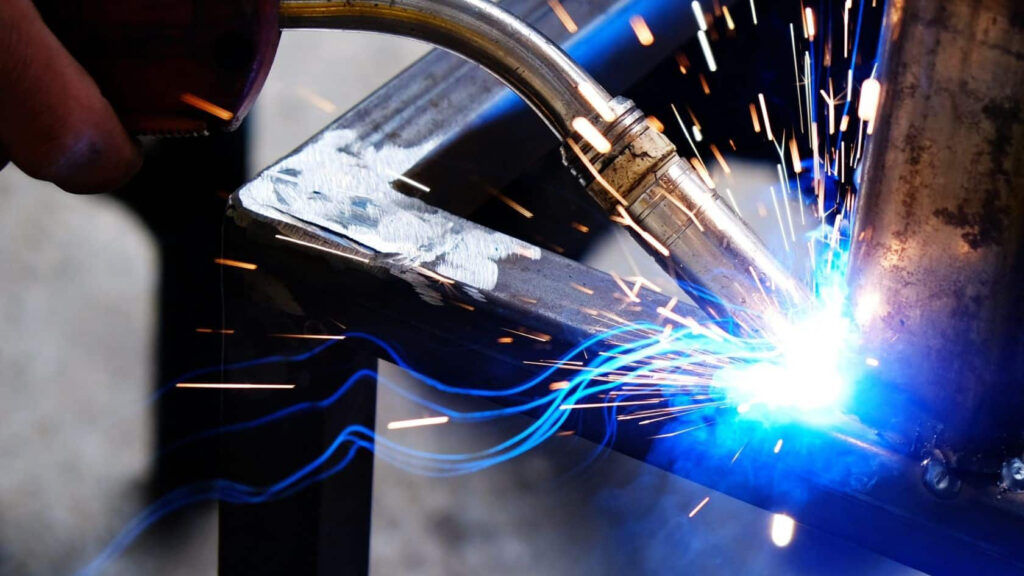
TIG welding, also known as Tungsten Inert Gas welding or argon arc welding, is a precision welding process that uses a non-consumable tungsten electrode and inert shielding gas (typically argon) to protect the weld pool from contamination.
Compared to other welding methods, TIG welding offers:
-
Excellent weld appearance and cleanliness
-
Precise heat input control
-
Minimal spatter and post-weld cleanup
-
Strong, corrosion-resistant welds
-
High suitability for stainless steel and thin-wall components
Because of these characteristics, TIG welding is widely used in industries such as:
-
Industrial machinery and equipment
-
Valves, fittings, and piping systems
-
Medical and food-grade equipment
-
Custom stainless steel assemblies
However, TIG welding’s precision also means it is sensitive to upstream machining accuracy and downstream dimensional control.
The Hidden Risks of Poorly Managed Outsourced Welding
Outsourcing TIG welding is common in the manufacturing industry and, by itself, is not a disadvantage. Problems arise when welding is treated as an isolated service rather than part of an integrated manufacturing process.
Common issues include:
1. Dimensional Deformation After Welding
Stainless steel reacts strongly to heat. Even well-executed TIG welding can introduce distortion, including:
-
Flatness deviation
-
Angular misalignment
-
Loss of concentricity
-
Assembly interface mismatch
When welding is disconnected from CNC machining control, these issues are often discovered too late.
2. Responsibility Gaps Between Suppliers
When machining and welding are handled by different suppliers without unified oversight:
-
Machining suppliers may blame welding distortion
-
Welding shops may claim parts were not designed for welding
-
Buyers are left managing disputes instead of progress
This lack of clear ownership increases project risk.
3. Extended Lead Times and Hidden Costs
Additional logistics, queue times at welding shops, and rework cycles add non-value-added time that is rarely visible in initial quotations.
Why CNC Machining and TIG Welding Should Be Treated as One Process
From a manufacturing engineering perspective, CNC machining and TIG welding are not independent steps. Welding affects dimensions, and machining decisions influence weld quality.
An integrated process approach focuses on:
-
Designing machining features with welding heat input in mind
-
Defining welding sequences to minimize distortion
-
Reserving critical surfaces for post-weld CNC finishing
-
Establishing inspection checkpoints before and after welding
This approach significantly reduces uncertainty—especially in tight-tolerance stainless steel assemblies.
Our Manufacturing Model: Controlled TIG Welding, Not Unmanaged Outsourcing
As a CNC machining supplier serving overseas B2B customers, we use a controlled outsourcing model for TIG welding rather than claiming full in-house capability.
This means:
-
TIG welding is performed by long-term qualified partner workshops
-
Welding procedures are reviewed and defined by our engineering team
-
Machining, welding, and inspection are managed as one workflow
-
Final dimensional responsibility remains with us
This model reflects how many mature industrial supply chains operate globally.
Pre-Welding Control: Engineering Before Production
Effective control starts before the first part is welded.
Key pre-welding practices include:
-
Reviewing drawings for weld-sensitive dimensions
-
Identifying datums and functional interfaces
-
Adjusting machining tolerances where welding distortion is expected
-
Defining acceptable post-weld correction methods
By addressing these factors early, welding becomes a predictable operation rather than a variable risk.
Welding Execution: Consistency Through Qualified Partners
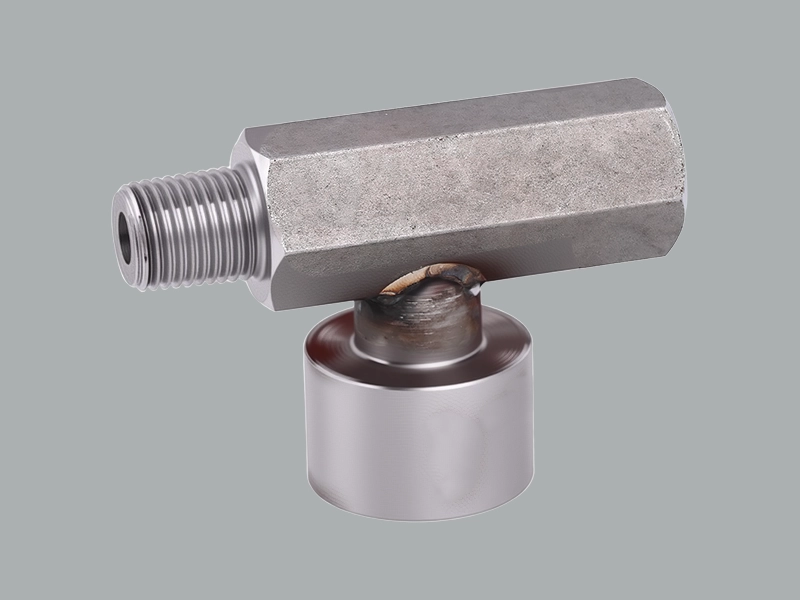
Rather than switching welding vendors frequently, we work with stable TIG welding partners who specialize in stainless steel materials and understand industrial quality expectations.
This consistency allows:
-
Repeatable welding results
-
Continuous process improvement
-
Better communication between machining and welding teams
It also reduces learning curves and variability between production batches.
Post-Welding Inspection and CNC Correction
After TIG welding, all parts return for:
-
Visual weld inspection
-
Dimensional measurement of critical features
-
Functional fit checks where applicable
If distortion is detected within allowable correction limits, post-weld CNC machining is applied to restore precision. This step is often the key difference between acceptable parts and scrap.
Cost and Lead Time: Looking Beyond Piece Price
From a procurement perspective, the lowest welding price rarely equals the lowest project cost.
When CNC machining and TIG welding are managed together:
-
Rework rates decrease
-
Scrap risk is reduced
-
Lead times become more predictable
-
Engineering changes are easier to implement
The result is lower total manufacturing cost, even if individual process prices appear higher on paper.
Quality Consistency for Long-Term B2B Supply
For overseas buyers, consistency across batches matters more than one-time success.
An integrated process ensures:
-
Stable weld appearance and strength
-
Repeatable dimensions across production runs
-
Traceable quality responsibility
-
Easier onboarding of new part revisions
This is particularly important for customers scaling production or supplying regulated industries.
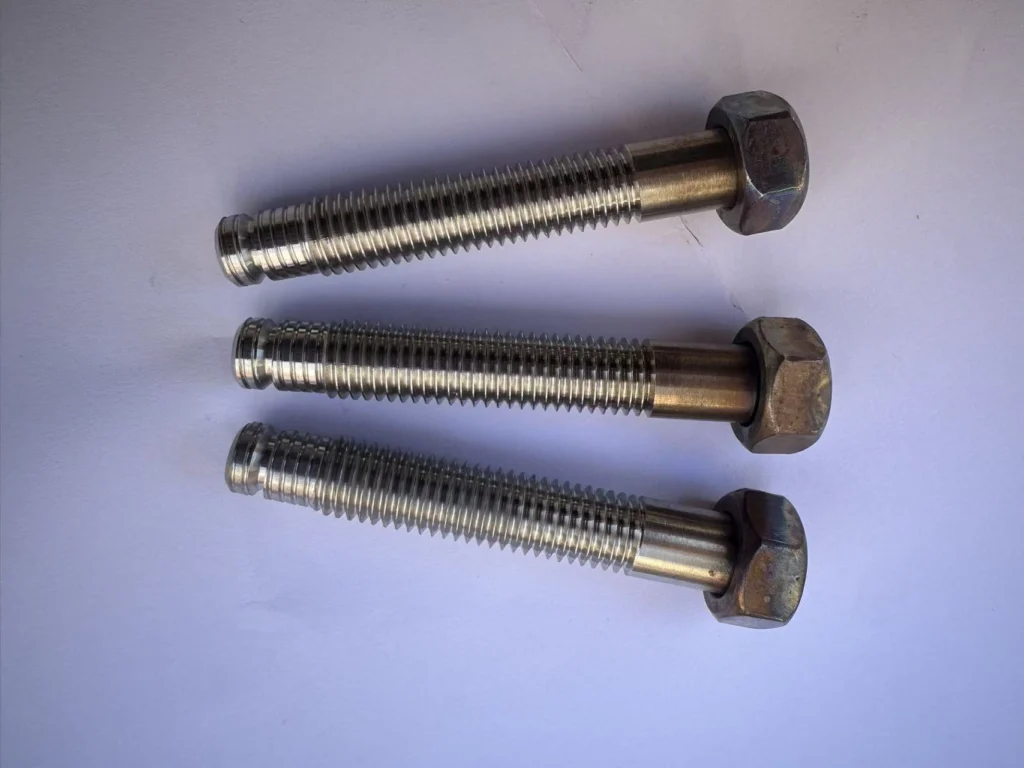
Typical Stainless Steel Applications Using This Approach
This controlled CNC machining + TIG welding model is commonly used for:
-
Welded stainless steel housings
-
Pipe and tube assemblies
-
Structural brackets and frames
-
Machined components with welded reinforcements
In each case, machining precision and welding quality must work together.
Buyer Guidance: How to Evaluate CNC Suppliers Using Outsourced Welding
When assessing a CNC machining supplier that outsources TIG welding, buyers should ask:
-
Who defines the welding process?
-
Are welding partners long-term or project-based?
-
Is post-weld inspection performed in-house?
-
Can post-weld CNC correction be applied?
-
Who takes responsibility for final dimensions?
Clear answers indicate a controlled process—not unmanaged outsourcing.
Frequently Asked Questions (FAQ)
What is TIG welding best used for?
TIG welding is common welding way for different type material , include ss ,iron material and requiring clean welds, precision, and controlled heat input.
Is argon arc welding different from TIG welding?
No. Argon arc welding is another name for TIG welding,it is popular used in asia , Tig welding name is popular in USA /International. referencing the shielding gas used.
Can outsourced TIG welding meet tight tolerances?
Yes, when welding is part of a controlled manufacturing workflow with post-weld inspection and correction.
Why combine CNC machining and TIG welding management?
Because welding affects dimensions, and integrated control reduces risk and delays.
Is this approach suitable for overseas buyers?
Yes. It simplifies communication and ensures one party is responsible for final quality.
Conclusion: Control, Not Location, Determines Manufacturing Success
In stainless steel manufacturing, the question is not whether TIG welding is performed in-house or externally. What truly matters is who controls the process and who stands behind the final result.
By managing CNC machining and TIG welding as a single, controlled workflow, manufacturers can deliver more consistent quality, shorter lead times, and lower overall risk—benefits that matter most to serious B2B buyers.
Early technical communication and process alignment remain the most effective ways to optimize welded stainless steel projects.