Introduction
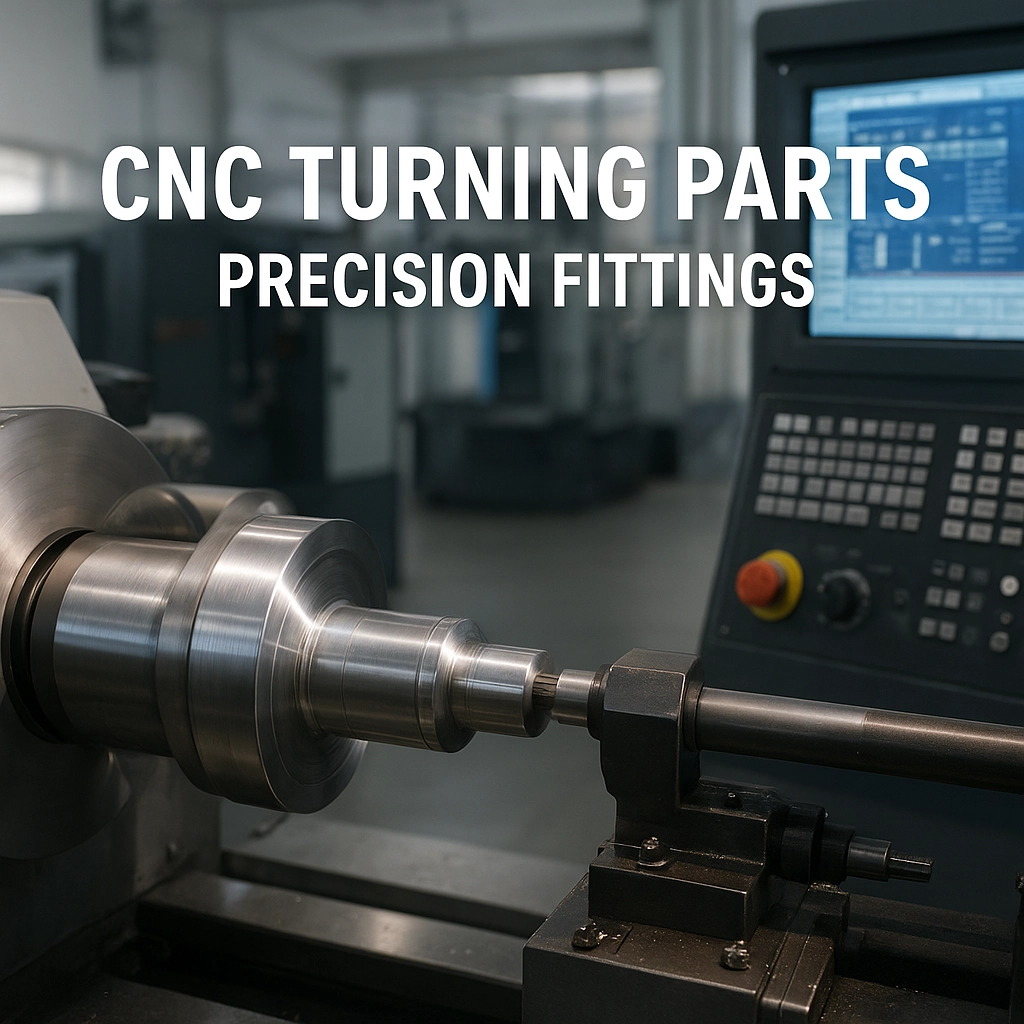
CNC machining has become the backbone of modern manufacturing, especially for industries that require accuracy, repeatability, and reliable mechanical performance. From aerospace components to hydraulic connectors, automotive adapters,adapter fittings and aluminum CNC machining parts, CNC technology allows cnc parts factories to produce custom made cnc parts that meet strict tolerances and demanding operating conditions.
Yuhuan Hongqian Machinery Co., Ltd. is a precision machining manufacturer specializing in non-standard CNC machined parts, CNC lathe machine parts, precision hydraulic fittings, and batch OEM connectors. With multi-axis CNC turning and a dedicated engineering team, the company provides stable mass production for custom metal parts that cannot be solved by catalog standard fittings.
This time we focus on explain what CNC machining parts are, how they are produced, and why they matter in aerospace, automotive, hydraulic, and industrial fields.
What Are CNC Machining Parts?
CNC machining parts are components produced through Computer Numerical Control machining, where cutting tools, turning spindles, and milling heads are programmed to remove material according to digital instructions.
These parts are widely used in:
-
aerospace instruments
-
hydraulic blocks and connectors
-
engine fuel and oil transmission lines
-
pneumatic cylinders and valve bodies
-
automotive braking and power systems
-
industrial automation and robotics
Key benefits:
-
High dimensional accuracy
-
Consistent tolerances in mass production
-
Excellent surface precision and sealing performance
-
Compatibility with threads such as BSP, NPT, UNF, and Metric
Whether they are stainless steel adapters or aluminum CNC machining parts, the ability to produce identical components repeatedly is what makes CNC machining essential.
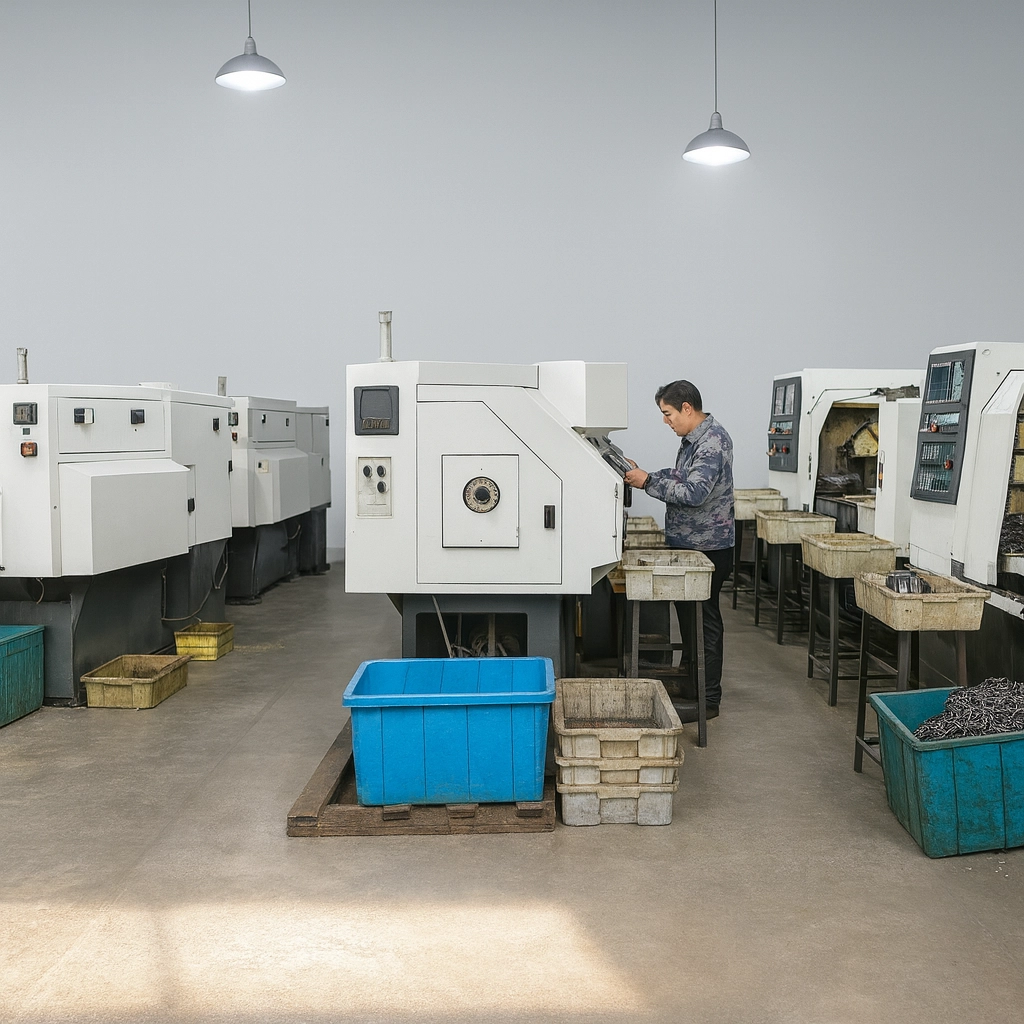 What Does CNC Mean in Machined Parts?
CNC means Computer Numerical Control. Every movement of the tool—depth, angle, feed rate, and path—is controlled by a written numerical program.
Typical flow:
-
CAD design (geometry model creation)
-
CAM conversion (machining path simulation)
-
G-code programming
-
CNC lathe or CNC milling machine execution
-
Deburring and cleaning
-
Precision inspection (thread gauges, calipers, CMM)
-
Optional surface coating or heat treatment
Because the machine follows encoded instructions, tolerances remain stable even across 10,000 identical CNC machined parts.
Parts of a CNC Machine (Simple Overview)
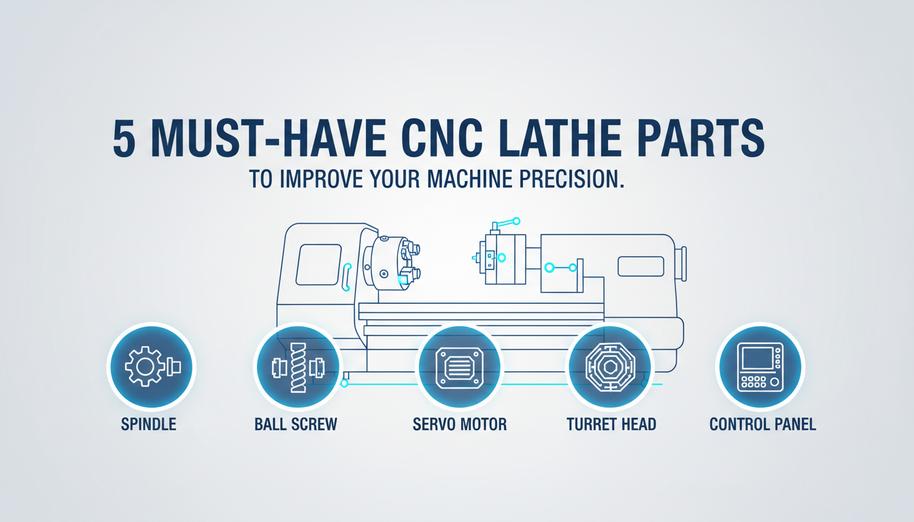
A standard CNC machine has several working units:
| CNC Component | Function |
|---|---|
| Spindle | Rotates cutting tools at programmed speed |
| Chuck / Collet | Clamps the workpiece in turning machines |
| Linear axis (X, Y, Z) | Controls tool motion |
| Controller | Interprets G-code |
| Tool magazine | Holds multiple cutting tools |
| Coolant system | Reduces heat and tool wear |
| Fixture / clamp | Secures irregular or non-standard parts |
These combined elements allow CNC machining to shape metal precisely, even in thin-wall aerospace shells or complex hydraulic threads.
CNC Machining in Aerospace Applications
Aerospace CNC machining parts must handle:
-
vibration and temperature extremes
-
high-pressure oxygen, fuel, hydraulic fluids
-
landing gear shock loads
Examples of aerospace CNC machined parts:
-
turbine compressor spacers
-
hydraulic valve housings
-
aluminum structural supports
-
threaded fuel connectors
-
sensor brackets, housings, and rings
Aerospace components often use:
-
Aluminum 7075 / 6061
-
Titanium alloys
-
Stainless steel 17-4PH
Their mechanical reliability relies on tight tolerances and smooth sealing surfaces, making CNC precision machining parts essential.
CNC Precision Machining Parts and Why They Matter
Precision machining refers to achieving tolerances down to ±0.005 mm in some high-grade components.
This level is critical for:
-
leak-free sealing of engine lubrication lines
-
precision hydraulic valves
-
motor shaft seats
-
aerospace couplings and threaded adapters
-
instrumentation connectors
Yuhuan Hongqian Machinery focuses on:
-
CNC turning for mass production fittings
-
CNC lathe machine parts for custom connectors
-
strict thread inspection (NPT, BSP, metric)
A precision connector that leaks 1% in a high-pressure hydraulic system can lead to system shutdown, performance loss, or safety hazards. Thus, precision determines reliability.
Aluminum CNC Machining Parts
Aluminum is the most common CNC material due to:
-
light weight
-
corrosion resistance
-
aerospace and automotive compatibility
-
easy anodizing and surface finishing
Typical aluminum CNC components:
-
hydraulic blocks
-
aerospace brackets
-
pneumatic valve bodies
-
automotive engine connectors
-
electric motor housings
Aluminum CNC machining parts are preferred in electric vehicle platforms, drone systems, and aerospace because weight reduction directly increases efficiency.
CNC Lathe Machine Parts for Custom Fittings
Turning machines allow high-speed mass production of:
-
threads
-
internal tapers
-
sealing grooves
-
pipe adapters
-
non-standard nipple fittings
At Yuhuan Hongqian, CNC turning is the core technology for batch hydraulic and pneumatic connectors, designed according to customer drawings in PDF, STEP, IGS, or customized sketches.
Non-Standard and Custom CNC Fittings
Many machinery builders encounter mismatched threads, custom sealing angles, or pressure-line geometries that catalog parts cannot solve. CNC manufacturing allows:
-
special thread conversion (BSP to NPT, UNF to Metric)
-
deep-shoulder sealing grooves
-
multi-diameter flow channels
-
complex hex and blind port structures
Custom CNC machining enables perfect compatibility and eliminates pipe leaks caused by ill-fitting standard components.
Why CNC Machined Parts Are Reliable for Mass Production
Mass OEM runs require:
-
repeatable size
-
stable tolerance
-
consistent surface finish
-
pressure and vibration resistance
CNC machining guarantees:
-
every thread angle is identical
-
every taper matches the same sealing seat
-
every connector fits the same torque range
This is why industrial machinery and aerospace assemblies rely on CNC instead of random machining or manual tool turning.
Industries Using CNC Machining
-
Aerospace hydraulic systems
-
Automotive fuel injection and braking
-
Industrial pump and valve bodies
-
Marine engines and propulsion fittings
-
Robotics and automation
-
Electric vehicle drive platforms
-
High-pressure pneumatic cylinders
Each area depends on non-leak thread sealing, fatigue resistance, and tight dimensional control.
Why Choose Yuhuan Hongqian Machinery
-
Batch CNC production for custom fittings
-
Focus on non-standard thread adapters
-
Real-time quality control and sealing inspections
-
Experience with BSP, NPT, UNF, Metric
-
Aluminum, brass, stainless steel, carbon steel, alloy steel
-
Options for galvanizing, anodizing, nickel plating, black oxide, and electrophoresis
The factory maintains high tolerance and stable machining cycles even under high-volume demands.
Conclusion
CNC machining makes it possible to manufacture thousands of identical, high-accuracy parts that tolerate vibration, pressure, and sealing environments. From aerospace fuel connectors to hydraulic adapters, aluminum valve bodies, and CNC precision fittings, CNC technology guarantees stability where industrial reliability is critical.
Yuhuan Hongqian Machinery Co., Ltd. continues to supply global OEM partners with non-standard CNC machined parts, CNC lathe machine parts, and custom connection solutions designed for modern engineering performance.