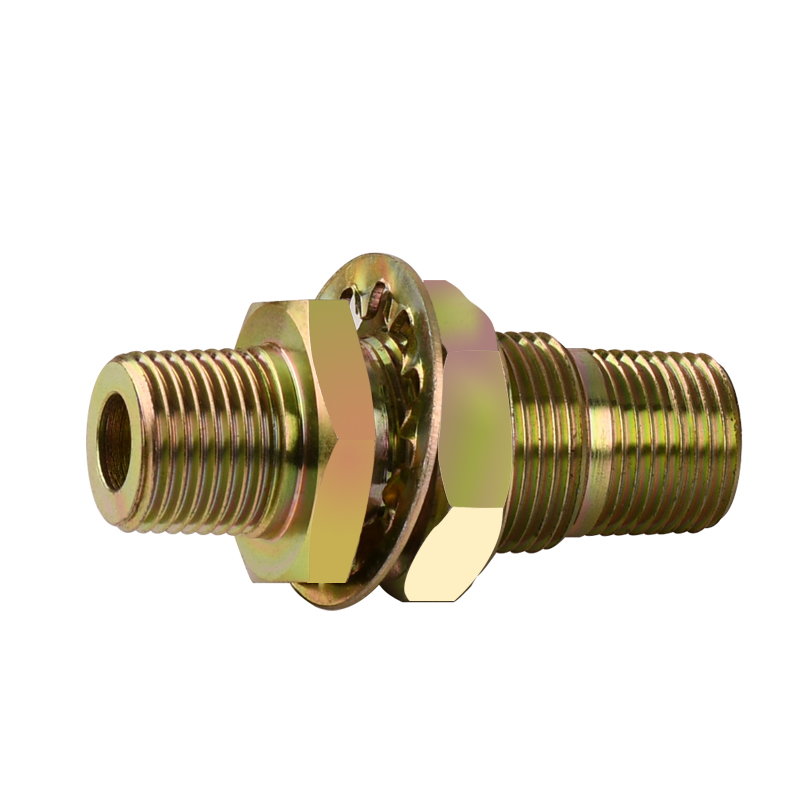
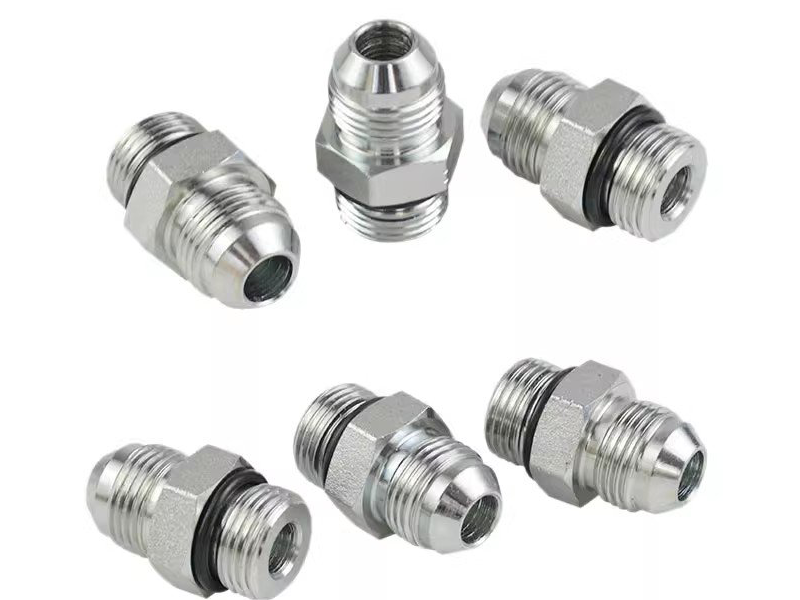
In the high-stakes world of industrial fluid power, high-precision CNC turning parts have become the gold standard for creating reliable threaded pipe joints. It is the critical interface that ensures a hydraulic system, a chemical line, or a high-pressure gas manifold remains leak-free under extreme conditions. Whether you are sourcing a Hex Nipple for a global supply chain or a custom male pipe fitting for a specialized project, the manufacturing process you choose determines not just the price, but the reliability of your entire system.
At Yuhuan Hongqian Machinery, located in the heart of the precision machining hub in Zhejiang Province, China, we have spent over 8 years mastering the nuances of external thread fabrication and finish different cnc turning parts. Operating a fleet of over 70 CNC lathes and 15 truss robots, we’ve seen every possible thread failure and success.
This guide provides a deep technical dive into the three primary external threading processes, along with real-world case studies on how to avoid costly production traps.
1. Why CNC Turning Parts are the Gold Standard for Precision
CNC thread turning is a subtractive manufacturing process where a precision-ground carbide insert cuts a helical path into a rotating workpiece. For high-end applications in Yuhuan‘s manufacturing ecosystem, this remains the “safe bet” for quality.
Technical Precision and Standards
Thread CNC turning can choose the right cnc cutter to finish different types threads of cnc turning parts. This is critical when working with international standards such as:
-
Metric (M) & Unified (UN/UNF/UNEF)
-
Pipe Threads: G (BSPP), R (BSPT), and the highly demanding npt male fitting.
-
NPTF (Dryseal): Unlike standard NPT, NPTF requires a metal-to-metal seal without Teflon tape. Only CNC turning can consistently achieve the root and crest truncations necessary for this level of sealing.
2-Material Versatility in Custom CNC Turning Parts
One of the core strategic advantages of our facility in Zhejiang Province, China, is our ability to handle an extensive spectrum of industrial materials and complex geometries. Unlike thread rolling, which is strictly limited by material ductility (HRC < 40), our CNC turning process excels in processing:
-
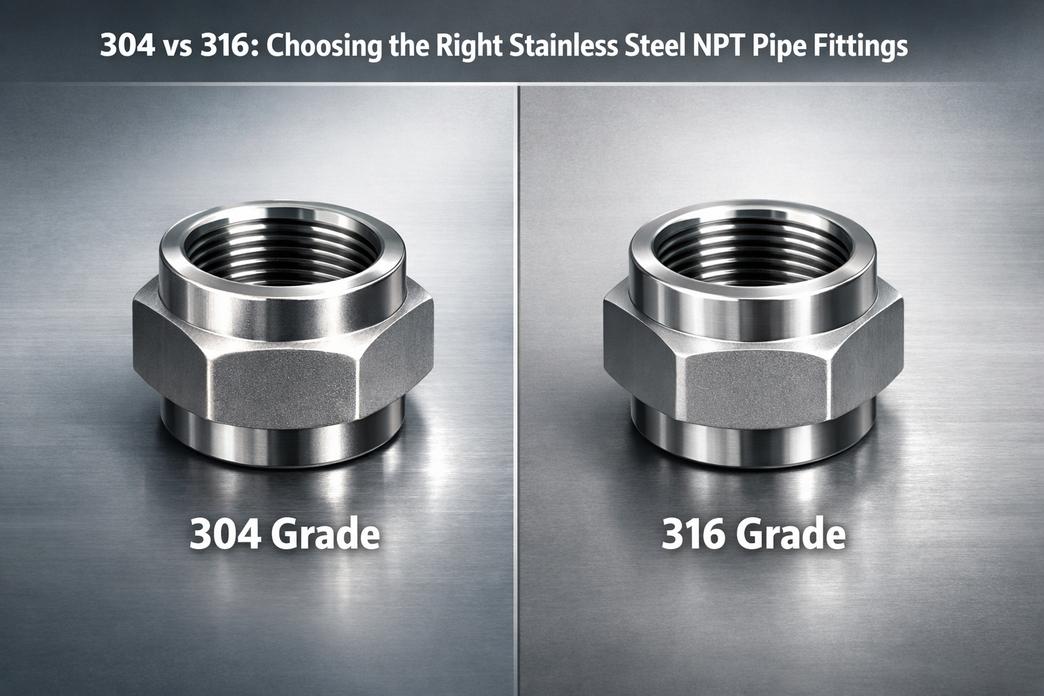
Stainless Steel (304, 316, 316L): Known for being “tough and gummy,” stainless steel requires rigid machine setups and professional technicians to prevent work hardening and ensure surface integrity.
-
Carbon Steel & Alloy Steel: The primary choice for high-pressure hydraulic systems where structural thread strength is non-negotiable.
-
Aluminum & Copper: CNC precision delivers mirror-like surface finishes and maintains excellent electrical and thermal conductivity.
2.1Expanding Beyond Standard Nipples: Our Diverse Fitting Portfolio
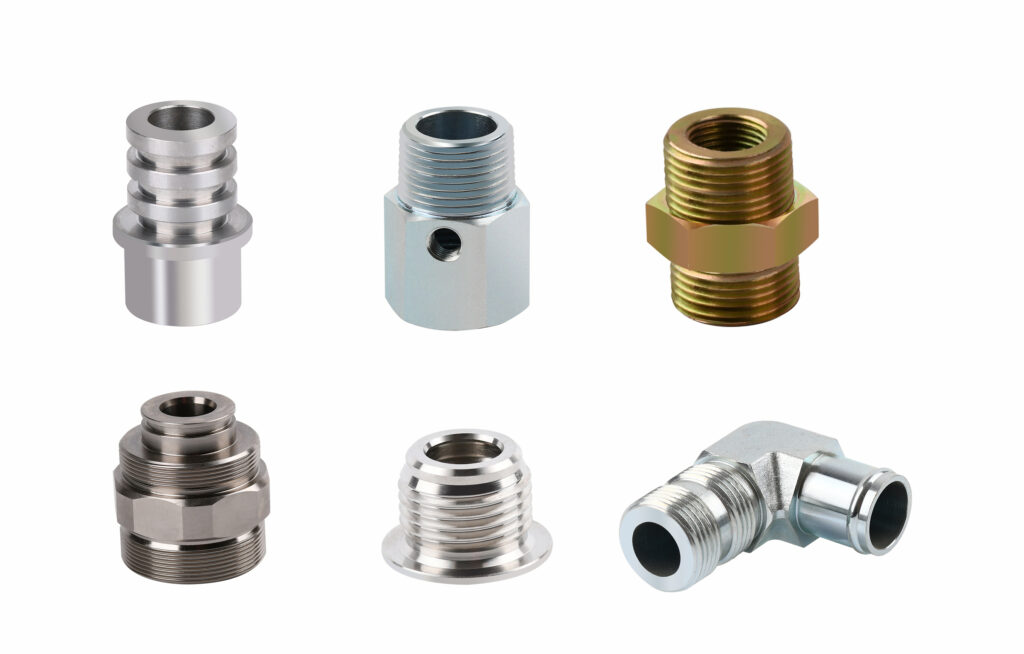
By leveraging the flexibility of our 70+ CNC lathes and truss robots, we provide a much broader product range than traditional rolling shops. Our precision-engineered lineup includes:
-
Bulkhead Fittings: Specialized for secure connections through panels and partitions.
-
Pneumatic Fittings: High-sealing components for critical air-pressure systems.
-
Adapter & Hex Connectors: Precision-cut for leak-free fluid transfer.
-
Caps, Tees, and Elbow Fittings: These complex, non-linear geometries—which are impossible to produce via thread rolling—are our core strength, ensuring perfect 90° and 45° flow control.
Our facility is equipped to handle the most demanding specifications for custom CNC turning parts, ensuring every fitting meets global quality standards
3. CNC Threading vs. Thread Rolling: A Technical Showdown
3.1The Pros and Cons of CNC Turning
-
Pros: Ultra-high precision and superior thread surface finish compared to rolling. While rolled threads can appear rough or dull due to extrusion pressure, CNC machining produces bright, clean, and aesthetically pleasing thread profiles. With custom CNC machining, there is no need for expensive molds or tooling investment; we utilize readily available, high-precision cutters to handle everything from prototypes (small batches) to mass production. It is also the only reliable method to process high-hardness materials.
-
Cons: Higher unit price; slower production speed; high tool consumption.
3.2 Thread Rolling: The Efficiency Powerhouse (and Its Hidden Traps)
Thread rolling is a cold-forming process where hardened steel dies “squeeze” the metal into the final thread shape. While it is the champion of speed and cost-efficiency for mass-produced Hex Nipples, it has strict technical boundaries:
-
The HRC 40 & Plasticity Limit: Typically, the workpiece hardness must not exceed HRC 40. Beyond this limit, material plasticity decreases significantly, leading to surface micro-cracks, accelerated die wear, and potential forming failure.
-
Material Compatibility: This process is ideal for Carbon and Stainless steel but is unsuitable for Cast Iron due to its lack of plasticity (risk of brittle fracture). While Copper and Aluminum can be rolled, high plasticity is mandatory; otherwise, the threads will experience cracking during extrusion.
-
Warm Thread Rolling: For high-strength materials processed after heat treatment (common in certain aerospace fasteners), we implement Warm Rolling to artificially increase ductility and protect the dies.
-
The “Blank Diameter” Danger: Rolling is a volume-constant process. It requires extreme precision in the pre-machined outer diameter (Blank Size). Any deviation in blank size before production will result in a catastrophic batch-wide quality failure.
-
Tooling & Precision Constraints: Unlike CNC turning, rolling requires specific molds (dies). Attempting small batches without the proper professional tooling often leads to inconsistent quality. Furthermore, the surface finish is generally rougher than a machined finish, making it incapable of meeting high-precision NPTF (Dryseal) standards. Even for standard NPT, it requires deep technical expertise that most supply chains lack.
The “Cost of Quality” Reality
In the current China manufacturing market, CNC thread turning often costs 2 to 5 times more than thread rolling. Why? Because it is a slower process, and the carbide inserts wear out rapidly, especially when cutting tough stainless steel. To maintain ISO9001 standards, tools must be replaced at the first sign of wear. A professional technician is required to monitor these machines continuously to ensure precision—this is where the cost lies. However, for a Threaded Pipe Joint used in a critical environment, this upfront cost is an insurance policy against system failure.
4. CNC turning parts thread Case Study
In a professional workshop environment, the possibility of “saving” a failed batch depends entirely on the initial manufacturing process and the part’s geometry. At Yuhuan Hongqian Machinery, we believe in transparency regarding rework limitations.
CNC Thread turning Rework: The “Locating” Rule
Many buyers assume that if a thread is out of tolerance, a CNC lathe can simply re-cut it. This is only partially true and comes with specific conditions.
-
Fixable Scenarios: If a CNC-machined thread is oversized, it can potentially be repaired by re-running the CNC program.
-
The Geometry Constraint: This is only feasible for Hex Nipples or parts with flats. The machine requires a precise physical orientation point to synchronize the lead of the second cut with the existing thread.
-
For Round Parts: If the part is perfectly round with no clear orientation point, the success rate for CNC re-syncing is near zero.
-
The 10% Scrap Factor: Even with perfect positioning, thread rework typically carries a ~10% scrap rate due to minor synchronization errors, tool pressure variations, or vibration during the second pass.
The Agony of Manual Die Repair (The 1/10th Productivity Trap)
When CNC re-syncing is impossible and rolling cannot save the part, some suppliers resort to manual Die Threading.
-
Productivity Collapse: Manual repair output is barely 1/10th the speed of CNC machining. If a machine produces 500 pieces, a worker struggles to finish 50 by hand.
-
The Human Toll: This is grueling labor. We have seen workers’ hands become swollen and red from the sheer force required to force a die onto a failed thread. Fatigue quickly leads to uneven pressure and even more quality inconsistencies.
5. Die Threading: When to Use the “Last Resort”
Die Threading uses a fixed-size tool to manually cut threads. In a professional facility, we treat this purely as a maintenance procedure.
-
Acceptable Uses: Cleaning minor burrs from a finished batch or performing an emergency repair on a single, high-value part damaged during handling.
-
Mass Production Warning: Die threading is never a viable solution for mass production. If a supplier tells you they are “manually finishing” your order, your quality and lead times are at extreme risk.
6. The “Secret Sauce”: Thread Chasing for Barrel Plating
Here is a piece of Yuhuan industry insight: Barrel Plating (Zinc or Nickel) often damages threads. The parts bounce against each other in a rotating drum, causing “thread dings.”
The Solution: Thread Chasing
If the thread was correctly manufactured but damaged during barrel plating (leading to burrs that block the “Go-gauge”), we use a rolling machine for Thread Chasing.
-
Advantage: It effectively removes burrs and restores the Go-gauge fit without stripping the protective coating.
-
Limitation: It only fixes superficial impact damage. It cannot correct “tilted” or “oversized” threads caused by incorrect blank diameters.
-
Pro Tip: For high-sealing requirements, we recommend Rack Plating instead of barrel plating to prevent dings entirely and ensure superior sealing performance.
7. Technical Comparison Table
| Feature | CNC Thread Turning | Thread Rolling | Die Threading (Manual) |
| Precision | Ultra-High (NPTF Ready) | Medium (Risk of Tilting) | Low |
| Output Rate | 100% (High) | 500% (Ultra-Fast) | 10% (Very Low) |
| Production Cost | High (2x – 3x) | Lowest | High Labor Cost |
| If Thread is Tilted? | Rarely happens | Unfixable Scrap | Unfixable |
| Repairability | Possible (10% scrap) | Impossible via CNC | Manual / High Pain |
| Best Application | High-Pressure / Sealing | Mass Market / Fasteners | Maintenance Only |
8. FAQ: Sourcing cnc turning parts from China
Q: Why did my rolled NPT CNC turning parts fail the assembly?
A: Usually, it’s a Blank Diameter error or the machine setup was “tilted.” In Zhejiang, many factories have the machines but not the skilled technicians to calibrate them for NPT tapers.
Q: Can I use manual dies to fix failed 316 Stainless Steel threads?
A: It is extremely difficult. 316 SS is too hard for manual dies, and the worker’s fatigue will be even higher, making it nearly impossible to finish a large batch.
Q: What is the biggest risk with thread rolling?
A: The “Tilted Thread” . Because it is an extrusion process, once it is crooked, it is permanent. You cannot “un-squeeze” a metal part.
9. Conclusion: High-Quality Threads are Made, Not Fixed
In the competitive landscape of Zhejiang Province manufacturing, it is tempting to chase the lowest price. But as our case study shows, a “cheap” Hex Nipple becomes the most expensive part of your inventory when it leads to a 100% rejection rate and manual labor that causes physical injury.
Summary Advice:
-
Choose CNC Turning if your application involves high pressure, critical sealing (NPTF), or 316 Stainless Steel.
-
Choose Thread Rolling only if the supplier has a 100% inspection record for blank diameters and the application is non-critical.
-
Avoid Manual Dies—if you are at this stage, the project is already in trouble.

Partner with Yuhuan Hongqian Machinery
Located in Yuhuan, China, we don’t just give you a quote; we provide a risk assessment. We help you choose between CNC and Rolling based on the reality of your engineering needs.
Ready to start your project with an cnc turning parts partner?