Spec sheets shouldn’t feel like a game of roulette. Yet when you’re sourcing ss tubes and fittings, one wrong grade or sloppy tolerance can stall a whole production line. That’s not a small oops—that’s forklifts idling and managers pacing. In high-stakes CNC environments, stainless isn’t just metal; it’s the backbone of uptime, safety, and your reputation on the shop floor.
Grand View Research reports the global stainless steel market continues steady growth, driven by industrial and infrastructure demand. As one industry analyst put it, “Performance consistency now outweighs upfront cost in procurement decisions.” That shift says everything.
So here’s the straight talk: you need clear specs, certified finishes, tight tolerances, and proof your supplier can hit the mark batch after batch. No guesswork. No crossed fingers. Just parts that fit, seal, and keep the pressure where it belongs.
What Are Ss Tubes And Fittings Materials?
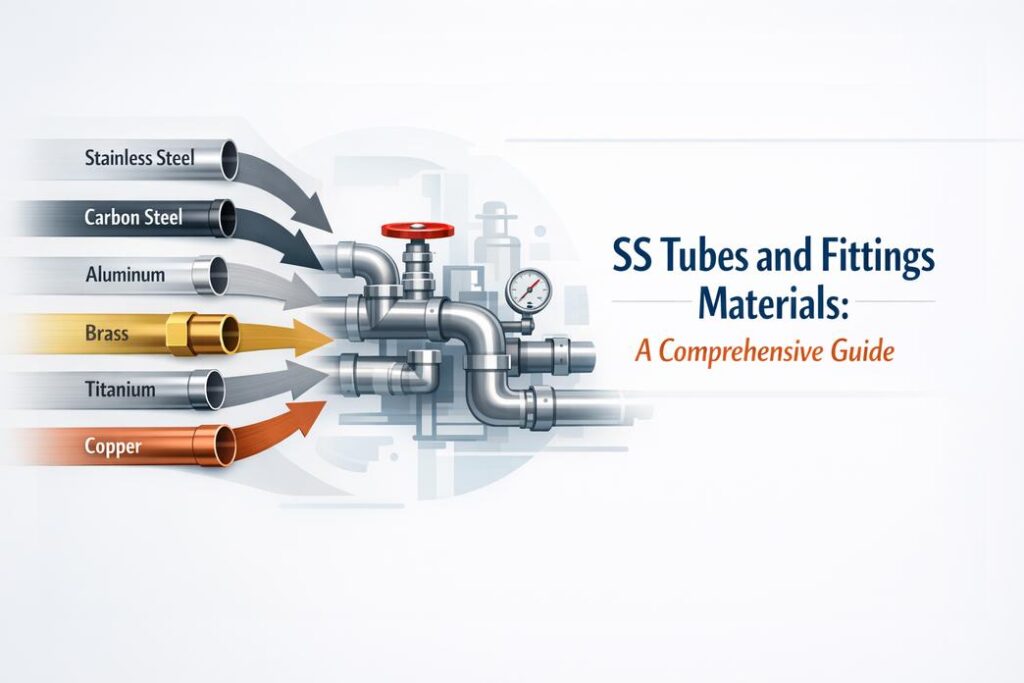
When people talk about ss tubes and fittings, they usually mean stainless steel pipes, connectors, and related hardware used in fluid lines. Still, the world of ss tubes and fittings goes beyond one alloy. Materials range from stainless to carbon steel, aluminum, brass, titanium, and copper—each picked for strength, corrosion resistance, or cost.
Stainless Steel Grades for Tubes and Fittings
In the ss tubes and fittings market, stainless options dominate because corrosion is the daily enemy. Under the umbrella of Austenitic Stainless Steel, Ferritic Stainless Steel, Martensitic Stainless Steel, and Duplex Stainless Steel, buyers choose grades based on pressure, temperature, and chemical exposure.
- Austenitic Stainless Steel
- Common grades:
- 304 Stainless Steel
- Used in:
- Food-grade ss tubes and fittings
- General process piping
- Instrument lines
- 316 Stainless Steel
- Added molybdenum improves:
- Chloride corrosion resistance
- Marine durability
- Typical applications:
- Hydraulic systems
- Valves and instrumentation
- Common grades:
- Duplex Structures
- 2205 Duplex Steel
- Combines:
- High strength
- Stress corrosion resistance
- Preferred in:
- Offshore pipelines
- Chemical transport systems
- 2205 Duplex Steel
- Performance Snapshot
- Corrosion resistance: high
- Weldability: stable under ASTM and ASME norms
- Cost: moderate to premium
For buyers comparing stainless steel tubes and fittings, 304 handles daily industrial use, while 316 and 2205 step in when conditions get harsh. Brands like yuuhuan hongqian focus on precision finishing so ss fittings seal tight and stay leak-free over time.
Carbon Steel Variants in Connector Manufacturing
Carbon steel stays popular in structural and heavy-load environments. It’s strong, affordable, and easy to machine for large-scale ss tubes and fittings alternatives.
- Carbon Categories
- Low Carbon Steel
- Better ductility
- Used in:
- Carbon Steel Pipe
- Mild-pressure connectors
- Medium Carbon Steel
- Higher tensile strength
- Structural supports
- High Carbon Steel
- Increased hardness
- Wear-resistant components
- Low Carbon Steel
- Alloyed Options
- Alloy Carbon Steel
- Enhanced toughness
- Suitable for:
- Carbon Steel Fittings
- High-load flanges
- Alloy Carbon Steel
- Compliance and Fabrication
- Produced under ASTM rules
- Welding aligned with Welding Standards
- Applied in:
- Fluid transfer
- Pneumatic systems
While ss tubes and fittings resist corrosion better, carbon steel wins on cost in dry, controlled settings.
Aluminum Alloy and Brass Options Explained
Lightweight systems call for something easier to handle. That’s where aluminum and brass step in.
- Aluminum Choices
- Aluminum Alloy 6061
- Good strength-to-weight ratio
- Common in Aluminum Tubes
- Aluminum Alloy 7075
- Higher strength
- Aerospace-grade parts
- Aluminum Alloy 6061
- Brass Variants
- Brass Alloy C36000
- Excellent machinability
- Precision Brass Fittings
- Naval Brass
- Improved seawater Corrosion Resistance
- Brass Alloy C36000
- Why Engineers Pick Them
- Lower weight than steel
- Smooth threading for connectors
- Ideal for adapters in automotive lines
In lighter pneumatic setups, these materials compete with ss tubes and fittings when weight reduction matters more than extreme pressure capacity.
Specialty Metals: Titanium and Copper Uses
Some environments are brutal—salt spray, acids, high heat. That’s when specialty metals enter the mix.
- Titanium Range
- Titanium Grade 2
- Strong corrosion resistance
- Used in Titanium Tubes
- Titanium Grade 5
- High strength-to-weight
- Aerospace assemblies
- Key traits:
- Biocompatibility
- High temperature applications
- Titanium Grade 2
- Copper and Bronze
- Copper Alloy C11000
- High conductivity
- Reliable Copper Pipes
- Bronze Alloys
- Wear resistance
- Marine connectors
- Copper Alloy C11000
For heat exchangers and process piping, copper moves fluids efficiently. Titanium survives chemical attack. In contrast, ss tubes and fittings stay the everyday go-to for balanced performance and price. Suppliers such as yuuhuan hongqian align material choice with working pressure, media type, and long-term maintenance goals, keeping stainless steel tubes and fittings competitive across industries.
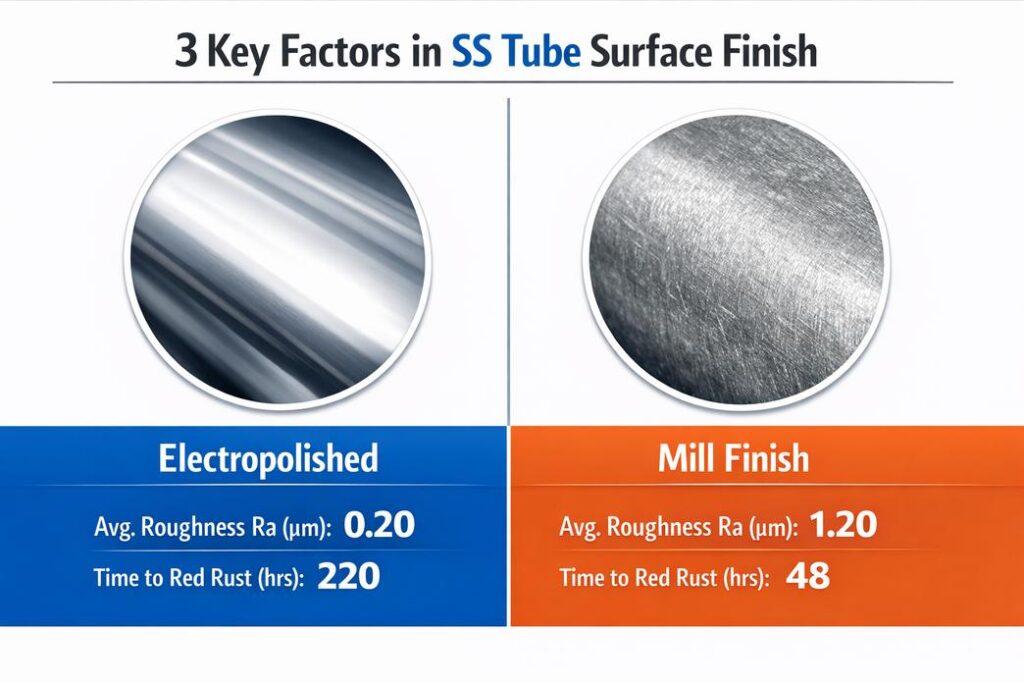
3 Key Factors In Ss Tube Surface Finish
Surface finish can make or break ss tubes and fittings in real-world service. From food plants to hydraulic lines, ss tubes, stainless steel tubes and fittings, and SS pipe fittings all react differently depending on how the metal surface is treated and protected.
Polished Finish Impact on Corrosion Resistance
When engineers specify ss tubes and fittings for wet or chemical-heavy settings, polish level becomes a big deal. The relationship between surface roughness and corrosion is not just theory; it directly affects fluid hygiene and service life.
- Lower surface roughness reduces debris retention.
- A stable passivation layer forms faster on smooth metal.
- Higher exposed chromium content supports a stronger oxide layer.
In practical installations using ss tubes and fittings, performance often depends on how the finish interacts with the environment:
- Environmental exposure to chlorides increases risk.
- Micro-gaps encourage crevice corrosion.
- Damaged areas may trigger pitting corrosion.
Performance Comparison of Surface Roughness Levels
| Finish Type | Avg. Roughness Ra (µm) | Time to Red Rust (hrs) | Pitting Depth (µm) | Cleaning Cycles to Residue |
|---|---|---|---|---|
| Mill Finish | 1.20 | 48 | 85 | 6 |
| Brushed | 0.80 | 72 | 60 | 5 |
| Satin | 0.60 | 96 | 42 | 4 |
| Polished (180#) | 0.40 | 140 | 25 | 3 |
| Electropolished | 0.20 | 220 | 10 | 2 |
In stainless steel tubes and fittings used for sanitary flow, smoother walls also mean fewer hidden pockets where bacteria cling. That’s why high-purity ss pipe fittings often come with specified Ra values in procurement documents.
Brushed vs. Satin: durability insights
Brushed and satin finishes are common across visible ss tubes and fittings in automotive trims and control panels. The difference sits mainly in surface texture and how it handles daily abuse.
From a durability standpoint:
- Brushed surfaces improve scratch resistance by masking marks along grain lines.
- Satin finishes offer balanced abrasion resistance and softer reflection.
- Both reduce visible wear compared to mirror polish in high-touch areas.
Looking closer at mechanical behavior in ss tubes and fittings:
- Under repeated mechanical wear, brushed lines can trap fine dust.
- Satin surfaces simplify cleaning ease in oily environments.
- Long-term maintenance requirements vary based on exposure and wipe frequency.
In food kiosks or transport cabins, long-term appearance matters. Stainless steel tubes and fittings with satin treatment usually keep a consistent tone, while brushed finishes may show directional fading over time. Still, for moderate-duty stainless tubing systems, either finish works well when matched to the right load and cleaning routine.
Passivated and Electropolished Benefits
High-purity ss tubes and fittings used in pharma, biotech, and semiconductor lines often require chemical finishing. The goal is simple: cleaner metal, fewer surprises.
At the core:
- Chemical passivation removes free iron and supports chromium enrichment.
- Electropolishing increases smoothness and improves surface cleanliness.
- Both processes boost enhanced corrosion resistance.
For critical stainless steel tubes and fittings, the advantages stack up in layers:
- Material Chemistry
- Increased chromium enrichment strengthens the protective film.
- A denser oxide barrier improves biocompatibility.
- Functional Surface
- Reduced reduced friction helps fluid flow stay stable.
- Improved sterilizability supports clean-in-place cycles.
- Operational Impact
- Lower contamination risk in ultra-pure media.
- Extended service life for ss pipe fittings under aggressive cleaning chemicals.
In demanding fluid systems, properly treated ss tubes and fittings are not just shiny parts. They become reliable flow channels that handle pressure, heat, and strict hygiene rules without constant rework.
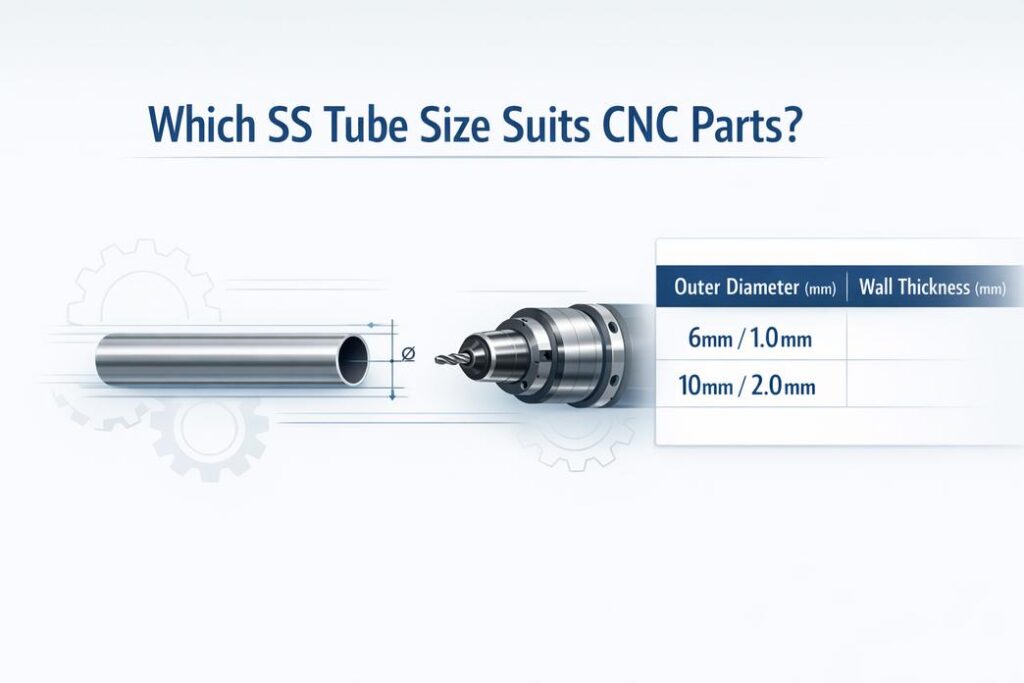
Which Ss Tube Size Suits CNC Parts?
Choosing the right size for ss tubes and fittings in CNC parts is not guesswork. It’s about matching real machining limits with flow demand and sealing performance. From compact manifolds to heavy-duty valves, the correct stainless setup keeps your project tight, safe, and smooth. Let’s break it down in a practical way.
Matching Outer Diameter to CNC Application
When selecting ss tubes and fittings, the Outer Diameter must align with machining capacity and functional load.
- Based on CNC Machining capability
- Spindle limits
- Maximum clamp range
- Tool clearance around Tube Diameter
- Chuck accuracy
- Impact on Precision Machining
- Runout control for small Component Size
- Spindle limits
- Based on fluid and pressure demand
- Flow rate
- Larger Tube Selection for high-volume transfer
- Pressure class
- Thicker walls with moderate Outer Diameter
- Flow rate
- Based on Material Compatibility
- Stainless grade vs cutting tool wear
- Heat buildup during milling
For compact hydraulic blocks using stainless steel tubes and fittings, smaller OD keeps space tight. For process piping, bigger diameters make life easier. Brands like yuuhuan hongqian fine-tune ss tubes dimensions to match real CNC fixtures, which saves setup time.
Wall Thickness and Tolerance Requirements
Strength in ss tubes and fittings comes from proper Wall Thickness and tight Tube Tolerance. Too thin, and Structural Integrity drops. Too thick, and machining costs spike.
Key checks include:
- Confirm Pressure Rating against system PSI
- Review Manufacturing Standards such as ASTM
- Match Dimensional Accuracy with sealing groove design
- Consider raw Material Properties
Below is a reference guide for common steel tubes and fittings in CNC use:
| Outer Diameter (mm) | Wall Thickness (mm) | Tolerance (±mm) | Pressure Rating (MPa) | Common Use |
|---|---|---|---|---|
| 6 | 1.0 | 0.05 | 16 | Pneumatic lines |
| 8 | 1.5 | 0.05 | 25 | Hydraulic pilot |
| 10 | 2.0 | 0.08 | 40 | Valve blocks |
| 12 | 2.5 | 0.08 | 60 | Process piping |
| 16 | 3.0 | 0.10 | 80 | High-pressure systems |
Reliable ss fittings must pair with this data. Yuuhuan hongqian controls tolerance tightly, helping CNC shops avoid rework.
Thread Size and Length Selection
The final detail in ss tubes and fittings is thread matching. Wrong Thread Size or poor Thread Pitch ruins sealing fast.
Focus on:
- Fastener Compatibility
- BSP, NPT, or metric
- Match with adapters
- Assembly Requirements
- Required torque
- Seal type: O-ring or metal seat
- Tube Length and engagement
- Ensure minimum thread engagement depth
- Allow space for tool access
Standard sizes work for most stainless steel tubes and fittings setups, but Custom Lengths often help in tight CNC layouts. Smart sizing reduces leakage risk and keeps maintenance simple. When threads, length, and OD align, your ss tubes and fittings system just runs—no drama, no surprise leaks.
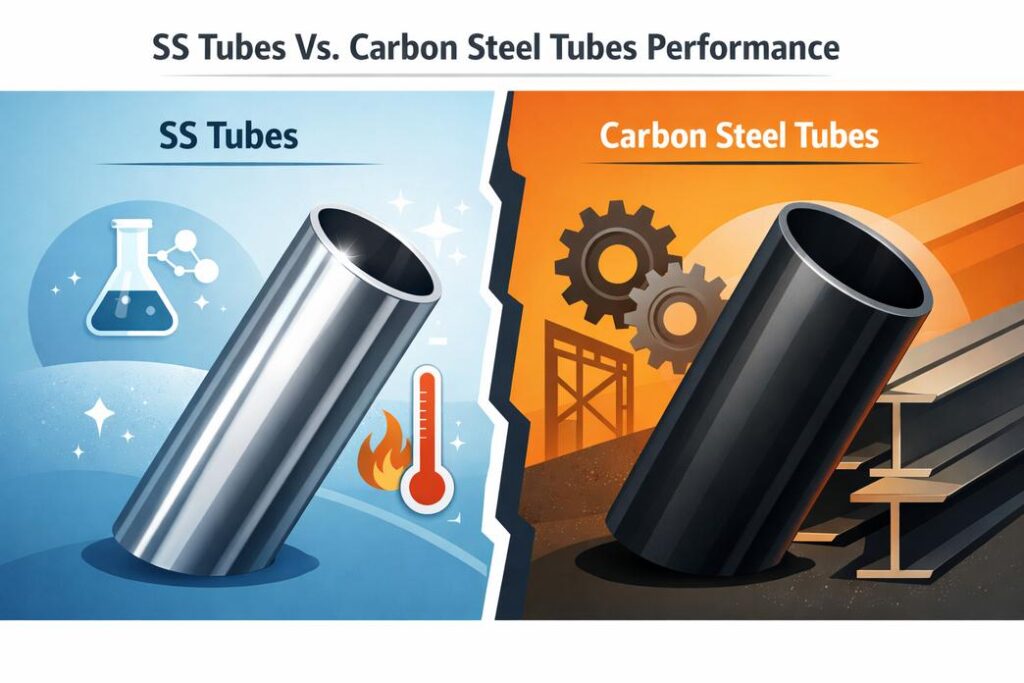
Ss Tubes Vs. Carbon Steel Tubes Performance
In industrial piping, material choice can make or break a project. From ss tubes and fittings to carbon-based options, performance, cost, and durability all play a role in long-term value and daily reliability.
Ss Tubes
When discussing ss tubes and fittings, performance often starts with material science and ends with real-world durability.
- Core Material Foundation
- Stainless steel relies on refined alloy composition, typically chromium and nickel.
- This composition builds natural corrosion resistance, even in chemical or coastal settings.
- Compared with ordinary steel tubes and fittings, oxidation risk drops sharply.
- Mechanical and Thermal Behavior
- Strong high temperature strength keeps shape under heat stress.
- Stable durability supports pressure systems in aerospace and clean process lines.
- Excellent weldability ensures tight joints in stainless steel tubes and fittings assemblies.
- Surface and Hygiene Control
- Smooth surface finish reduces contamination in food or pharma pipelines.
- In instrumentation systems using ss tubes and fittings, clean flow paths matter a lot.
For buyers who want fewer shutdowns and longer service cycles, ss tubes and fittings offer steady output and lower maintenance drama. Brands like yuuhuan hongqian focus on precision tolerances, giving stainless steel tubes and fittings consistent wall thickness and dependable sealing performance. In short, ss tubes and fittings are built for demanding spaces where failure simply isn’t an option.
Carbon Steel Tubes
Carbon-based systems bring a different vibe. Carbon steel is widely chosen for strength-focused builds using steel tubes and fittings.
- Structural Strength Profile
- High tensile strength supports heavy frameworks.
- Reliable mechanical properties handle static loads in buildings and machinery bases.
- Fabrication Advantages
- Good machinability speeds up cutting and threading.
- Solid weldability fits common fabrication shops.
- Surface upgrades through surface treatment improve rust resistance when needed.
- Cost and Application Balance
- Strong cost-effectiveness makes large-scale hydraulic lines affordable.
- For non-corrosive systems, carbon options paired with ss fittings in key joints can balance budget and lifespan.
In projects mixing ss tubes and fittings with carbon steel layouts, smart material pairing keeps costs steady without sacrificing safety. Many contractors sourcing from yuuhuan hongqian combine both materials, matching performance to environment rather than guessing.
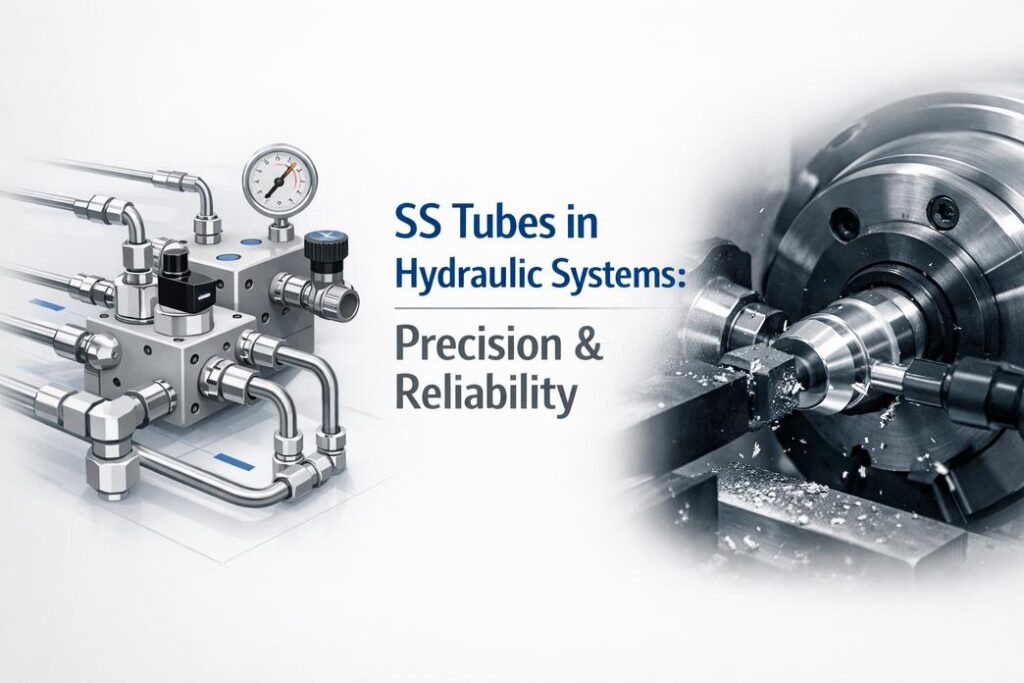
Design Review: Ss Tubes In Hydraulic Systems
Hydraulic performance often comes down to details. From ss tubes and fittings to final inspection, every link in the line matters. Get the basics right, and the whole system runs smooth without drama.
Integration of Manifolds and Valves
In hydraulic layouts, ss tubes and fittings connect tightly with Hydraulic Manifolds and Hydraulic Valves, shaping stable Flow Control and accurate Pressure Regulation. The logic usually unfolds like this:
- Core Assembly Alignment
1.1 Tube Routing
- ss tubes are cut to precise length to avoid stress at connection points.
- Bend radius is matched to manifold port spacing.
1.2 Valve Positioning
- Hydraulic Valves are mounted to reduce vibration transfer.
- Port orientation ensures easy pairing with ss fittings.
- Functional Compatibility
2.1 Seal Interface
- Thread type follows approved standards to maintain Component Compatibility.
- Surface finish supports metal-to-metal sealing.
2.2 Pressure Coordination
- Working pressure of ss tubes and fittings aligns with manifold rating.
- Burst margin is verified for safety.
- System Integration Validation
3.1 Flow Testing
- Confirm steady response under variable loads.
3.2 Leak Inspection
- Torque values are rechecked across all ss tubes and fittings joints.
Brands like yuuhuan hongqian focus on stable integration so stainless steel tubes and fittings stay reliable in real shop conditions, not just on paper.
CNC Precision Machining for Fittings
Performance starts at the machining center. High-quality ss tubes and fittings rely on CNC Machining to meet strict Tolerances and deliver solid sealing.
- Machining Framework
1.1 Material Preparation
- Raw bars are selected based on Material Machinability.
- Chemical composition matches pressure class.
1.2 Turning and Milling
- CNC programs control Dimensional Accuracy within microns.
- Thread cutting follows global Thread Standards.
- Surface and Fit Control
2.1 Surface Finish
- Controlled feed rate ensures smooth sealing faces.
- Roughness is measured before assembly.
2.2 Precision Fittings Check
- Each batch of Precision Fittings is gauge-tested.
- Random samples are pressure-checked with ss tubes.
- Assembly Compatibility
3.1 Tube-to-Fitting Match
- Wall thickness of ss tubes and fittings is verified.
3.2 Torque Simulation
- Repeated tightening confirms stable engagement.
yuuhuan hongqian keeps machining records tight, so stainless steel tubes and fittings deliver consistent performance across projects.
ISO Certified Traceability in Process Piping
When ss tubes and fittings enter critical Process Piping, paperwork matters just as much as metal strength.
- Certification Backbone
1.1 ISO Certification
- Production follows documented procedures.
- Audit trails are maintained.
1.2 Compliance Standards
- Materials meet ASTM and ASME codes.
- Traceability Flow
2.1 Heat Number Tracking
- Each batch of ss tubes and fittings links to mill data.
2.2 Manufacturing Records
- Machining, inspection, and testing logs are archived.
- Quality Confirmation
3.1 Material Certification Review
- Chemical and mechanical properties are cross-checked.
3.2 Quality Assurance Testing
- Hydrostatic and dimensional checks validate readiness for installation.
With yuuhuan hongqian, traceability is clear and easy to verify, so ss tubes, ss fittings, and complete ss tubes and fittings assemblies move into service with confidence.
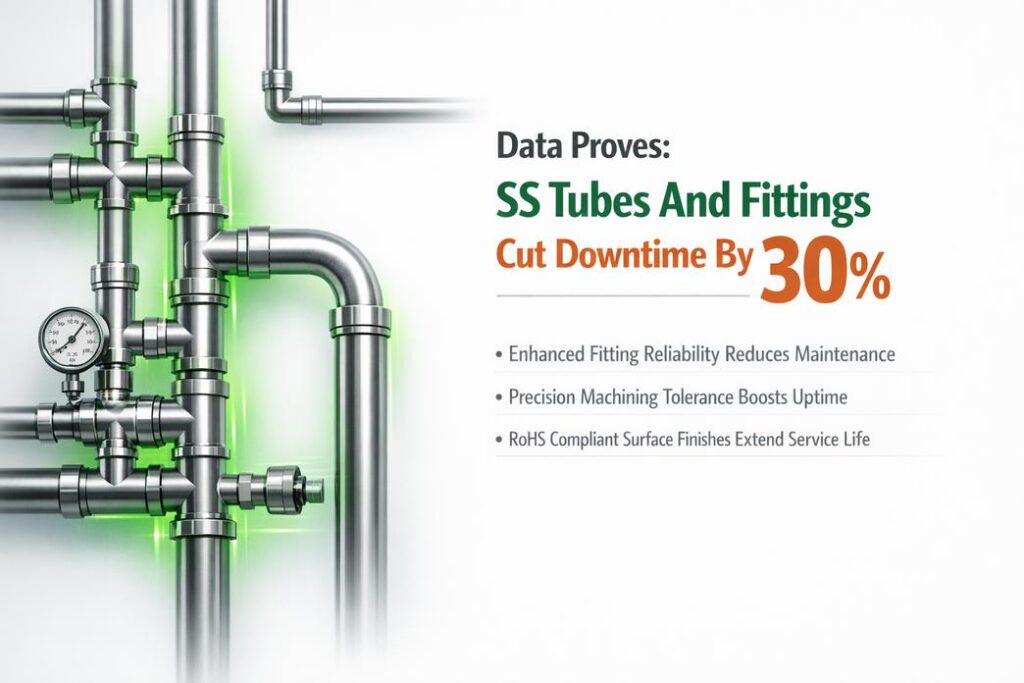
Data Proves: Ss Tubes And Fittings Cut Downtime By 30%
Downtime eats money fast. Plants running hydraulic lines, process piping, or tight instrumentation loops have learned the hard way that weak joints cost hours. Solid ss tubes and fittings change that story. When stainless steel tubes pair with precision fittings, leaks drop, uptime climbs, and maintenance teams finally catch a break.
Enhanced Fitting Reliability Reduces Maintenance
When ss tubes and fittings are built for fitting reliability, the gains show up on the shop floor.
- Core impact on maintenance reduction:
- Fewer callouts for leak checks.
- Lower parts replacement frequency.
- Extended component lifespan in vibration-heavy lines.
- Technical drivers behind leak prevention:
- Controlled ferrule grip on stainless steel tube.
- Stable seal integrity under pressure spikes.
- Tight interface between SS tube and precision fittings.
- Application-level results:
- In hydraulic skids
- Reduced micro-leak formation
- Cleaner equipment bays
- In pneumatic manifolds
- Stable pressure retention
- Less compressor cycling
- In hydraulic skids
With well-matched ss tubes and fittings, stainless steel fittings hold their line. No drama. Just steady performance that keeps maintenance schedules predictable.
Precision Machining Tolerance Boosts Uptime
Tight machining tolerance is not hype; it’s daily survival in aerospace and automotive fluid transfer.
- Accurate bore alignment improves assembly efficiency.
- Clean surface geometry supports precision engineering standards.
- Consistent fit protects system uptime and overall operational performance.
A recent 2025 outlook from MarketsandMarkets noted that fluid handling systems using high-precision stainless steel tube assemblies are seeing measurable reductions in unplanned shutdowns across transport manufacturing.
“Tolerance-controlled stainless assemblies are directly linked to improved production continuity in advanced mobility platforms,” the report highlights (2025 industry analysis).
Pairing ss tubes and fittings with exact machining means fewer sealing surprises. Stainless steel tubes seat correctly. Fittings lock in. The line runs. That’s the win.
RoHS Compliant Surface Finishes Extend Service Life
Surface quality is where ss tubes and fittings quietly prove their worth.
- Compliance foundation:
- Verified RoHS compliance
- Documented material traceability
- Finish options improving corrosion resistance:
- Passivated stainless steel tube surfaces
- Electropolished SS tubes and fittings
- Performance outcomes tied to material durability:
- Slower pitting in chemical process piping
- Reduced contamination in instrumentation loops
- Noticeable service life extension
Within processing plants:
- For high-purity systems
- Smooth surface finish lowers residue buildup
- Cleaning cycles shorten
- For outdoor installations
- Stainless steel fittings resist oxidation
- Tubes and fittings maintain structural stability
When ss tubes and fittings combine compliant finishes with stainless steel strength, downtime drops and replacement cycles stretch out. That’s not hype. It’s solid engineering doing its job.
FAQs about Ss tubes and fittings
What materials are best for ss tubes and fittings in industrial assemblies?
Material choice shapes performance and service life.
1) Stainless Steel (304/316) – preferred for Tubes, Fittings, and Flanges in Hydraulic Systems and Process Piping due to corrosion resistance and ASTM Standards compliance.
2) Carbon Steel – selected for high-strength Connectors and Manifolds where cost control matters.
3) Aluminum Alloy & Brass – lightweight Adapters and Valves for Pneumatic Systems and Automotive use.
4) Titanium & Copper – applied in Aerospace and heat-driven Fluid Transfer lines.
Each option should arrive with Material Certification and Traceability to protect long-term reliability.
How do surface finishes influence corrosion resistance and service life?
Surface finish is more than appearance—it defines durability.
- Polished / Electropolished: smoother surface, reduced contamination risk in Instrumentation and Fluid Transfer.
- Passivated: strengthens Stainless Steel against chemical attack in Process Piping.
- Brushed: balanced finish for visible Automotive components.
- Anodized (Aluminum Alloy) or Powder Coated (Carbon Steel): added protection in moderate environments.
When paired with Precision Machining and controlled Tolerance, the right finish cuts maintenance stops and keeps Hydraulic Systems steady under pressure.
What dimensional and machining factors ensure leak-free performance?
Accuracy decides sealing success.
Key dimensional checks:
- Outer Diameter & Inner Diameter
- Wall Thickness & Length
- Thread Size & Tolerance
Manufacturing methods such as CNC Machining, Turning, Milling, Grinding, and Laser Cutting refine Tubes, Fittings, and Adapters for tight assembly with Valves and Manifolds.
For critical Aerospace or high-pressure Hydraulic Systems, request ISO Certified production, ASME Standards compliance, and RoHS Compliant finishing. Precision at this stage prevents vibration failures and costly downtime later.