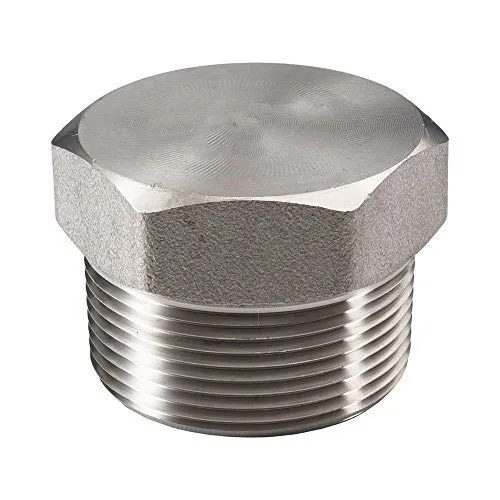
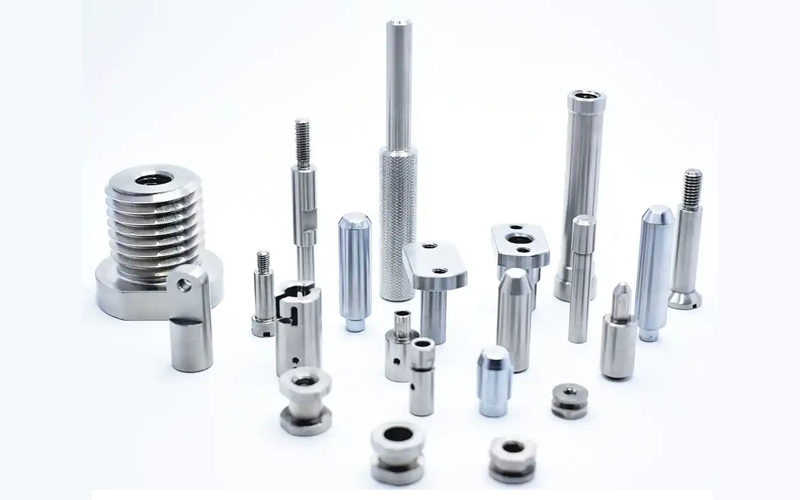
In the competitive landscape of custom pipe fittings and precision machining, the difference between a part that lasts decades and one that fails in weeks lies in the “invisible” process: Heat Treatment.
Whether you are sourcing carbon steel pipe fittings made from low-carbon 08F (AISI 1010) or medium-carbon 45# steel (AISI 1045), understanding the microscopic transformation of these metals is vital. At our precision machining facility, we don’t just cut metal; we engineer its molecular structure to meet your exact performance needs.
1. What is Heat Treatment in Machining?
Heat treatment is a controlled process used to alter the physical and sometimes chemical properties of a material, specifically its microstructure. By heating and cooling the metal under strictly monitored conditions, we improve its performance—increasing hardness, wear resistance, or ductility.
For custom pipe fittings, heat treatment ensures that the component can withstand high pressures, corrosive environments, and mechanical stress without cracking.
2. When Does Your Order Require Heat Treatment?
In a standard machining workflow, the timing of heat treatment is critical:
-
Sawing & Preparation: Our workshop cuts the mold steel or raw bars (like A3 or 1045) to size based on the client’s specifications.
-
Rough Machining: We perform initial grinding or milling to achieve the near-net shape.
-
The Heat Treatment Pivot: Depending on the material (e.g., 45# steel) and the final application, the part is sent for heat treatment.
-
Finish Machining: After the steel’s properties are locked in, we perform final high-precision CNC turning or grinding to meet tolerance requirements.
3. Deep Dive: Core Heat Treatment Processes for Pipe Fittings
I. Quenching
The Process: Heating the steel to an austenitic state followed by rapid cooling (in oil, water, or air) to transform the structure into Martensite—an extremely hard but brittle state.
Why we use it for fittings:
-
Mechanical Boost: It significantly increases the hardness and wear resistance of tools and bearing surfaces within fittings.
-
Specialty Steels: For stainless steel fittings, quenching improves corrosion resistance.
II. Tempering (回火) — Essential for 45# Steel
The Process: Reheating quenched steel to a temperature below the critical point (AC1), holding it, and then cooling it.
The “Must-Know” for 45# Steel: If you are using 45# steel (Medium Carbon) for cold heading, tempering is non-negotiable.
-
Stress Relief: Quenched parts are full of internal stress. Without immediate tempering, 45# steel fittings will deform or crack.
-
Toughness: It balances hardness with ductility, ensuring the fitting isn’t so brittle that it snaps under pressure.
-
Dimensional Stability: Ensures the fitting holds its size during its service life.
III. Nitriding
The Process: A chemical heat treatment where nitrogen atoms are diffused into the surface of the steel at specific temperatures.
The Benefit: It creates an incredibly hard “skin” while the core remains tough. This is perfect for custom pipe fittings that require superior fatigue resistance and high-temperature stability.
IV. Cryogenic Treatment
The Process: Cooling the metal to below -160°C.
The Science: This transforms “Retained Austenite” (which is soft and unstable) into high-strength Martensite.
-
Precision: Standard quenching leaves 8-20% austenite. Cryogenics reduces this to under 2%, preventing irregular expansion and ensuring the highest dimensional accuracy for your fittings.
-
Red Hardness: Significantly increases the life of the metal under high-friction heat.
V. Oxidation / Blackening
The Process: Creating a dense protective film (Fe3O4) on the surface.
The Result: This film acts as an anti-binding agent and provides basic corrosion resistance. It’s a cost-effective way to improve the high-temperature oxidation resistance of carbon steel fittings.
4. Material Selection: Low Carbon vs. Medium Carbon
| Material Grade | Carbon Content | Primary Forming Method | Essential Heat Treatment |
| 08, 08F (1010) | Low (< 0.25%) | Cold Heading (Best) | Often none (Case hardening optional) |
| A3 Steel | Low (< 0.25%) | Red Punching / Cold Heading | General Stress Relief |
| 45# Steel (1045) | Medium (0.45%) | Red Punching / Machining | Quenching + Tempering |
5. FAQ: Expert Solutions for Carbon Steel Fittings
Q1: Can I cold head 45# steel without tempering?
Answer: No. 45# steel is a medium carbon steel. The high stress of cold heading on untreated 45# steel will lead to micro-fractures. You must use a Quenching + Tempering (often called “QT”) cycle to ensure the material is stable enough for high-deformation processes.
Q2: What is the advantage of 08F (AISI 1010) for pipe fittings?
Answer: 08F is a “killed” steel with excellent plasticity. It is the gold standard for cold heading because it can be formed into complex shapes with zero risk of cracking, making it the most cost-effective choice for high-volume custom fittings.
Q3: When should I choose Nitriding over Quenching?
Answer: Choose Nitriding if your pipe fitting faces constant friction or needs to operate in higher temperatures. Nitriding provides a harder surface and better corrosion resistance than standard quenching without the risk of warping the entire part.
Q4: Why is Cryogenic Treatment necessary for high-precision molds?
Answer: If your fitting requires tolerances in the microns, Cryogenic treatment is the only way to eliminate “Retained Austenite,” which can cause the part to grow or shrink slightly over time as the temperature changes.
Conclusion: Engineering the Future of Fittings
Understanding the synergy between material grades like 1010/1045 and heat treatments like Deep Cryogenics or Tempering is what separates a world-class manufacturer from the rest.
Whether you need custom pipe fittings that can handle the cold of the deep sea or the heat of an engine, our integrated machining and heat treatment facility is ready to deliver.
Contact our engineering team today for a technical consultation on your next project.