
In the manufacturing of industrial components such as stainless steel pipe fittings, hydraulic adapters, and threaded connectors, machining cost is always one of the most important factors for both manufacturers and buyers.
For a pipe fitting manufacturer, reducing CNC machining cost does not simply mean lowering prices. It requires experience in material selection, blank type design, machining process planning, and production efficiency.
At our factory, we operate over 60 CNC lathes, along with automatic bar feeding machines, drilling machines, and tapping machines, with a monthly production capacity of around 300,000 pieces. Most custom parts start from 2000 pieces MOQ.
Based on real production experience, there are several key ways to significantly reduce machining cost when producing custom pipe fittings and CNC turning parts.
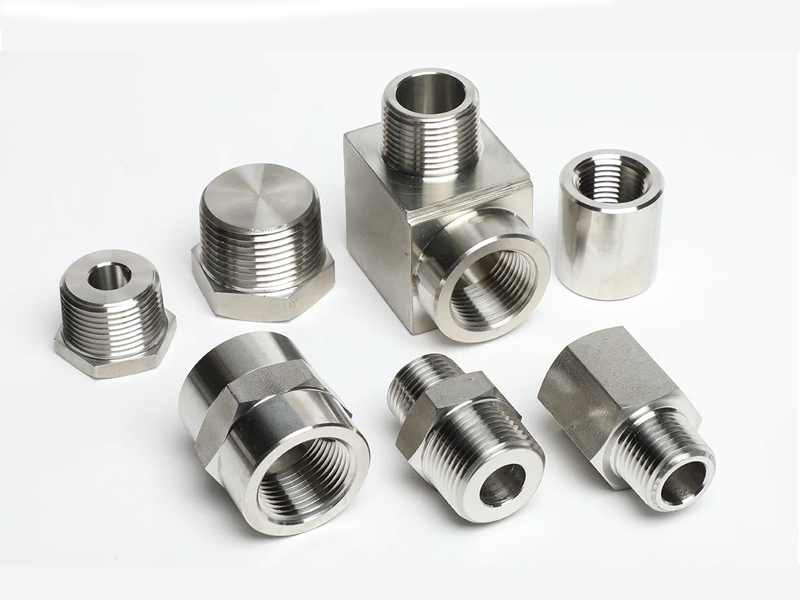
1. Raw Material Selection
Material choice directly affects both raw material cost and machining efficiency.
Common materials used in pipe fittings include:
Stainless Steel
- 201
- 303
- 304
- 316
Carbon Steel
- 1010
- 1020
- 1045
- 40Cr
- 42CrMo
In many projects, selecting the correct material can significantly reduce production cost.
For example, we once worked with a customer who originally specified 316 stainless steel for a fitting component. After reviewing the application conditions, we suggested using 304 stainless steel instead.
This adjustment resulted in several advantages:
- Lower raw material cost
- Reduced tool wear
- Faster machining speed
- Higher overall production efficiency
Since 304 stainless steel is easier to machine than 316, the factory was able to reduce machining time while maintaining the required performance.
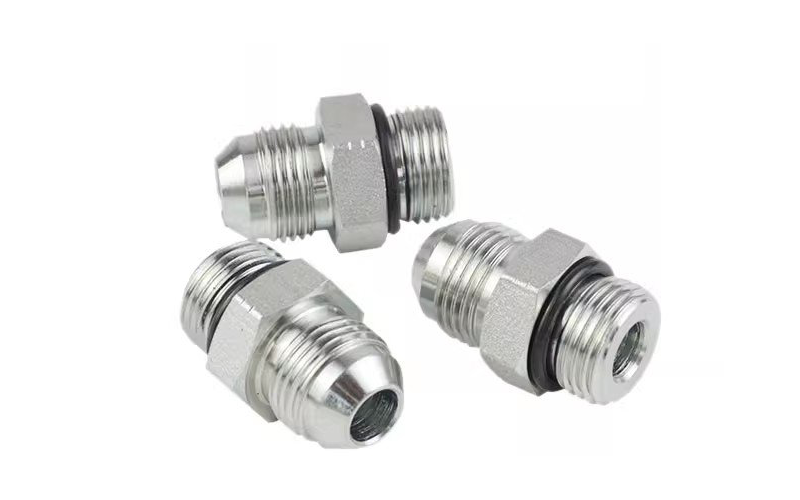
2. Choosing the Right Blank Type
Blank selection plays a major role in machining efficiency.
In custom pipe fitting manufacturing, common blank types include:
| Blank Type | Typical MOQ | Characteristics |
|---|---|---|
| Round bar | 2000 pcs | Flexible for small batch machining |
| Tube material | 2000 pcs | Reduces drilling operations |
| Hot forging | 3000–5000 pcs | Reduces machining allowance |
| Cold heading | High volume | High efficiency for small parts |
| Casting | Usually 5000+ pcs | Suitable for complex structures |
Because our factory mainly produces custom CNC turning parts, we evaluate the drawing first and then determine the most suitable blank type.
Tube Material Advantage
In some cases, using tube material instead of round bar does not reduce raw material cost, but it improves production efficiency.
Since the inner hole already exists, the drilling process can be reduced or eliminated. This allows the machine to complete more parts per day, which effectively increases production output and reduces machining cost per unit.
3. Forging vs Casting
For higher volumes, forging or casting may be better options than bar machining.
Hot Forging
Hot forging typically requires 3000–5000 pieces MOQ because molds must be developed.
Advantages:
- Forging allowance usually around 1.5 mm
- Reduced machining material removal
- Lower machining time
- Lower overall production cost for large quantities
In one case, a customer initially ordered parts produced from round bar machining. When the order volume increased, we redesigned the blank using hot forging.
This change resulted in:
- Reduced blank weight
- Eliminated cutting waste
- Forged internal hole
- Reduced drilling process
Overall, the manufacturing cost was reduced by around 20%.
Casting
Casting is often used for complex pipe fitting structures.
Characteristics:
- Small machining allowance (usually about 1 mm)
- Faster machining process
- Ability to create complex shapes
However, casting also has several challenges:
- Higher mold cost
- Longer production cycle
- Risk of leakage or porosity defects
Because of these risks, cast pipe fittings often require air tightness testing to ensure sealing performance.

4. Thread Machining Methods
Thread accuracy is extremely important for pipe fittings, especially when sealing performance is required.
In our factory, three common thread manufacturing methods are used:
| Thread Method | Advantages | Disadvantages |
|---|---|---|
| CNC thread turning | Highest accuracy | Slower than tapping |
| Tapping | Efficient for internal threads | Concentricity may vary |
| Thread rolling | Fast and low cost | Requires skilled operators |
CNC Thread Turning
This method provides the best control of:
- concentricity
- perpendicularity
- thread accuracy
It is commonly used for high precision fittings.
Tapping
Tapping is widely used for internal threads because it is efficient and suitable for batch production. However, compared with CNC thread turning, it may have slight limitations in alignment accuracy.
Thread Rolling
Thread rolling is mainly used for external threads. It is fast and economical, but it requires experienced operators because improper setup may lead to batch quality problems.
5. Engineering Support and Design Optimization
Another important factor in cost control is early communication with customers.
Since we specialize in custom pipe fittings manufacturing, customers often provide drawings for production.
If we identify potential machining issues, such as:
- unnecessary machining steps
- inefficient blank selection
- material over-specification
our engineering team will communicate with the customer and suggest improvements.
This approach helps prevent large-scale production errors and ensures that the design is suitable for efficient manufacturing.
Applications in Pipe Fittings Manufacturing
These cost optimization strategies are widely used when producing components such as:
- hydraulic adapters
- hose fittings
- instrumentation fittings
- threaded connectors
- custom CNC turning parts
With the combination of material optimization, blank selection, and proper machining methods, manufacturers can significantly reduce machining cost while maintaining product quality.
Our Manufacturing Capabilities
As a stainless steel pipe fittings supplier, our factory focuses on CNC turning production for custom industrial components.
Our capabilities include:
- 60+ CNC lathes
- Automatic bar feeding systems
- Drilling machines
- Tapping machines
Production capacity:
- 300,000 pieces per month
Minimum order quantity:
- 2000 pieces for custom parts
We support manufacturing based on:
- 2D technical drawings
- 3D models
- physical samples
Our materials include both stainless steel and carbon steel, and various surface treatments such as polishing, passivation, plating, and sandblasting.
Conclusion
Reducing CNC machining cost is not simply about lowering prices. It requires deep understanding of materials, blank selection, machining processes, and production planning.
For manufacturers specializing in stainless steel pipe fittings and CNC turning parts, optimizing these factors can significantly improve efficiency while maintaining high product quality.
Through engineering experience and continuous process improvement, pipe fitting manufacturers can deliver reliable components at competitive costs for global industrial applications.