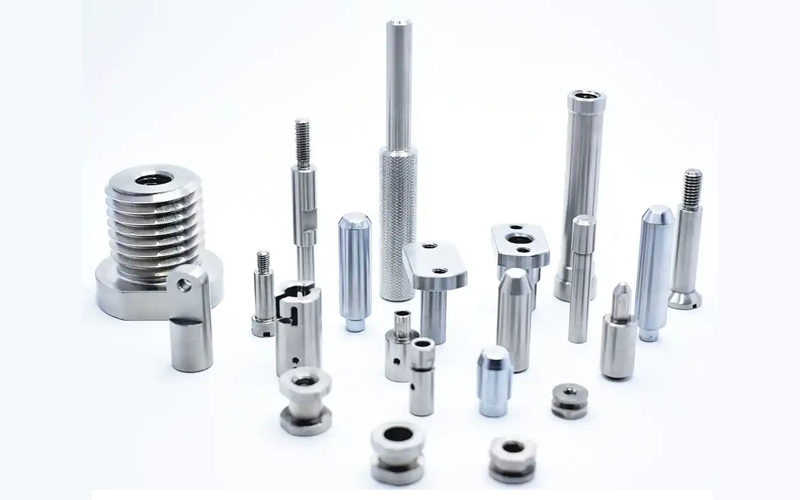
In the vast ecosystem of mechanical design and industrial manufacturing, the hex bolt is often referred to as the “salt of industry.” Whether you are securing a massive steel bridge or assembling precision-engineered CNC machining parts, the performance of a single hex head bolt can determine the ultimate safety and structural integrity of the entire project.
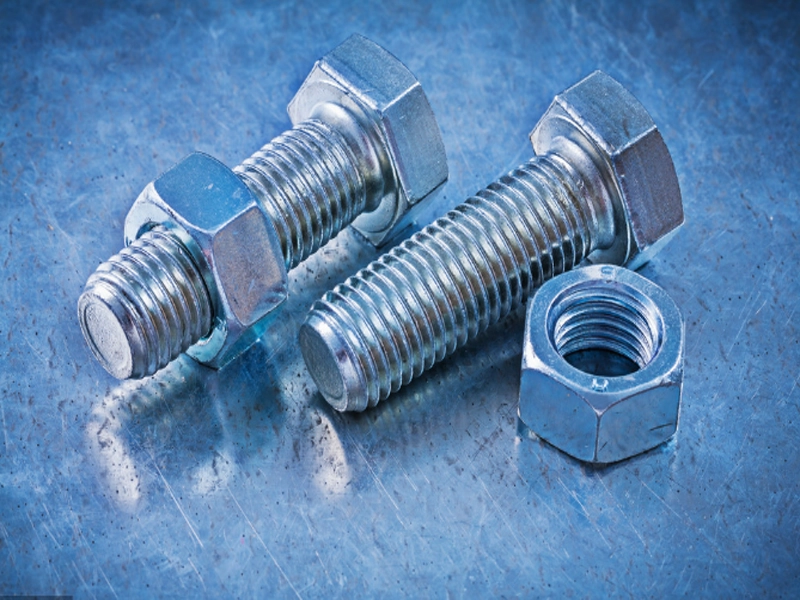
Most professionals recognize the numbers stamped on a bolt head—such as 4.8, 8.8, or 10.9—as indicators of strength. However, few understand the profound material logic, heat treatment processes, and mathematical “Preferred Numbers” that govern these fasteners. This guide provides a deep dive into the world of bolt performance grades to help you make informed engineering decisions.
1. Decoding hex Bolt Performance Grades: The Logic of Strength
A bolt’s performance grade is not a random classification; it is a standardized system consisting of two numbers. These numbers represent the nominal tensile strength and the yield ratio of the material.
Let’s break down the calculations using a standard hex bolt (Grade 4.6) and a high-strength fastener (Grade 10.9) as examples:
Case Study: Grade 4.6 Bolt
-
Nominal Tensile Strength: The first digit (4) multiplied by 100 equals 400 MPa.
-
Yield Ratio: The second digit (6) divided by 10 equals 0.6.
-
Nominal Yield Strength: 400 MPa × 0.6 = 240 MPa.
Case Study: Grade 10.9 High-Strength Bolt
-
Nominal Tensile Strength: 1000 MPa.
-
Yield Ratio: 0.9.
-
Nominal Yield Strength: 1000 MPa × 0.9 = 900 MPa.
This international standardization allows engineers to select fasteners based on calculated stress requirements rather than specific brand names, ensuring global compatibility and safety in steel structures.
2. Material Selection: What Makes a Bolt “High-Strength”?
The “watershed” moment in bolt manufacturing occurs at Grade 8.8. Below this grade, bolts are generally considered “standard”; at 8.8 and above, they are classified as high-strength bolts. The primary difference lies in the chemistry of the steel and the application of heat treatment.
Bolt Grade and Material Correspondence Table
| Performance Grade | Classification | Common Materials (Carbon/Alloy Steel) | Heat Treatment |
| 3.6 / 4.6 | Standard Bolt | Low Carbon Steel (Q195, Q235, 1008, 1010) | None |
| 4.8 / 5.6 | Standard Bolt | Low Carbon Steel (Q235, 1015, 1022) | None |
| 6.8 | Standard Bolt | Medium Carbon Steel (35#, 45#) | None |
| 8.8 | High-Strength | Medium Carbon Steel (35#, 45#) / Low Carbon Alloy (10B21) | Quenched & Tempered |
| 9.8 | High-Strength | Medium Carbon Steel (45#) / Medium Carbon Alloy | Quenched & Tempered |
| 10.9 | High-Strength | Low/Medium Alloy Steel (40Cr, 35CrMo, 42CrMo) | Quenched & Tempered |
| 12.9 | High-Strength | Alloy Steel (35CrMo, 42CrMo, SCM435) | Quenched & Tempered |
The Secret of Quenching and Tempering (Q&T)
Why is Grade 8.8 the turning point? It is because these bolts undergo Quenching and Tempering. While low-carbon steel is ductile, it lacks the raw strength for heavy-duty industrial use. By adding alloying elements like Chromium (Cr), Molybdenum (Mo), or Boron (B) and subjecting the bolt to controlled heating and rapid cooling, the internal molecular structure is transformed. This results in a hex head bolt that possesses both extreme hardness and excellent fatigue resistance.
3. The Mathematical Soul of hex nut: Why M6, M8, M10, and M12?
Have you ever wondered why hex head bolts follow a specific sequence? Why don’t we see M7 or M9 as often? This is the result of the Renard Series (Preferred Numbers)—a concept that defines modern standardization.
The Birth of the Renard Series
In the late 19th century, French engineer Charles Renard sought to standardize the chaotic variety of wire rope sizes used in hot air balloons. He utilized a geometric progression based on the 5th root of 10, creating the R5 series:
1.0, 1.6, 2.5, 4.0, 6.3
This mathematical logic ensures that the steps between sizes are neither too small (which would lead to excessive inventory) nor too large (which would leave gaps in performance). This is why you see hex bolt diameters and even surface roughness values (0.8, 1.6, 3.2) following these specific increments. Understanding this allows engineers to create scalable product lines that are internationally recognized.
4. Maintenance Mastery: How to Remove a Stripped Hex Bolt
Even the highest quality hex head bolts can become damaged due to corrosion or over-torquing. One of the most common challenges in the field is how to remove a stripped hex bolt. When the six sides of the hex head become rounded, standard wrenches lose their grip.
Professional Techniques for Removal:
-
Bolt Extractor Sockets: These specialized tools feature reverse-spiral flutes that “bite” into the damaged hex bolt head as you turn them counter-clockwise.
-
Heat Induction: Applying heat to the nut or the surrounding metal can cause expansion, breaking the bond of rust or thread-locking compounds.
-
The “Sacrificial” Method: In extreme cases, a technician may weld a nut onto the stripped head or use a chisel to create a new notch for leverage.
-
Penetrating Oils: Always start with high-quality penetrating oil and allow it to sit for at least 30 minutes before attempting removal.
5. Global Standards: Metric vs. Imperial
While much of the world utilizes the Metric system (measured in millimeters), the Imperial system (measured in inches) remains prevalent in the United States and parts of Europe.
-
Metric: Identified by “M” (e.g., M8).
-
Imperial: Identified by fractions of an inch (e.g., 3/8″).
-
Key Formula: 1 inch = 25.4 mm.
At Yuhuan Hongqian Machinery, we specialize in both systems, ensuring that our CNC machining parts meet the specific regional requirements of our global clientele.
6. FAQ: Frequently Asked Questions About Hex Bolts
Q1: What is the difference between a hex bolt and a hex cap screw?
Technically, a hex head bolt is designed for use with a nut, while a hex cap screw has a washer face under the head and is designed to be driven into a tapped hole. However, in modern industry, the terms are often used interchangeably.
Q2: Can I replace a Grade 4.8 bolt with a Grade 8.8 bolt?
Generally, yes, as it offers higher strength. However, you must ensure the increased rigidity doesn’t affect the assembly’s vibration absorption. Never go the other way (replacing 8.8 with 4.8) as it leads to catastrophic failure.
Q3: How do I identify a stainless steel bolt?
Stainless steel bolts are usually marked with letters like A2-70 or A4-80. The “A2” refers to 304 stainless steel, and “70” represents a tensile strength of 700 MPa.
Q4: Why is my hex bolt “stripping” so easily?
This is often caused by using the wrong size wrench or using a 12-point socket on a 6-point hex bolt. For high-torque applications, always use a 6-point socket to maximize surface contact.
Conclusion
From the mathematical elegance of the Renard Series to the rugged strength of quenched alloy steel, the humble hex bolt is a masterpiece of engineering. Understanding performance grades and material properties is the first step toward superior mechanical design.
At Yuhuan Hongqian Machinery, we leverage over 10 years of expertise and 80 sets of advanced CNC lathe machines to produce precision hex head bolts and custom turning parts. Whether you require standard carbon steel or high-strength alloy fasteners, our factory is committed to delivering quality that meets international standards.
Are you looking for a reliable partner for your next CNC machining project? Contact us today for a professional consultation and high-quality hex bolt solutions.