How to Choose the Right CNC Turned Parts Manufacturer
In modern manufacturing, precision and efficiency are paramount. One of the most versatile and widely used methods for creating metal and plastic components is CNC turning. This technology enables manufacturers to produce high-quality, consistent, and durable parts for industries ranging from automotive to aerospace, medical devices, and industrial machinery.
Whether you’re a designer, engineer, or procurement manager, understanding CNC turning parts and knowing how to choose a reliable CNC turned parts manufacturer can make a significant difference in product quality, lead times, and overall production cost.
What Are CNC Turning Parts?
CNC turning parts are components created using a Computer Numerical Control (CNC) lathe. In this process, a workpiece—usually cylindrical—is rotated while a cutting tool moves along one or more axes to remove material and shape the part. This method is ideal for producing round, symmetrical components with tight tolerances and consistent dimensions.
Common materials for CNC turning include:
-
Carbon steel for high-strength industrial components
-
Aluminum for lightweight parts with excellent corrosion resistance
-
Brass for electrical and decorative components
-
Stainless steel for corrosion-resistant, high-durability applications
The versatility of CNC turning allows manufacturers to produce both standard and custom components, from simple bushings to complex shafts with multiple secondary features.
How CNC Turning Works
CNC turning uses automated lathes controlled by computer programs. The process begins by securing the raw material—carbon steel, aluminum, brass, or stainless steel—in the lathe chuck. The computer-controlled cutting tool then removes material along the axis of rotation, following the programmed design.
Modern CNC turning centers often feature live tooling, allowing secondary operations such as:
-
Drilling
-
Threading
-
Milling
-
Chamfering
-
Knurling
This integration reduces the need for multiple setups, improves efficiency, and ensures tighter tolerances across the finished parts.
Types of CNC Turned Parts
CNC turning is particularly well-suited for rotationally symmetric components. Common examples include:
1. Shafts and Axial Components
These are critical in machinery, automotive, and aerospace applications. CNC turning ensures uniform diameter, precise tolerances, and consistent surface finish, whether made from carbon steel, aluminum, brass, or stainless steel.
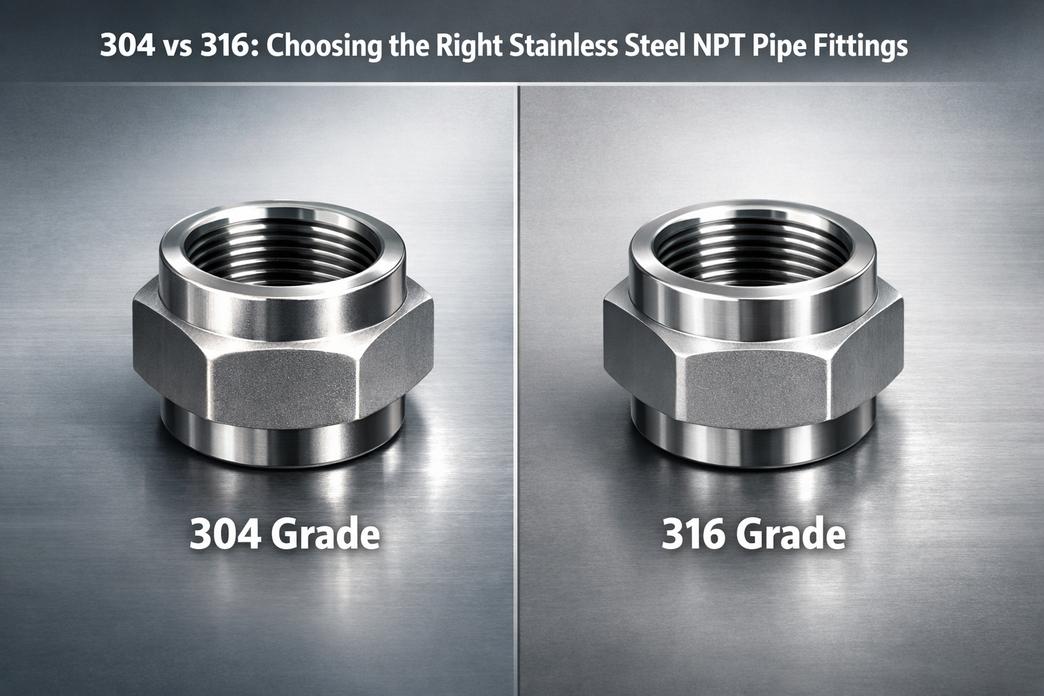
2. Bushings, bolt ,nut,insert ,plug ,elbow connector , tee connector,bulkhead fittings,pipe joint,quick connector,hydraulic fitting.
These small components are used to reduce friction, maintain alignment, or provide spacing in assemblies. CNC turning delivers exact dimensions, even in high-volume production, and works with all common materials, including stainless steel and brass.
3. Custom Industrial Components
CNC turning can also produce specialized parts like pulleys, flanges, couplings, pins, and nozzles. Live tooling and secondary operations allow for holes, threads, and grooves to be integrated directly into the turning process, for carbon steel, aluminum, brass, or stainless steel parts.
Industries benefiting from CNC turned parts include:
-
Automotive
-
Aerospace
-
Medical devices
-
Industrial machinery
-
Electronics and consumer goods
By leveraging CNC turning, manufacturers can produce parts that meet strict dimensional, functional, and aesthetic requirements.
Advantages of CNC Turning Parts
Choosing CNC turned parts over manually machined components or other manufacturing methods offers several advantages:
-
High Precision and Consistency
CNC lathes operate under strict computer control, ensuring consistent dimensions and tolerances across batches, regardless of whether the material is carbon steel, aluminum, brass, or stainless steel. -
Efficiency and Speed
CNC turning reduces setup time and can produce multiple identical components with minimal manual intervention. -
Material Versatility
CNC turning supports metals and plastics, allowing production of carbon steel shafts, aluminum spacers, brass bushings, and stainless steel components for a variety of applications. -
Integrated Secondary Operations
Modern CNC lathes can perform drilling, threading, and milling in a single setup, reducing cost and turnaround time. -
Scalability
Whether producing a small batch of prototypes or large-scale production runs, CNC turning offers flexibility without compromising quality.
Choosing the Right CNC Turned Parts Manufacturer
Selecting a reliable CNC turned parts manufacturer is crucial for achieving consistent quality and meeting production deadlines. Key factors to consider include:
1. Equipment and Capabilities
-
Single or multi-axis CNC lathes
-
Live tooling for secondary operations
-
Automatic screw machines for high-volume production
2. Material Expertise
-
Capability to handle carbon steel, aluminum, brass, and stainless steel
-
Knowledge of material-specific machining requirements
3. Secondary Operations
-
Threading, broaching, reaming, deburring, and surface finishing
-
Integration of secondary processes reduces assembly time and cost
4. Tolerance and Quality Control
-
Ability to maintain tight tolerances (often ±0.001–0.005”)
-
ISO certifications or other quality management systems
5. Production Volume Flexibility
-
Small-batch custom components
-
Large-scale production runs
6. Technical Support and Communication
-
Experienced engineering team to review designs
-
Consultation on manufacturability, material selection, and post-processing
By carefully evaluating these factors, companies can ensure their CNC turned parts meet functional, aesthetic, and regulatory standards.
Applications Across Industries
CNC turned parts are indispensable in modern manufacturing:
-
Automotive: Shafts, bushings, fasteners, couplings
-
Aerospace: High-precision components for engines and avionics
-
Medical: Surgical instruments, prosthetic components, diagnostic equipment
-
Industrial Machinery: Rollers, pins, spacers, custom assemblies
-
Consumer Electronics: Small metal or plastic connectors, housings
Using carbon steel, aluminum, brass, and stainless steel allows manufacturers to tailor components to the specific strength, weight, and corrosion resistance required for each industry.
Best Practices for Designing CNC Turning Parts
To optimize CNC turning performance:
-
Design for Symmetry
Rotationally symmetric designs reduce machining complexity and cost. -
Minimize Complex Non-Cylindrical Features
Avoid excessive secondary milling operations; instead, integrate features that can be performed on the lathe. -
Consider Material and Surface Treatment
Select materials (carbon steel, aluminum, brass, stainless steel) and post-processing like plating, anodizing, or heat treatment. -
Plan for Mechanical Strength
Ensure part geometry supports the required load without compromising the integrity of thin walls or critical features. -
Collaborate with Your Manufacturer
Leverage the expertise of your CNC turned parts manufacturer to optimize design, material selection, and production efficiency.
Conclusion
CNC turning parts offer unmatched precision, efficiency, and versatility for a wide range of industries. Using materials such as carbon steel, aluminum, brass, and stainless steel ensures that parts meet specific strength, weight, and corrosion requirements.
By understanding CNC turning capabilities and carefully selecting a CNC turned parts manufacturer, businesses can produce high-quality components that meet stringent performance standards, whether for small prototypes or large-scale production runs.