Sourcing cnc precision machining parts for large-scale production can feel like ordering a thousand identical lattes during the morning rush—one slip, and the whole line backs up. You’re not just buying metal; you’re buying consistency, lead time, and peace of mind. When tolerances drift or materials vary, costs spike and deadlines wobble. That’s the stuff that keeps procurement managers up at 2 a.m., staring at spreadsheets like they owe them money.
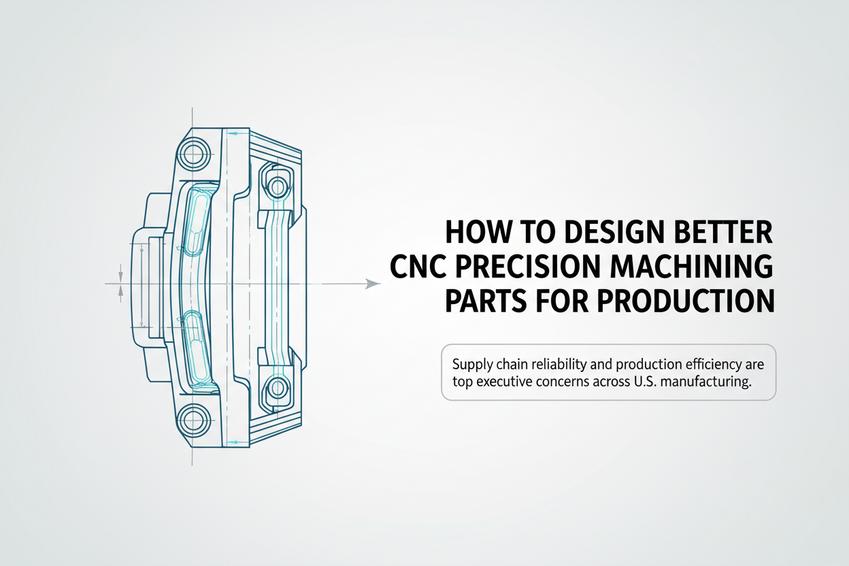
Deloitte’s 2024 Manufacturing Industry Outlook notes that supply chain reliability and production efficiency remain top executive concerns across U.S. manufacturing.
Here’s the plot twist: most production headaches start at the design stage. Smart material choices, realistic tolerances, and clear inspection standards turn chaos into clockwork. Get that right, and scaling up stops feeling like a gamble—and starts running like a well-tuned machine shop on a good day.
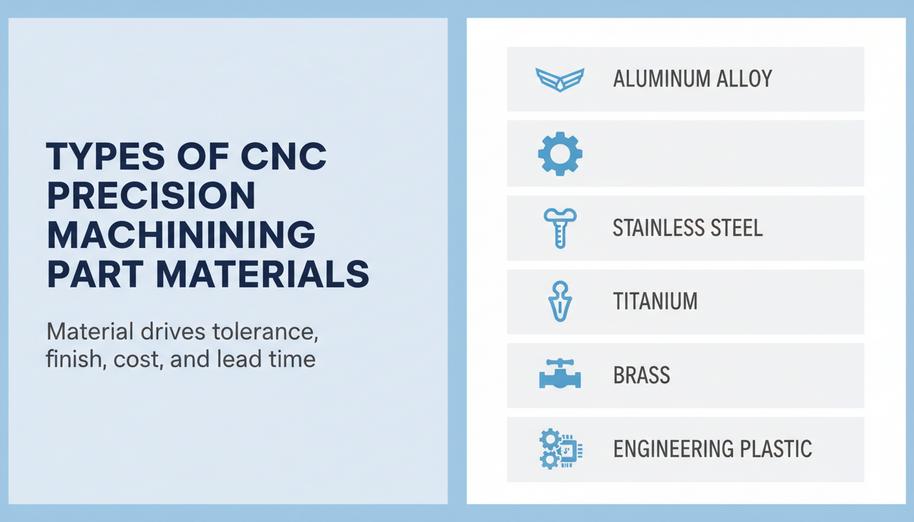
Types Of CNC Precision Machining Parts Materials
Choosing materials for cnc precision machining parts is never random. Material drives tolerance, finish, cost, and lead time. From aerospace to robotics, the right CNC precision parts material keeps machining stable and production smooth. Let’s break down what really works in cnc precision machining parts.
Aluminum Alloy for Lightweight, High-Volume Production
When high-volume cnc precision machining parts need speed and weight reduction, aluminum dominates.
- Core Grades
- Aluminum 6061
- Excellent Machinability
- Ideal for structural cnc precision parts
- Supports clean Surface Finish
- Aluminum 7075
- Higher strength after Heat Treatment
- Used in aerospace machining components
- Aluminum 6061
- Performance Factors
- Fast chip removal during precision machining
- Stable dimensional control
- Strong Anodizing compatibility
- Production Advantages
- Shorter cycle time
- Lower tool wear
- Efficient weight reduction in CNC machined components
For scalable cnc precision machining parts, aluminum keeps costs steady while maintaining tight tolerances.
Stainless Steel: Corrosion Resistance in Industrial Machinery
Stainless steel cnc precision machining parts shine in tough shops and chemical plants.
Key materials include Stainless Steel 304 and Stainless Steel 316, both known for high Corrosion Resistance and solid Tensile Strength. While 304 offers great Weldability, 316 steps up with stronger Chemical Resistance in marine or acidic settings.
• Benefits for machining parts:
- Increased Surface Hardness after finishing
- Stable grinding performance
- Long service life
In industrial CNC precision parts, durability beats speed. Machining may be slower than aluminum, yet the payoff is reliability in harsh environments.
Titanium’s Role in Aerospace and Medical Devices
Titanium cnc precision machining parts demand patience but reward performance.
- Material Foundation
- Titanium Grade 5
- Exceptional High Strength-to-Weight Ratio
- Strong Temperature Resistance
- High Fatigue Strength
- Titanium Grade 5
- Aerospace Applications
- Structural brackets
- Engine components
- Lightweight fasteners
- Medical Applications
- Surgical tools
- Medical Implants requiring certified Biocompatibility
- Long-term corrosion stability
According to a 2025 MarketsandMarkets aerospace materials outlook, titanium demand continues rising due to lightweight aircraft programs and medical implant growth, driven by durability and biocompatibility needs.
For complex cnc precision machining parts, multi-axis machining controls deformation and protects surface integrity. It’s not cheap, but performance speaks for itself.
Brass Components for Electronics and Robotics
Brass makes small cnc precision machining parts feel easy.
With strong Electrical Conductivity and Thermal Conductivity, Brass Alloy supports connectors and terminals. Its Ease of Machining allows tight internal features and fine threads without drama.
- High-speed turning stability
- Clean drilling results
- Smooth surface finish for visible CNC machined parts
Wear areas benefit from natural Wear Resistance, while moderate Corrosion Resistance keeps connectors reliable. For robotics and electronics machining components, brass keeps production moving fast and clean.
Engineering Plastic Parts: From Prototyping to Production
Engineering plastics reshape how cnc precision machining parts enter the market.
- Core Materials
- Acetal (POM) → strong Dimensional Stability
- Nylon (PA) → excellent Wear Resistance
- Polycarbonate (PC) → impact durability
- PTFE → superior Chemical Resistance
- Functional Strengths
- Reliable Electrical Insulation
- Lightweight structure
- Corrosion-free operation
| Material | Density (g/cm³) | Tensile Strength (MPa) | Temp Resistance (°C) |
|---|---|---|---|
| POM | 1.41 | 65 | 100 |
| Nylon PA | 1.15 | 75 | 120 |
| PC | 1.20 | 70 | 115 |
| PTFE | 2.20 | 25 | 260 |
Plastic cnc precision machining parts reduce weight and noise in electronics and medical devices. For brands like yuuhuan hongqian, combining plastic and metal precision machining solutions keeps production flexible.
From aluminum to titanium, from brass to advanced polymers, yuuhuan hongqian supports scalable cnc precision machining parts built for real-world performance.
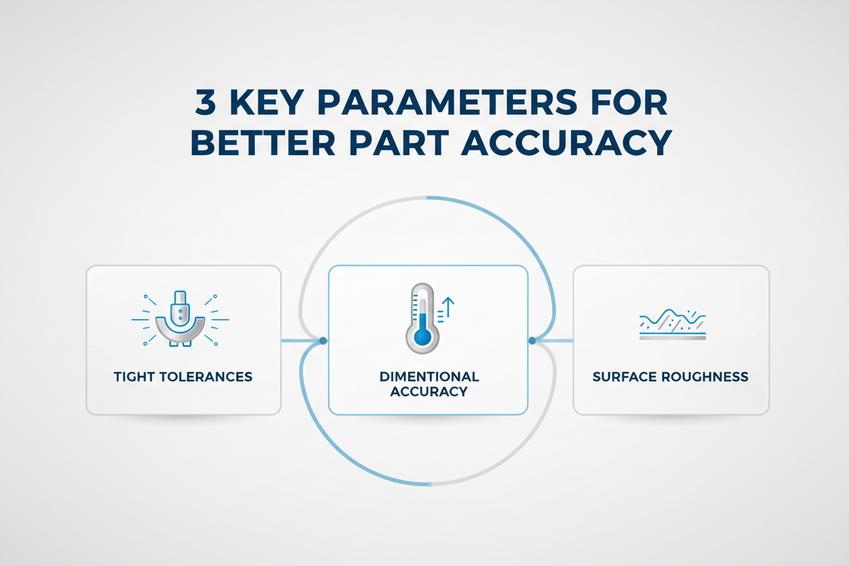
3 Key Parameters For Better Part Accuracy
Getting cnc precision machining parts right isn’t just about fancy machines. It’s about controlling the small stuff—movement, heat, and finish. When cnc, precision, machining, and parts come together with discipline, part accuracy improves fast. Below are three core drivers behind stable CNC precision machining parts and high-end precision machined components.
Tight Tolerances and Multi-Axis Machining Strategies
- Core Objective: Achieve tight tolerances
- Define acceptable micron range for part accuracy
- Align CAD data with real-world design for manufacturability
- Machine Approach: Multi-axis machining
- 3-axis for standard geometries
- 4-axis for indexed features
- 5-axis for complex contours
- Reduced repositioning
- Lower stack-up error
- Process Controls
- Refined toolpath optimization
- Smoother transitions
- Controlled engagement angles
- Stable fixture design
- Minimized vibration
- Repeatable clamping force
- Adaptive machining strategy
- Balanced load
- Consistent chip evacuation
- Refined toolpath optimization
This structure keeps cnc precision machining parts consistent, even in thin-wall aluminum or hardened steel parts machining jobs.
Dimensional Accuracy Through Rigidity and Temperature Control
- Mechanical Foundation
- High machine rigidity
- Reinforced frame
- Short tool overhang
- Managed cutting forces
- Correct tool geometry
- Balanced depth of cut
- High machine rigidity
- Thermal Management
- Active temperature control
- Coolant regulation
- Climate-stable workshop
- Enhanced thermal stability
- Warm-up cycles
- Real-time compensation
- Active temperature control
- Parameter Alignment
- Tuned spindle speed
- Optimized feed rate
- Material-aware setup based on workpiece material
Dimensional accuracy in cnc precision machining parts depends on this discipline. Even small thermal shifts can throw precision machining parts off by microns.
Surface Roughness Measurement for Optimal Finish Quality
- Target: Controlled surface roughness
- Define Ra for aerospace or medical precision parts
- Match finish quality to function
- Measurement Techniques
- Contact profilometer
- Optical metrology systems
- 3D mapping
- Surface deviation tracking
- Process Influence
- Monitor tool wear
- Adjust cutting parameters
- Protect surface integrity
When surface finish and surface finish specs align with inspection data, CNC precision machining parts perform better, last longer, and simply feel right in the hand.
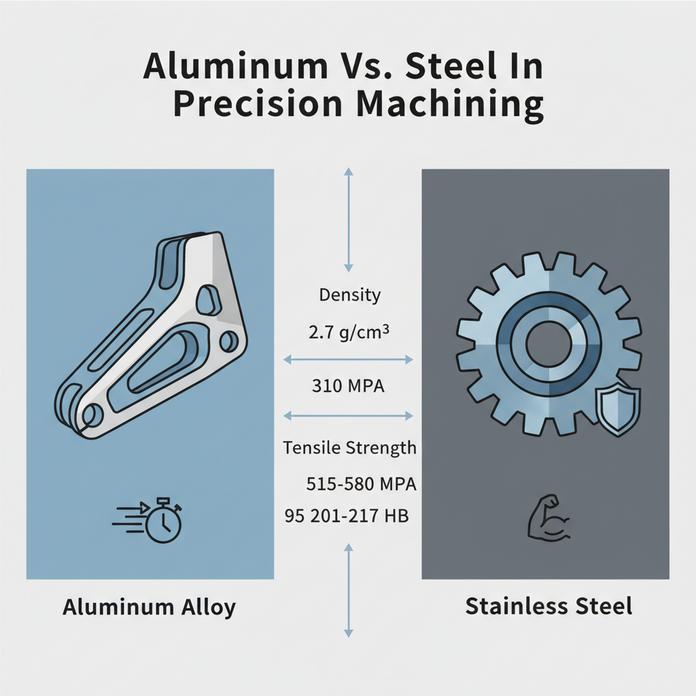
Aluminum Vs. Steel In Precision Machining
Choosing materials for cnc precision machining parts is not just technical talk—it affects cost, speed, and how long a product survives in the field. From lightweight housings to high-load shafts, material choice shapes every cnc precision part and every custom machining part produced today.
Aluminum Alloy
When producing cnc precision machining parts, aluminum alloy stands out for speed and efficiency.
- Core advantages
- lightweight structure
- Lower spindle load
- Faster feed rates
- Excellent machinability
- Reduced tool wear
- Stable chip control
- Strong corrosion resistance
- Ideal for anodizing finishes
- lightweight structure
- Functional properties
- High thermal conductivity
- Reliable electrical conductivity
- Smooth surface ready for anodizing
In practical cnc machining services:
- Raw aluminum billet is cut.
- High-speed milling shapes thin walls.
- Finishing improves surface quality.
- Anodizing boosts durability.
At yuuhuan hongqian, aluminum cnc precision machining parts are widely used in electronics housings and automation frames. The lighter weight keeps shipping costs down, and the clean finish helps precision machining parts meet tight visual standards. For brands chasing fast production without sacrificing accuracy, aluminum simply makes life easier.
Stainless Steel
Stainless steel brings serious strength, long-term durability, and top-tier corrosion resistance. It handles pressure, friction, and heat without flinching. That makes it perfect for industrial cnc precision machining parts exposed to stress.
Key performance snapshot for precision machined components:
| Property | Aluminum Alloy | Stainless Steel 304 | Stainless Steel 316 | Carbon Steel | Unit |
|---|---|---|---|---|---|
| Density | 2.7 | 8.0 | 8.0 | 7.8 | g/cm³ |
| Tensile Strength | 310 | 515 | 580 | 450 | MPa |
| Hardness | 95 | 201 | 217 | 170 | HB |
| Thermal Conductivity | 167 | 16 | 14 | 54 | W/m·K |
| Corrosion Rating (1–5) | 4 | 4 | 5 | 2 | — |
Higher hardness improves wear resistance, while strong high-temperature performance supports grinding and turning operations.
In real production:
- Tooling must be tougher.
- Cutting speeds are lower.
- Coolant control becomes critical.
For heavy-duty cnc precision machining parts in pumps, valves, or mechanical assemblies, yuuhuan hongqian delivers stainless solutions that hold tight tolerances and pass strict passivation checks. When failure is not an option, stainless steel precision machining parts earn their keep.
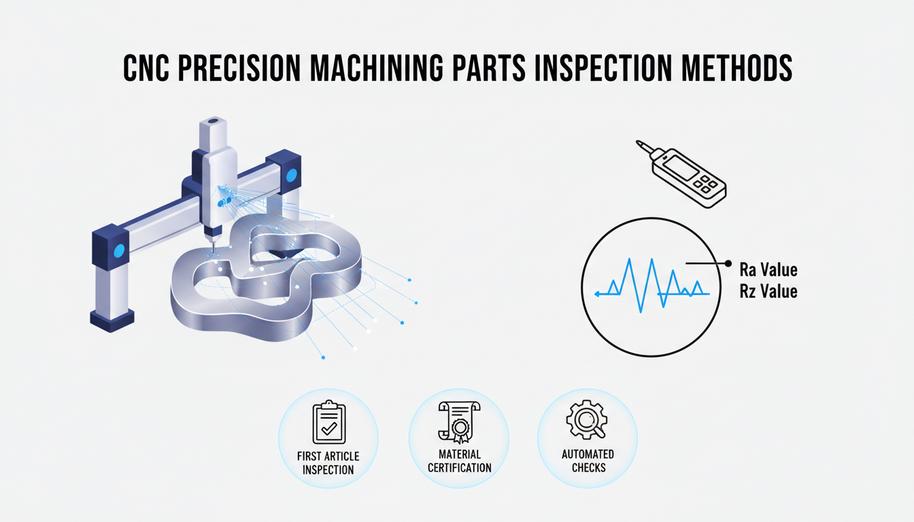
CNC Precision Machining Parts Inspection Methods
Quality control for cnc precision machining parts is not just paperwork; it is what keeps CNC precision parts reliable in real-world use. From aerospace brackets to medical housings, precision machining parts must meet tight specs. Solid inspection methods protect performance, safety, and trust in every batch of CNC machining components.
CMM Inspection for Complex Shapes and Small Features
When cnc precision machining parts involve tight curves or micro slots, a Coordinate Measuring Machine becomes essential.
- Core verification focus:
- Complex Geometry alignment
- Small Features positioning
- Internal cavity mapping
- System setup
1.1 Probe Calibration ensures stable contact points.
1.2 Environmental control supports Measurement Accuracy.
- Data acquisition
2.1 Multi-axis scanning captures dense point clouds.
2.2 Results sync with CAD Model Comparison software.
- Evaluation
3.1 Data Analysis highlights deviation trends.
3.2 Reports confirm tolerance compliance for CNC precision parts.
This approach keeps cnc precision machining parts consistent, even with tricky contours.
Surface Roughness Measurement after Polishing and Sandblasting
After polishing or sandblasting, surface quality can make or break cnc precision machining parts.
A Profilometer checks Surface Roughness by tracking Ra Value and Rz Value.
- Polishing improves shine but must protect Surface Integrity.
- Sandblasting creates texture while controlling final Surface Finish.
Quick checklist:
- Clean part surface.
- Calibrate the gauge.
- Measure multiple paths.
Smooth finishes improve adhesion and durability in CNC machining components, especially in electronics housings.
First Article Inspection in High Volume Production
Before scaling up cnc precision machining parts, First Article Inspection sets the tone.
- Review the Quality Control Plan.
- Conduct full Dimensional Verification.
- Perform Functional Testing where needed.
- Confirm Acceptance Criteria.
- Complete formal Documentation.
This process locks in stable production for precision machined parts and reduces surprises once high volume production kicks off.
Material Certification and Traceability Controls
Material strength matters just as much as dimensions in cnc precision machining parts.
- Verification elements:
- Material Certification review
- Certificate of Analysis matching
- Confirmed Material Properties
Traceability flow:
- Incoming Raw Material logged with Batch Number.
- Records tied to machining orders.
- Periodic Supplier Audit maintains control.
If a CNC precision part ever faces a field issue, traceability quickly tracks the source.
Automated Dimensional Accuracy Checks
Modern shops rely on Automated Inspection to maintain Dimensional Accuracy without slowing production.
• In-process probing verifies features mid-cycle.
• Vision Systems scan profiles fast.
• Laser Scanning captures freeform surfaces.
• Smart Gauging tools log real-time results.
With In-process Measurement feeding Statistical Process Control, trends are caught early. Scrap drops. Output stays steady. And cnc precision machining parts keep hitting spec, shift after shift.
FAQs about Cnc Precision Machining Parts
What materials work best for cnc precision machining parts in demanding industries?
Material choice decides performance, cost, and lifespan—especially in Aerospace, Medical Devices, and Automotive projects.
- Aluminum Alloy: Ideal for Thin Walls and Complex Shapes; supports fast Milling and Turning, often finished with Anodizing for corrosion resistance.
- Stainless Steel & Carbon Steel: Trusted in Industrial Machinery; suitable for Grinding and Drilling, strengthened by Passivation or Powder Coating.
- Titanium: Critical in Aerospace and Medical Devices where strength meets low weight; Multi-axis Machining handles intricate contours.
- Brass: Favored in Electronics and Robotics for precise Small Features and smooth Drilling.
- Engineering Plastic: Excellent for Prototyping to Production, especially lightweight Internal Features.
The right material balances machinability, durability, and real-world stress.
How can tight tolerances and dimensional accuracy be maintained in high volume production?
Consistency under pressure defines true cnc precision machining parts.
Production stability relies on three core controls:
- Automated Machining + Capacity Planning – Stable cycle times reduce variation during High Volume Production.
- Precision Processes – Milling, Turning, EDM, and Wire Cutting selected according to geometry and tolerance class.
- Environmental Control – Temperature stability protects Dimensional Accuracy in Tight Tolerances work.
Quality verification forms the safety net:
- CMM Inspection for Complex Shapes
- Surface Roughness Measurement after Polishing or Sandblasting
- First Article Inspection before batch release
- Traceability and Material Certification for regulated industries
Under these controls, repeatability becomes predictable—not hopeful.
Which surface finishes improve durability and functional performance?
Surface treatment is where machining meets application reality.
For corrosion resistance and appearance:
- Anodizing on Aluminum Alloy
- Passivation for Stainless Steel
- Electroless Nickel Plating on precision Internal Features
For wear protection or aesthetics:
- Powder Coating in Automotive parts
- Polishing for Medical Devices
- Sandblasting to prepare surfaces for assembly
Finish selection depends on environment, friction, and industry demands. In cnc precision machining parts, the surface often decides how long the part survives—and how confidently it performs.
Ready to Scale Your Production? Sourcing precision parts shouldn’t be a gamble. At Yuhuan Hongqian, we turn complex designs into high-performance components with clockwork predictability.
Stop settling for “good enough.” Contact our engineering team today for a free DFM review and a precision-matched quote.