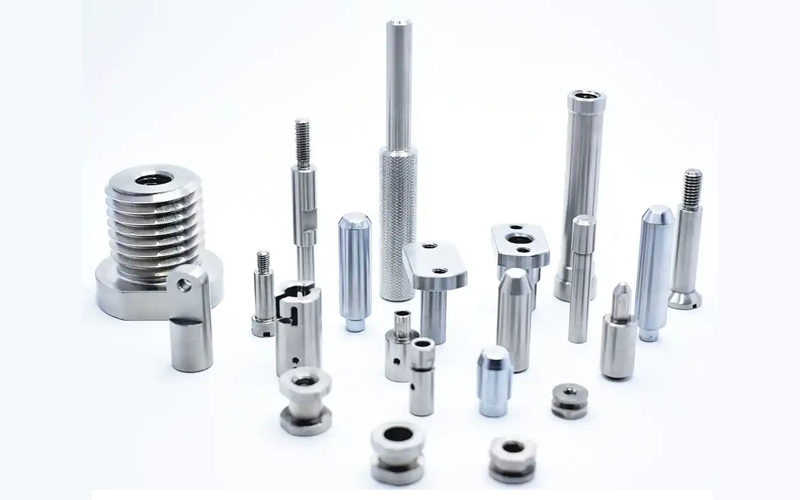
When manufacturing stainless steel pipe fittings, achieving a good surface finish is more difficult than many people expect. Stainless steel materials are prone to work hardening, heat buildup, and material adhesion during machining, which directly affects the final surface quality.
In practical production, even without polishing, a stable CNC lathe process can achieve a surface roughness of Ra 1.0 μm or better. For many stainless steel fittings, this level of finish is already sufficient for functional and assembly requirements.
However, reaching consistent surface quality is not only about machine capability—it depends on several key factors during machining.

4 Key Factors Affecting Surface Finish
1. Tool Selection (Critical Factor)
Tooling plays the most important role in determining the surface finish of stainless steel pipe fittings.
A properly selected cutting tool can reduce material tearing and improve chip control, while an unsuitable tool often leads to rough surfaces and instability.
2. Cutting Parameters
Cutting parameters directly influence how smooth the surface will be.
Feed rate, cutting speed, and depth of cut must be properly matched to avoid visible tool marks or surface irregularities on stainless steel fittings.
3. Cooling and Lubrication
During machining, stainless steel tends to generate significant heat.
Effective cooling and lubrication help reduce friction, control temperature, and improve the overall surface finish of stainless steel pipe fittings.
4. Machine Stability and Rigidity
Machine condition is another essential factor.
Insufficient rigidity or vibration can negatively affect the machining process, resulting in inconsistent surface quality, especially for precision stainless steel fittings.
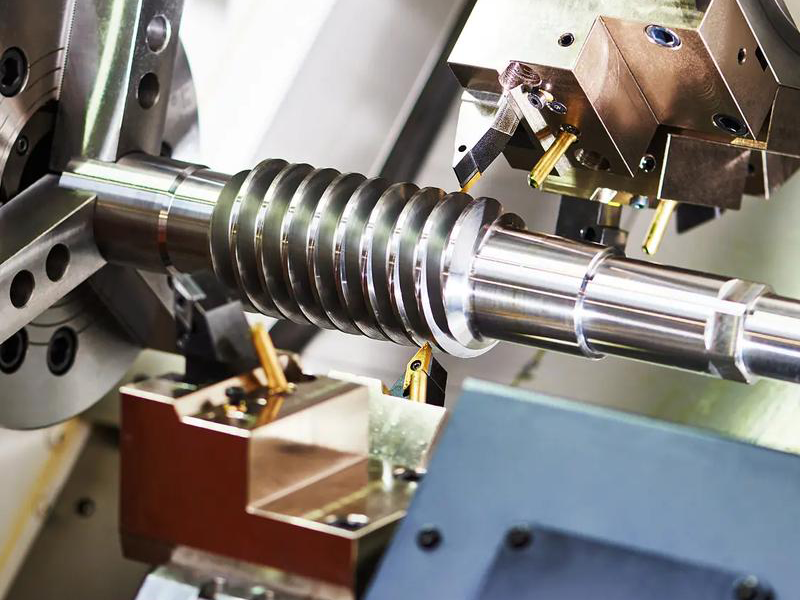
How to Improve Surface Finish (Adjustments & Trade-offs) ?
In real machining of stainless steel pipe fittings, improving surface finish often involves parameter adjustments. However, every improvement comes with potential trade-offs.
| Factor | Improvement Method | Potential Risk |
|---|---|---|
| Tool Nose Radius | Increase nose radius | May cause machine vibration (chatter) |
| Cutting Speed | Increase cutting speed | Reduces tool life |
| Feed Rate | Decrease feed rate | May lead to work hardening and friction |
| Cutting Edge | Use sharper cutting edge | Weakens edge strength, risk of chipping |
Key Insight
For stainless steel fittings, surface finish optimization is not about maximizing a single parameter, but balancing all factors.
Over-optimization in one direction often introduces new problems in another.
Extended Surface Optimization Methods
While the factors above cover the fundamentals of achieving surface finish during machining, in many applications of stainless steel pipe fittings, these conditions alone are not enough to meet higher surface requirements.
To further improve surface roughness beyond standard CNC turning, additional surface finishing processes are commonly applied. These methods allow manufacturers to achieve lower Ra values, improve corrosion resistance, and meet stricter application standards.
The most commonly used advanced methods include:
-
Rolling (burnishing)
-
Mechanical polishing
-
Electropolishing
Each of these processes provides a different level of surface improvement, but also introduces its own technical limitations and trade-offs.
1. Rolling (Burnishing): Direct Improvement During Machining
Rolling, also known as burnishing, is one of the most efficient ways to improve surface finish directly on the CNC machine.
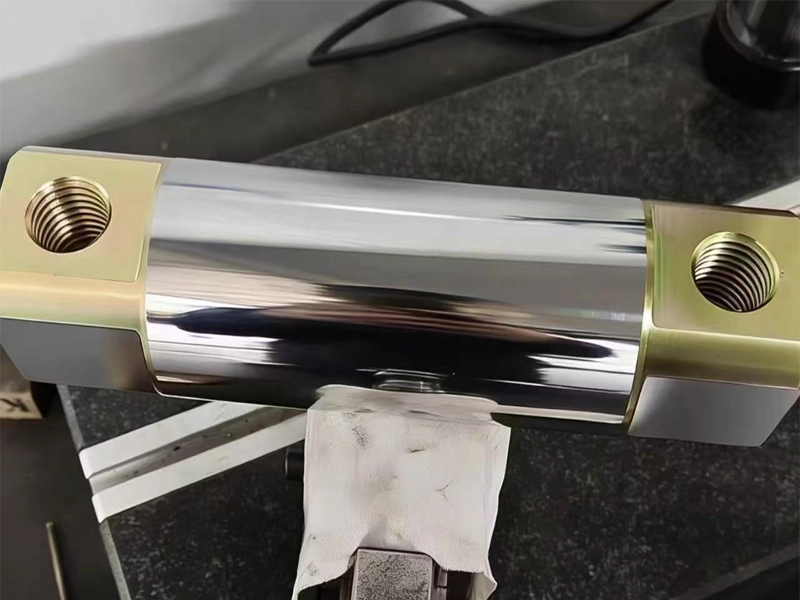
Instead of removing material, a rolling tool plastically deforms the surface, flattening microscopic peaks and filling valleys. This results in a smoother and more compact surface.
Advantages
-
Can be applied directly after CNC turning
-
No material removal → maintains dimensional accuracy
-
Significantly improves surface finish
-
Enhances surface hardness and fatigue resistance
-
Reduces or eliminates secondary processes
For many stainless steel pipe fittings, burnishing can achieve:
-
Ra 0.2 – 0.4 μm (stable)
-
In optimized conditions → near mirror-like finish
This makes it an excellent solution for reducing cost while improving quality.
Limitations & Risks
However, rolling is not a universal solution.
-
Requires stable machine rigidity (sensitive to vibration)
-
Not suitable for complex geometries or tight internal features
-
Tool pressure must be carefully controlled
-
Over-burnishing may deform thin-wall parts
Key Pain Point:
Burnishing works best on simple cylindrical surfaces, but struggles with complex shapes or intersections commonly found in stainless steel fittings.
2. Mechanical Polishing: Achieving Mirror Finish
Mechanical polishing (also called physical polishing) is the most common method for achieving a true mirror-like surface.
It uses abrasive belts, polishing wheels, and compounds to physically remove material and smooth the surface.
Surface Finish Capability
-
Rough polishing: Ra 0.8 – 1.6 μm
-
Fine polishing: Ra 0.2 – 0.4 μm
-
Mirror polishing: Ra ≤ 0.1 μm (up to 0.05 μm)
After CNC machining (typically Ra 1.6), polishing can dramatically improve surface quality.
Advantages
-
Best visual appearance (mirror effect)
-
Flexible for external surfaces
-
Suitable for decorative or high-end products
Limitations & Pain Points
-
Difficult to polish internal surfaces or complex geometries
-
Surface consistency depends heavily on operator skill
-
May introduce residual stress
-
Risk of surface contamination
-
Time-consuming for large batches
Key Pain Point:
Mechanical polishing struggles with curved intersections, internal corners, and complex geometries, which are very common in stainless steel pipe fittings.
3. Electropolishing: Micro-Level Smoothing and Cleanliness
Electropolishing is an electrochemical process that removes microscopic high points on the surface by controlled dissolution.
Unlike mechanical polishing, it does not rely on physical abrasion.
Surface Finish Capability
-
Standard: Ra 0.4 – 0.8 μm
-
Optimized process: Ra 0.2 – 0.4 μm
It is important to note:
Electropolishing does not typically achieve a mirror-like visual finish.
Advantages
-
Excellent for internal surfaces and complex geometries
-
Removes burrs effectively
-
Produces uniform, non-directional finish
-
Improves corrosion resistance (especially 304 / 316)
-
No mechanical stress introduced
Limitations & Pain Points
-
Limited improvement if initial surface is too rough
-
Does not create high-gloss mirror appearance
-
Requires strict chemical process control
-
Additional environmental and safety considerations
Key Misconception:
Electropolishing is not “shinier”—it is cleaner and more corrosion-resistant.
| Method | Typical Ra | Main Advantage | Key Limitation | Best Application |
|---|---|---|---|---|
| CNC Turning | 0.8 – 1.6 μm | Cost-effective, fast | Limited finish | General fittings |
| Rolling (Burnishing) | 0.2 – 0.4 μm | Improves finish without extra process | Limited geometry | Cylindrical parts |
| Mechanical Polishing | ≤0.1 μm | Mirror finish | Hard for complex shapes | Decorative parts |
| Electropolishing | 0.2 – 0.8 μm | Clean, corrosion-resistant | Not mirror-like | Food/medical |
Best Practice: Combining Processes
In high-end manufacturing of stainless steel fittings, a combined process is often used:
Mechanical Polishing + Electropolishing
Process:
-
Mechanical polishing → reduce Ra
-
Electropolishing → improve cleanliness and corrosion resistance
Final Result:
-
Surface roughness: Ra 0.1 – 0.3 μm
-
Bright appearance + enhanced corrosion resistance
-
Burr-free and uniform surface
This approach is widely used in food-grade, pharmaceutical, and high-purity systems.
Key Factors to Consider When Choosing Surface Finish
When selecting a finishing method for stainless steel pipe fittings, consider:
-
Required surface roughness (Ra)
-
Application (decorative vs functional)
-
Geometry complexity
-
Cost vs performance balance
There is no single “best” solution—only the most suitable one.

FAQ
1. What surface roughness is typically required for stainless steel pipe fittings in industrial applications?
For most industrial applications, Ra 0.8 μm is sufficient.
For food-grade or sealing applications, Ra ≤ 0.8 μm or lower is recommended.
2. Is electropolishing better than mechanical polishing?
Not necessarily.
-
Mechanical polishing → better appearance
-
Electropolishing → better cleanliness and corrosion resistance
They serve different purposes.
3. Can rolling replace polishing?
In some cases, yes.
For simple geometries, rolling can achieve excellent surface finish directly during machining, reducing the need for polishing and lowering cost.
4. Why is stainless steel difficult to polish?
Because it tends to:
-
Work harden
-
Generate heat
-
Stick to cutting tools
These factors make achieving a consistent smooth surface more challenging.
Conclusion
Surface finish in stainless steel pipe fittings is not determined by a single factor, but by a combination of machining parameters and post-processing methods.
From CNC turning to rolling, mechanical polishing, and electropolishing, each method plays a different role in achieving the desired surface quality.
Selecting the right process depends on application requirements, geometry, and cost considerations.
CTA (Call to Action)
If you are sourcing high-quality stainless steel pipe fittings or stainless steel fittings, choosing the right surface finishing process is critical to performance and cost.
We help customers optimize machining and finishing solutions based on real applications—whether it’s reducing cost with rolling, achieving mirror finish, or meeting food-grade standards.