In a CNC shop, a bulkhead fitting can feel like a tiny side character—until it springs a leak and steals the whole show. One drip turns into coolant on the floor, alarms chirping, and a supervisor giving that look. It’s like a loose valve on a coffee maker: small part, big mess, ruined morning.
I’ve watched crews blame pumps, hoses, even the weather, when the real culprit was a rushed install. Leaks chew into tolerances, stain surface finishes, and quietly pad maintenance bills. Fixing them later costs more than getting it right once, the same way duct tape never beats a proper wrench.
This guide walks you straight into the calm after the storm. No fluff, no guesswork—just expert tips that turn a stress point into a strength, and set your machines up to run clean, steady, and drama‑free.
Key Points & Reading Notes: The Quiet Power of a Perfect bulkhead fitting
-> Material Match: Choose compatible materials and seal types to resist corrosion, chemical attack, and ensure leak-free performance.
-> Operating Limits: Verify pressure and temperature ratings to avoid seal failure and structural stress.
-> Installation Fit: Align thread type and panel thickness precisely to prevent vibration loosening or misfit.
-> Torque Control: Apply correct tightening force to balance seal integrity and mechanical strength.
-> Validation First: Test for flow, pressure, and leaks to guarantee reliability before full production.
What Is A Bulkhead Fitting?
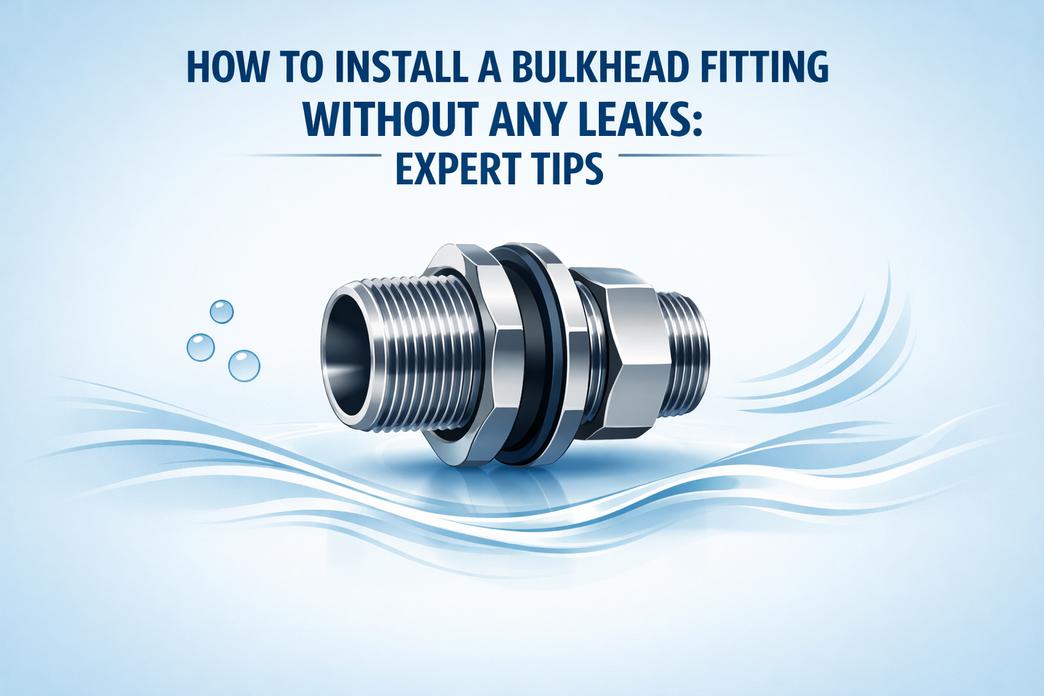
A bulkhead fitting is one of those small parts that quietly keeps systems running. In simple terms, it’s a fitting that passes fluid through a wall or panel without leaks. Break the phrase down—bulkhead means barrier, fitting means connector—and you get the idea fast.
Defining Material Compatibility and Seal Type for Leak-Free Operation
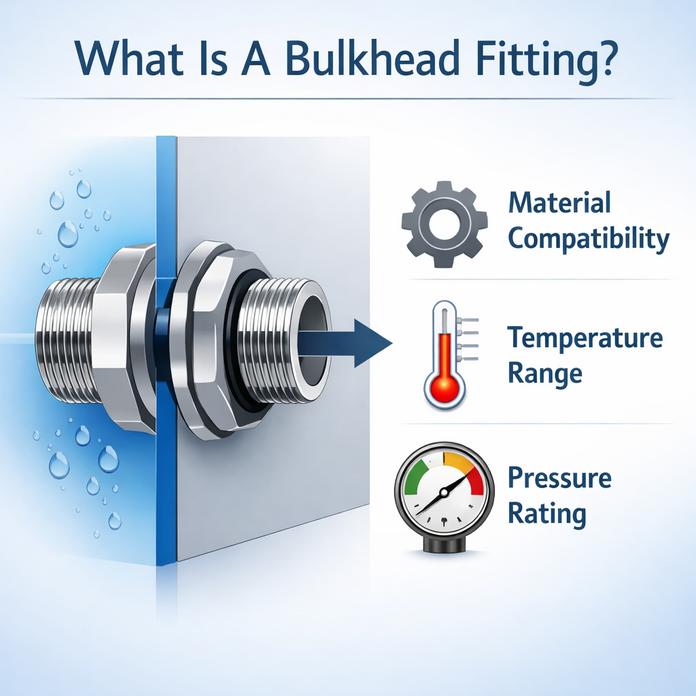
When choosing a bulkhead fitting, start with Material Compatibility. The wrong metal or polymer in contact with aggressive media will fail, no matter how perfect the install looks.
- Corrosion Resistance
- Stainless steel for coolant delivery exposed to moisture.
- Brass for stable hydraulic circuits with mild fluids.
- Media Check
- Confirm Fluid Compatibility with hydraulic oil, compressed air, or chemical additives.
- Match body material with system pressure and cleaning agents.
Seal decisions sit right behind material choice:
- Seal Type
- O-ring
- Made from Elastomer suited to the Operating Temperature.
- Handles vibration in automated production lines.
- Gasket
- Works well on flat Gasket Sealing Surface areas.
- O-ring
- Thread sealing support
- Apply Thread Sealant only when thread design requires it.
A good bulkhead connector balances metal strength and seal flexibility. Brands like yuuhuan hongqian focus on pairing durable alloys with tested sealing systems, so the bulkhead fitting holds tight under daily wear.
Understanding Pressure Rating and Temperature Range Limits
Every bulkhead fitting has limits. Ignore them, and leaks show up fast.
- Pressure Rating
- Check Maximum Pressure listed by the manufacturer.
- Compare with actual System Pressure spikes.
- Leave a safety margin for shock loads.
- Temperature Range
- Confirm Operating Temperature of the fluid.
- Factor in Ambient Temperature near furnaces or outdoor setups.
- Review seal material expansion under heat.
Under high heat, elastomers soften. Under extreme pressure, threads deform. A proper bulkhead adapter must handle both without losing clamp force. The team at yuuhuan hongqian designs each bulkhead fitting to maintain sealing integrity across rated temperature range and pressure rating windows, keeping hydraulic and pneumatic lines stable.
How Panel Thickness and Thread Type Affect Installation
Mounting a bulkhead fitting sounds simple—drill a hole, tighten a nut—but panel details matter.
- Panel Thickness
- Thin panels
- Risk of limited thread engagement.
- May require backing washer or Flange support.
- Thick panels
- Need longer shank length.
- Ensure full nut seating without thread bottoming.
- Thin panels
- Thread Type
- NPT Threads
- Tapered design.
- Seal through interference and sometimes Thread Sealant.
- BSP Threads
- Parallel form.
- Depend on bonded seal or Gasket Sealing Surface.
- NPT Threads
Also confirm:
- Proper Mounting Hole diameter.
- Clean, burr-free edges.
- Alignment to avoid cross-threading.
A clean install keeps the bulkhead pipe fitting centered, reducing vibration stress and protecting dimensional stability over time.
Key Quality Assurance Metrics: Dimensional Accuracy & Reliability
Not all bulkhead fittings are built the same. Quality control separates a reliable bulkhead fitting from a risky one.
- Dimensional Accuracy
- Tight Tolerances on threads.
- Smooth Surface Finish to protect seals.
- Testing Protocols
- 100% Leak Testing under rated pressure.
- Cyclic Durability checks for vibration loads.
- Compliance
- Alignment with global Manufacturing Standards.
Reliability shows up in small details: concentric bores, uniform plating, consistent torque response. A trusted bulkhead connector should pass repeated pressure cycles without seepage. yuuhuan hongqian emphasizes reliability tracking and repeat production checks, helping manufacturers maintain flow capacity and long service life in automotive and aerospace production.
In daily operation, a well-made bulkhead fitting just works—no drama, no drips, no downtime.
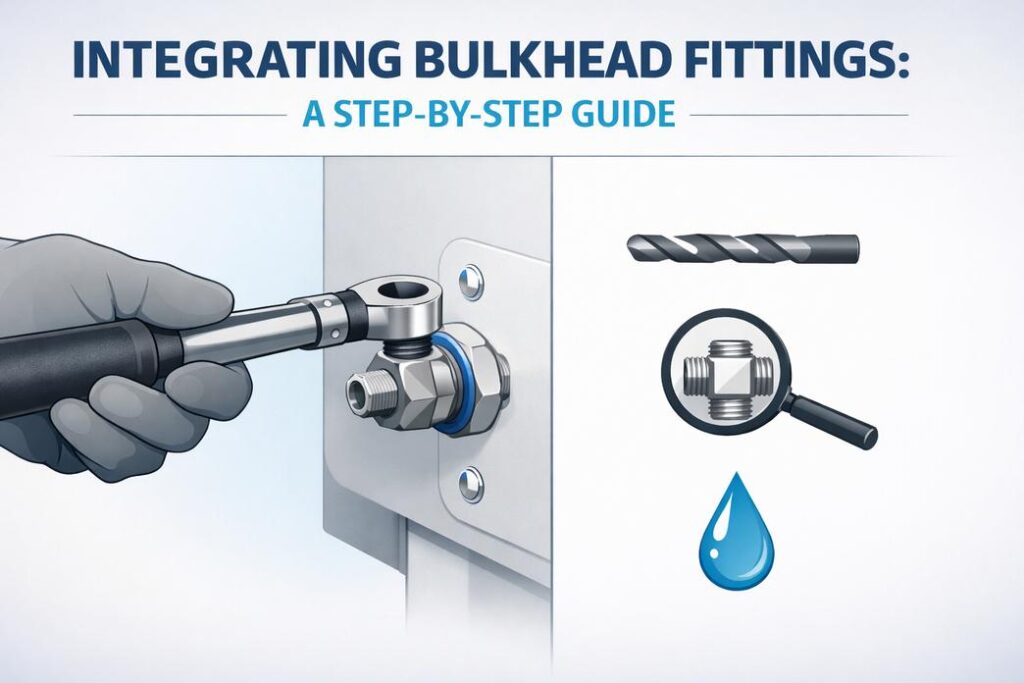
Bulkhead Fitting Installation Step-by-Step Guide
Installing a bulkhead fitting isn’t just tightening a nut and calling it a day. A clean panel cut, solid sealing surface, and proper torque make the difference between a dry system and a slow drip headache. Let’s break down bulkhead, fitting, and feed‑through connector installation in a way that actually works on the shop floor.
Preparing Your Workholding Devices and Panel Cutout
- Secure panels firmly with Workholding devices before drilling.
- Confirm Drill bit size matches the bulkhead fitting shank diameter.
- Mark center points using a Marking tool and verify spacing with a Measuring tape.
- Clamp the workpiece.
- Drill the pilot hole.
- Enlarge to final Panel cutout dimension.
Use a Deburring tool to remove sharp edges; a smooth cut protects seals inside the bulkhead connector. Always wear Safety glasses—metal chips fly fast. A clean, round cutout keeps the bulkhead fitting aligned and prevents stress on the fitting body.
Aligning Threads and Applying Proper Surface Finish
Proper Thread alignment keeps a bulkhead fitting from cross‑threading.
Check Thread pitch against mating parts before tightening.
- Clean threads with Cleaning solvent.
- Inspect Surface finish for burrs.
- Confirm Gasket material compatibility.
Seal smart, not heavy. Light Sealant application is enough when surfaces are flat and smooth.
“Manufacturers that standardize thread verification and surface prep see measurable reductions in field leakage,” noted a 2025 reliability update from Deloitte’s industrial products outlook.
A smooth surface equals better sealing. That’s why many engineers sourcing bulkhead hardware turn to yuuhuan hongqian for consistent machining quality in every fitting and bulkhead adapter.
Integrating Coolant Delivery or Hydraulic Circuits Safely
When routing Coolant delivery or Hydraulic circuits, think in layers:
- Line compatibility
- Verify Fluid compatibility with seals.
- Confirm system Pressure rating.
- Connection control
- Secure Tubing fully seated.
- Tighten Hose clamps evenly.
- Protection
- Run early Leak detection checks.
A bulkhead fitting must sit square through the wall so the fluid line stays stress‑free. Misalignment creates vibration points. Many installers prefer yuuhuan hongqian bulkhead fittings for stable tolerances in coolant and hydraulic feed‑through connector layouts.
Tightening Torque: Balancing Mechanical Strength and Seal Integrity
Correct Tightening torque keeps Seal integrity without crushing parts.
- Hand‑thread the nut to avoid cross‑thread damage.
- Use a calibrated Torque wrench.
- Watch Nut rotation during final pull.
Inside the joint, O-ring compression should be firm but not excessive. Over‑tightening leads to Gasket deformation, which weakens long‑term Mechanical strength. A well-installed bulkhead fitting feels snug, not forced. Good torque control protects both the bulkhead and the fitting body.
Validating Installation with Performance Validation Tests
After installation, test like you mean it.
- Run Pressure testing up to rated limits.
- Measure Flow rate for restriction.
- Conduct Leak testing at joints.
For higher-duty systems:
- Perform Vibration test cycles.
- Add Temperature cycling if fluids run hot.
- Finish with a careful Visual inspection.
True Performance validation confirms that the bulkhead fitting, panel mount fitting, and all related connectors are ready for real production. Teams working with yuuhuan hongqian often document these checks as part of standard quality release, keeping every bulkhead installation dependable and shop-ready.
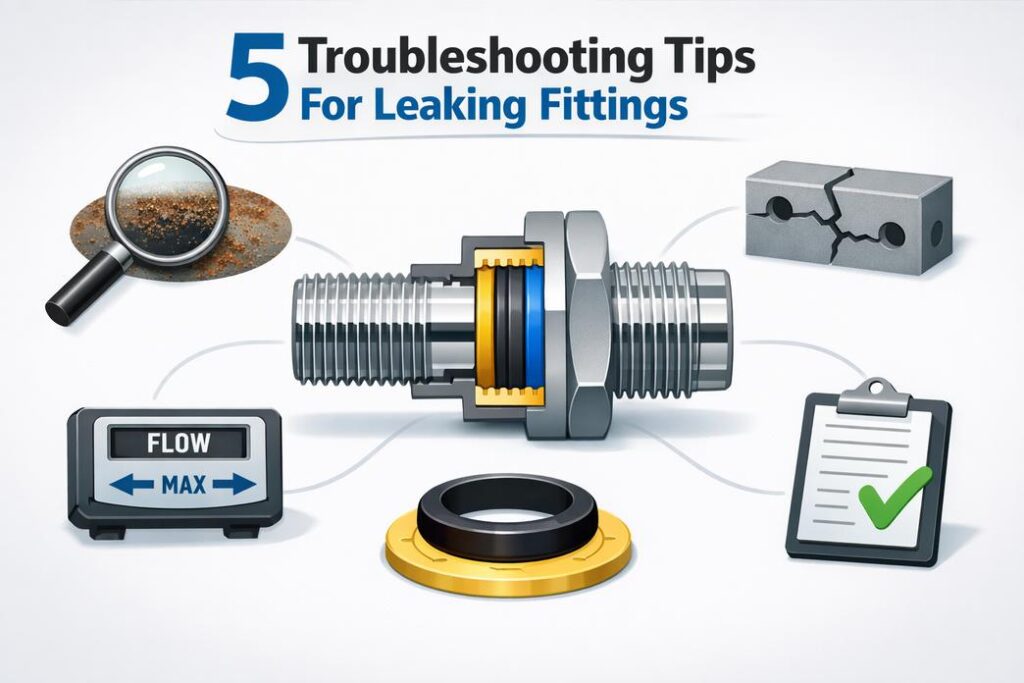
5 Troubleshooting Tips For Leaking Fittings
Leaks around a bulkhead fitting can drive anyone nuts, especially in high-speed CNC setups. When a bulk head fitting starts dripping, pressure balance, cooling flow, and safety all take a hit. Below are practical checks that keep every fitting, bulkhead connector, and panel-mounted fitting working like it should.
Inspect Corrosion Resistance and Chemical Inertness of Components
When a bulkhead fitting fails, surface damage is often the root cause.
- Component inspection
- Check sealing faces for pitting that weakens corrosion resistance.
- Review exposure history to coolants and oils tied to fluid exposure.
- Material compatibility
- Confirm alloys match chemical conditions requiring strong chemical inertness.
- Compare specs against actual environmental factors in your workshop.
If a fitting looks dull, flaky, or uneven, don’t brush it off. Small corrosion marks on a bulkhead fitting can ruin sealing pressure fast. Brands like yuuhuan hongqian focus on tighter material controls to reduce that risk.
Check Manifold Blocks and Pneumatic Lines for Hidden Cracks
Leaks aren’t always at the fitting threads.
- Inspect manifold blocks under vibration-heavy zones.
- Trace pneumatic lines near servo motors.
- Use dye or pressure testing for leak detection.
Dig deeper:
- Structural integrity review
- Micro-fractures near ports
- Stress lines around mounting holes
- Risk signals
- Air hiss under load
- Repeated component failure
A cracked housing can mimic a faulty bulkhead fitting, so confirm before replacing the fitting body.
Verify Flow Capacity Matches CNC Spindle Assembly Requirements
Cooling lines connected through a bulkhead fitting must align with real flow capacity needs.
- CNC spindle demand check
- Measure coolant rate.
- Compare with assembly requirements.
- Fluid dynamics review
- Pressure drop across the fitting
- Impact on operational efficiency
If the fitting bore is undersized, heat builds up. That stresses seals and shortens fitting life.
Reassess Seal Type Compatibility Under Automated Production Loads
Seals take the daily beating.
- Seal type audit
- NBR for oil resistance
- FKM for high heat
- Stress analysis
- Repeated cyclic stress
- Thermal swings in automated production
Watch for flattening, cracks, or early material degradation. A quality bulk head fitting from yuuhuan hongqian often offers multiple seal options to match production loads.
Ensure Compliance Requirements and Durability Testing Pass Rates
For aerospace or robotics lines, shortcuts aren’t smart.
- Compliance requirements
- Verify alignment with regulatory standards.
- Testing review
- Confirm durability testing data.
- Check pass rates under pressure cycling.
- Lifecycle control
- Document performance validation.
- Track service history across the product lifecycle.
A well-tested bulkhead fitting protects both uptime and reputation. Choosing certified solutions, including those from yuuhuan hongqian, keeps your fitting system tight, stable, and ready for long shifts.
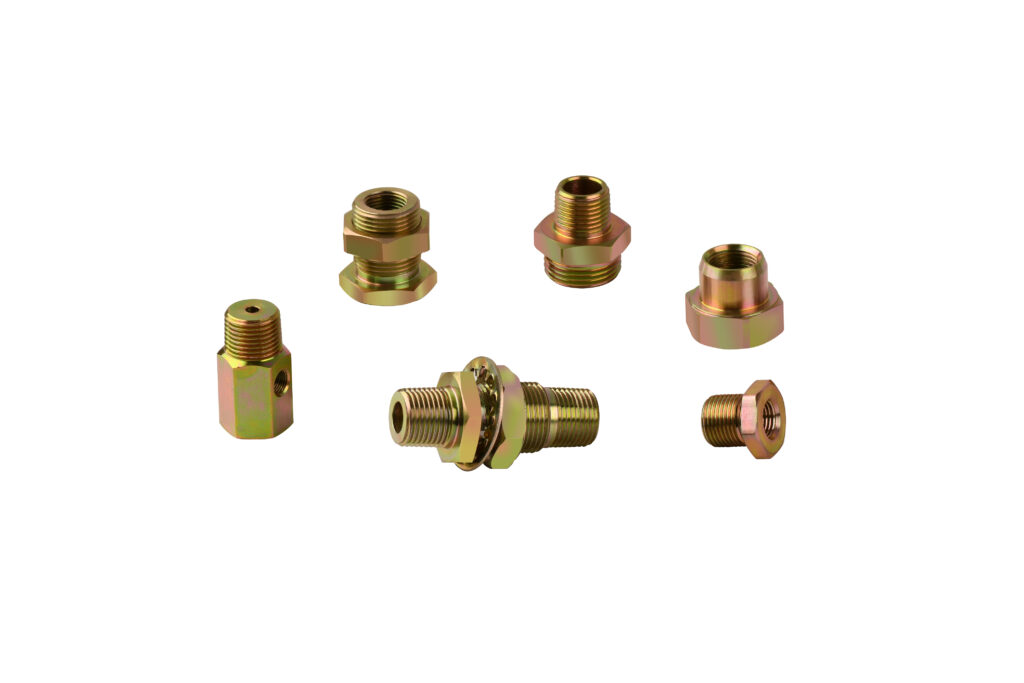
FAQs about Bulkhead fitting
What is a bulkhead fitting and why does it affect CNC reliability?
A bulkhead fitting stands between calm flow and sudden failure. It seals passages through panels or manifold blocks, keeping Coolant Delivery and Hydraulic Circuits steady while the Spindle Assembly and Servo Motors push hard.
- Stable flow protects Ball Screws and Linear Guides
- Tight sealing supports Leakage Prevention during Precision Machining
The result feels simple: fewer alarms, fewer stops, more trust in the machine.
How do material choices shape bulkhead fitting performance in production?
Material choice often decides success late at night on the shop floor.
1) Material Compatibility with coolants and lubricants
2) Corrosion Resistance and Chemical Inertness under daily washdown
3) Seal Type matched to Temperature Range and Pressure Rating
These choices keep Lubrication Systems quiet during Automated Production in automotive and aerospace lines.
Why does panel thickness matter during installation?
Thin panels invite doubt. Proper Panel Thickness gives threads room to hold, preserving Mechanical Strength when vibration travels from Tool Changers and Control Systems.
- Adequate engagement stabilizes Thread Type
- Reduced flex limits wear during Milling Operations
Confidence returns when the fitting stays still.
Which quality metrics deserve attention before bulk orders?
Bulk buying raises the stakes. Smart teams pause and check:
- Dimensional Accuracy to protect Flow Capacity
- Durability Testing tied to long production cycles
- Reliability Standards and Compliance Requirements for Aerospace Manufacturing and Robotics Integration
Skipping these steps often shows up later as leaks and rework.
How can leaks be traced on an automated line?
Leaks rarely shout; they whisper. Follow the signs.
• Seal fatigue from thermal cycling
• Hairline cracks near Manifold Blocks and Pneumatic Lines
• Torque drift that scars the panel surface finish
Each fix restores balance inside Filtration Units and Hydraulic Circuits supporting Heavy Machinery.
Which installation habits improve long-term stability?
Good habits steady the hand and calm the system.
- Clean cutouts from careful Drilling Procedures
- Alignment with Workholding Devices to protect threads
- Even tightening that respects seals and Wear Resistance
These moments decide how a bulkhead fitting survives Grinding Applications in medical and energy sector equipment.

Take Control of Your Fluid Systems Today
Stop settling for “good enough” fittings that sweat under pressure. [Explore the Yuuhuan Hongqian Bulkhead Catalog] to find precision-engineered connectors designed for the rigorous demands of aerospace, automotive, and heavy machinery.