Margins get skinny fast when cnc machined stainless steel parts hit the schedule. Stainless fights back—heat, wear, scrap—like a bar tab that keeps growing. Shop floors feel it in overtime, busted tools, and quotes that stop winning work.
“Nickel price swings keep pressure on stainless costs,” warns the World Bank’s Commodity Markets Outlook (2024).
This piece pulls back the curtain on smart machine choices, fixturing that behaves, and feedback loops that cut waste. It’s less wizardry, more street smarts—so every spindle minute pays rent and then some.
Key Points for cnc machined stainless steel parts
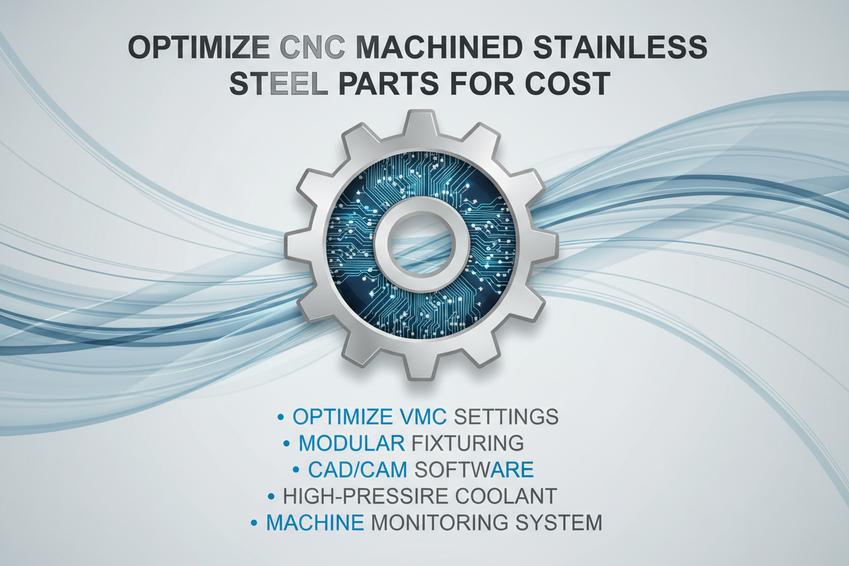
➔ Optimize Vertical Machining Center settings to cut cycle times and tool wear.
➔ Implement a Modular Fixturing System for fast, repeatable setups and lower labor costs.
➔ Leverage CAD/CAM Software with simulation to prevent collisions and scrap.
➔ Use High-Pressure Coolant Systems for better heat control and extended tool life.
➔ Monitor production with a Machine Monitoring System to stabilize per-part costs.
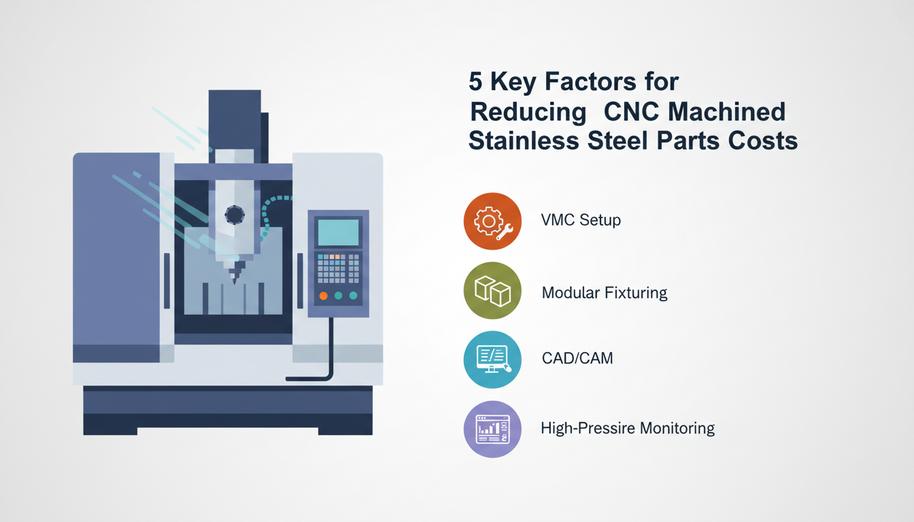
5 Key Factors for Reducing CNC Machined Stainless Steel Parts Costs
Cost pressure on cnc machined stainless steel parts is real. Stainless steel machining is tough on tools, time, and budgets. If you break down cnc / machined / stainless steel / parts into controllable variables, savings start to show up fast. Below are practical ways to trim cycle time, cut scrap, and stabilize pricing for stainless steel components without cutting corners.
Vertical Machining Center setup choices that lower stainless steel cycle time
For cnc machined stainless steel parts, smart VMC configuration directly drives cycle time reduction.
- Machine-Level Optimization
- Spindle & Cutting Parameters
- Adjust RPM for stainless steel machining heat control.
- Match feed rate to carbide tooling grade.
- Tool Changer Magazine
- Pre-load high-use tools.
- Reduce non-cutting swap delays.
- Automation Integration
- Add pallet changers.
- Sync probing cycles to limit manual checks.
- Spindle & Cutting Parameters
- Setup Time Control
- Standardize workholding heights.
- Use preset tool length offsets.
- Document proven stainless steel cutting data.
Shops producing stainless steel parts at volume often see 8–15% faster throughput just from tightening these variables. Brands like yuuhuan hongqian apply this structured VMC logic to stabilize cnc machined stainless steel parts pricing across repeat batches.
Modular Fixturing System for faster repeat production
When repeat production kicks in, modular fixturing pays for itself.
Shorter setup efficiency.
Cleaner fixture design.
Faster tooling changes.
For cnc machined stainless steel parts, consistency matters more than speed alone. A flexible plate-and-pin system lets operators lock parts in the same position every run. That boosts production speed without risking tolerance drift.
Key gains include:
- Reduced alignment guesswork
- Better rigidity for stainless steel components
- Faster swap between similar machined stainless steel parts
In high-mix environments, this flexibility keeps cnc stainless steel parts profitable instead of chaotic.
Why CAD/CAM Software reduces hidden machining errors
Programming mistakes quietly inflate the cost of cnc machined stainless steel parts.
- Design to Toolpath Flow
- CAD model validation
- Tolerance stack review
- Toolpath Generation
- Adaptive clearing for stainless steel machining
- Controlled step-over to reduce tool wear
- Simulation & Verification
- Collision checks
- Virtual material removal
- Feed optimization
With advanced CAD/CAM software and integrated simulation, shops reduce scrap and avoid spindle crashes. Fewer surprises mean tighter control over stainless steel parts margins. Error reduction in programming is often cheaper than fixing one batch of rejected cnc machined stainless steel parts.
High-Pressure Coolant System and longer tool life savings
Stainless steel holds heat. That’s the enemy of tool life.
A high-pressure coolant setup improves chip evacuation, boosts lubrication, and protects cutting edges during stainless steel machining.
| Coolant Pressure (bar) | Avg Tool Life (min) | Insert Consumption/100 pcs | Surface Roughness (Ra μm) |
|---|---|---|---|
| 20 | 45 | 18 | 1.8 |
| 50 | 68 | 12 | 1.4 |
| 80 | 92 | 8 | 1.1 |
Higher pressure clearly supports better cutting performance and lower tool wear. For cnc machined stainless steel parts, that translates into fewer insert swaps and steadier machining efficiency.
Machine Monitoring System for stable batch cost control
Margins on cnc machined stainless steel parts often slip due to hidden downtime.
- Real-Time Data Capture
- Track spindle utilization.
- Monitor alarm frequency.
- Downtime Reduction
- Identify repeat stoppages.
- Schedule preventive maintenance.
- Batch Cost Visibility
- Compare planned vs actual cycle time.
- Link scrap data to operator shifts.
- Quality Control Feedback
- Tie inspection results to machine ID.
- Adjust process stability parameters.
A strong machine monitoring platform turns guesswork into measurable action. With performance tracking in place, stainless steel machining becomes predictable. That predictability is exactly how yuuhuan hongqian keeps cnc machined stainless steel parts competitive while maintaining tight tolerance stainless steel components for demanding buyers.
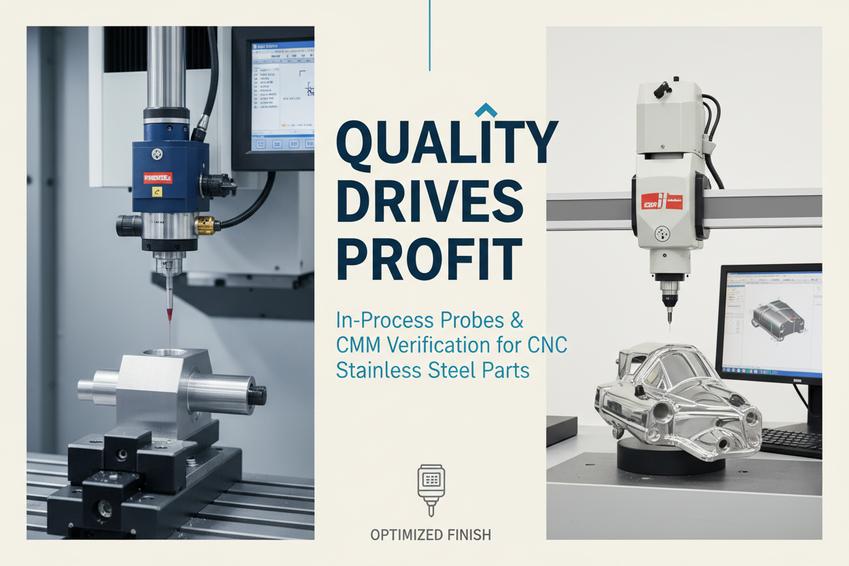
How CNC Machined Stainless Steel Parts Quality Impacts Cost-Effectiveness
Quality in cnc machined stainless steel parts is not just about tight numbers on a drawing. It decides scrap rate, delivery speed, and long-term profit. From stainless steel machining to final inspection, every move affects cost. Smart control keeps stainless steel parts competitive without burning cash.
In-Process Measurement Probes prevent expensive stainless steel rework
When producing cnc machined stainless steel parts, stopping errors mid-cut saves serious money. That’s where in-process measurement with advanced measurement probes steps in.
- During the machining process, probes check critical diameters and depths.
- If deviation appears, the system auto-corrects tool offsets.
- This keeps dimensional accuracy stable and reduces stainless steel rework.
From a cost angle:
- Fewer rejected stainless steel components.
- Lower machine downtime.
- Stronger quality control data for audits.
In practical shop flow:
- Detection
- Real-time signal capture
- Tool wear monitoring
- Correction
- Offset adjustment
- Feed rate fine-tuning
- Verification
- Secondary probing cycle
- Data logging for cost reduction
For manufacturers like yuuhuan hongqian, this approach turns raw stainless steel machining into predictable output. The result? Consistent cnc machined stainless steel parts without the painful redo.
Coordinate Measuring Machine verification before shipment
Before shipment readiness, serious shops rely on coordinate measuring machine systems.
Inspection flow often looks like this:
- Pre-check
- Visual scan
- Datum confirmation
- Full CMM verification
- Multi-axis probing
- Complex geometry mapping
- Reporting
- Digital part inspection record
- Signed final inspection approval
This layered dimensional inspection supports solid quality assurance. Customers receive stainless steel precision parts that match drawings, not excuses. Fewer claims. Lower warranty exposure. Better reputation.
For export-focused suppliers such as yuuhuan hongqian, reliable CMM reports strengthen shipment readiness and buyer trust in every batch of cnc machined stainless steel parts.
Surface Roughness Tester: balancing finish quality and machining cost
Surface finish can quietly eat profit.
- Too rough? Poor part performance.
- Too smooth? Extra passes, higher machining cost.
A calibrated roughness tester measures actual surface roughness instead of guessing. Shops then adjust:
- Tool path strategy.
- Cutting speed.
- Final finishing pass count.
Short check. Quick adjustment. Stable tolerance control.
By tracking Ra values and linking them to cycle time, manufacturers reach real cost optimization. The sweet spot is simple: meet surface finish specs without over-polishing stainless steel parts.
In the end, consistent control over machining stainless steel components keeps cnc machined stainless steel parts profitable, not just precise.
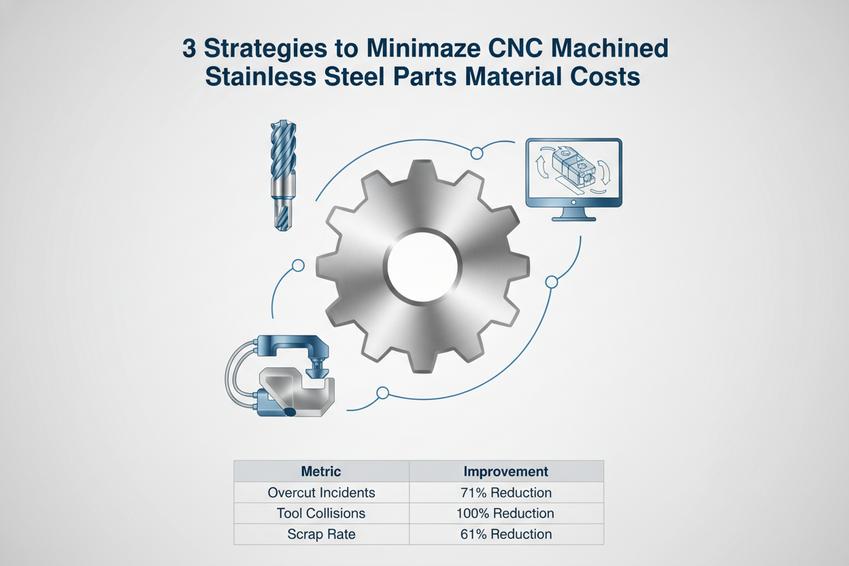
3 Strategies to Minimize CNC Machined Stainless Steel Parts Material Costs
Keeping material costs under control is a big deal when producing cnc machined stainless steel parts. Stainless steel isn’t cheap, and every extra gram cut away eats profit. Here’s how smart tooling, simulation, and fixturing help control waste while keeping stainless steel machining quality tight.
High-Performance End Mills improve stainless steel material yield
Reducing waste in cnc machined stainless steel parts often starts with smarter end mill selection.
- Tool Engineering Factors
1.1 Tool geometry
- Variable helix reduces chatter.
- Optimized rake angles improve chip flow.
1.2 Coating Technology
- Heat-resistant coatings extend tool life.
- Lower friction improves surface finish.
- Cutting Strategy Optimization
2.1 Dialed-in cutting parameters
- Stable spindle speed
- Balanced feed rate
2.2 Controlled material removal rate
- Avoids aggressive overcut
- Maintains dimensional control
In stainless steel machining, sharp tools cut cleaner. Cleaner cuts mean less scrap. For manufacturers like yuuhuan hongqian, dialing in tooling for stainless steel components directly improves yield and keeps cnc machined stainless steel parts consistent from batch to batch.
Simulation Software helps reduce overcut before production
Before a single chip flies, CAM software and machining simulation can spot trouble early. That’s where material savings really stack up for cnc machined stainless steel parts.
Here’s a practical comparison:
| Parameter | Without Simulation | With Simulation | Waste Reduction (%) |
|---|---|---|---|
| Overcut Incidents / 100 pcs | 7 | 2 | 71% |
| Tool Collisions / Month | 3 | 0 | 100% |
| Scrap Rate (%) | 5.5 | 2.1 | 61% |
| Avg. Material Loss (kg) | 18 | 7 | 61% |
| Setup Adjustment Time (hrs) | 12 | 5 | 58% |
With solid toolpath verification and real-time collision detection, shops can fine-tune engagement angles and boost material waste reduction before production starts. It’s simple math: fewer surprises equal fewer scrapped stainless steel parts.
Custom Workholding Solutions for thinner stock utilization
Material cost control doesn’t stop at programming. Workholding design plays a quiet but powerful role in stainless steel parts manufacturing.
- Thin Stock Strategy
1.1 Optimized clamping force
- Prevents distortion
- Protects part integrity
1.2 Integrated vibration dampening
- Supports stable thin wall machining
- Stock Efficiency Planning
2.1 Reduced raw stock material thickness
2.2 Higher part-per-bar yield
Shifting to thinner stock safely means more cnc machined stainless steel parts per sheet or bar. That’s real savings. Teams at yuuhuan hongqian often tailor fixtures around part geometry, keeping stainless steel components stable without over-clamping.
When tooling, simulation, and fixturing work together, cnc machined stainless steel parts become less about waste and more about smart control.

FAQs about Cnc Machined Stainless Steel Parts
How can a Vertical Machining Center setup reduce production time for cnc machined stainless steel parts?
A well-prepared Vertical Machining Center can shift production from strained to steady within hours.
1) Machine & Motion Control
- Fine-tuned spindle speeds via CNC Controller Upgrade
- Optimized tool paths generated in CAD/CAM Software
- Collision checks using Simulation Software
2) Tool & Chip Strategy
- High-Performance End Mills matched with a High-Pressure Coolant System
- Large Tool Changer Magazine to cut idle time
- Chip Conveyor System to prevent heat buildup
3) Live Oversight
- Machine Monitoring System tracking spindle load and downtime
- In-Process Measurement Probes auto-correcting offsets
Result: fewer pauses, fewer scrapped parts, smoother stainless steel cutting even under batch pressure.
What role does automation play in scaling cnc machined stainless steel parts production?
Growth exposes every weak link. Automation tightens the chain.
- A Robotic Arm Loader or Gantry Loading System keeps parts moving without fatigue.
- Automated Pallet Changer reduces manual repositioning delays.
- Conveyor System Integration links CNC Lathes, 5-Axis CNC Machines, and CNC Grinding Machines into one rhythm.
- Manufacturing Execution System aligns schedules with real-time Machine Monitoring System data.
When paired with proper Facility Layout Planning and Operator Training Programs, output rises while human error drops. The floor feels calmer—even during peak demand.
How do quality control systems prevent costly rework on cnc machined stainless steel parts?
Precision is earned, not inspected at the end.
During Machining
- In-Process Measurement Probes adjust tool offsets instantly.
- Statistical Process Control flags drift before tolerance is lost.
After Machining
| Stage | Equipment Used | Human Impact |
|---|---|---|
| Dimensional Check | Coordinate Measuring Machine | Confirms tight tolerances |
| Surface Review | Surface Roughness Tester | Protects sealing performance |
| Visual Scan | Vision Inspection System | Detects micro-defects early |
Supported by Gauge Calibration Services and a disciplined Preventative Maintenance Contract, the shop avoids last-minute panic. Stainless steel may be tough—but disciplined control keeps production tougher.
Looking for a reliable supplier of cnc machined stainless steel parts?
👉 Send us your drawings or requirements today and get a fast, competitive quote from our engineering team.
We specialize in high-precision stainless steel components with strict quality control and stable lead times.