
Buying the wrong stainless steel pipe fittings can quietly blow a project budget. A cheap part that fails inspection, or arrives with sub-standard wall thickness, costs far more in rework, rush freight, and lost hours than the pennies saved upfront. In the industrial manufacturing sector, specifically within the competitive landscape of Taizhou and Zhejiang’s CNC machining hubs, the race to the bottom is real.
To gain market share, many suppliers cut corners in every single link of the supply chain. Because most buyers are non-technical and only judge by a shiny exterior, they miss the Invisible Quality Degradation that leads to failure in 2–3 years, whereas a premium fitting should last 20+ years. This guide explores how to navigate the “landed cost” mindset, identify technical “cheating,” and leverage supplier relationships for long-term savings.
1. The “Iceberg” of Procurement: Understanding Total Cost of Ownership (TCO)
Most procurement officers make the mistake of looking only at the “Sticker Price.” However, the unit price of a stainless steel fitting is just the tip of the iceberg. Beneath the surface lie the heavy costs of testing, logistics, installation labor, and the catastrophic risk of downtime.
The Mathematical Reality Check
Let’s look at a real-world comparison between a “Market Standard” fitting and a “Precision Engineered” fitting (prices are illustrative):
| Cost Factor | Option A: Low-Cost “Standard” | Option B: Procamlock Precision |
| Initial Unit Price | $4.9 | $8.2 |
| Inspection & PMI Testing | $0.75 (Higher risk requires more testing) | $0.50 (Reliable batch consistency) |
| Installation Labor | $13.00 (Includes fighting poor threads) | $11.00 (Smooth, fast fitment) |
| Reject/Failure Rate | 4% ($100 rework cost per reject) | 0.3% (Minimal intervention) |
| Replacement Risk | High (2-3 year lifespan) | Low (15-20 year lifespan) |
| Total Installed Cost | $22.65 | $20 |
The Verdict: By spending $3.00 more on the part, you save $3.35 per unit on the total project. On a mid-sized order of 10,000 fittings, that represents a $33,500 net saving.
2. Where the “Cheating” Happens: Identifying Invisible Quality Degradation
If a factory lacks a reasonable profit margin due to aggressive price-cutting, they must save money elsewhere. Non-professional customers often miss these four technical shortcuts:
A. The “Thin Wall” Deception
Material weight is the biggest cost driver in stainless steel. Many factories reduce the wall thickness just enough to pass a visual check but not enough to meet the Schedule 40 or Schedule 80 pressure ratings. Without ultrasonic thickness testing or precision scales, you won’t realize the fitting is structurally compromised until it bursts or leaks under pressure.
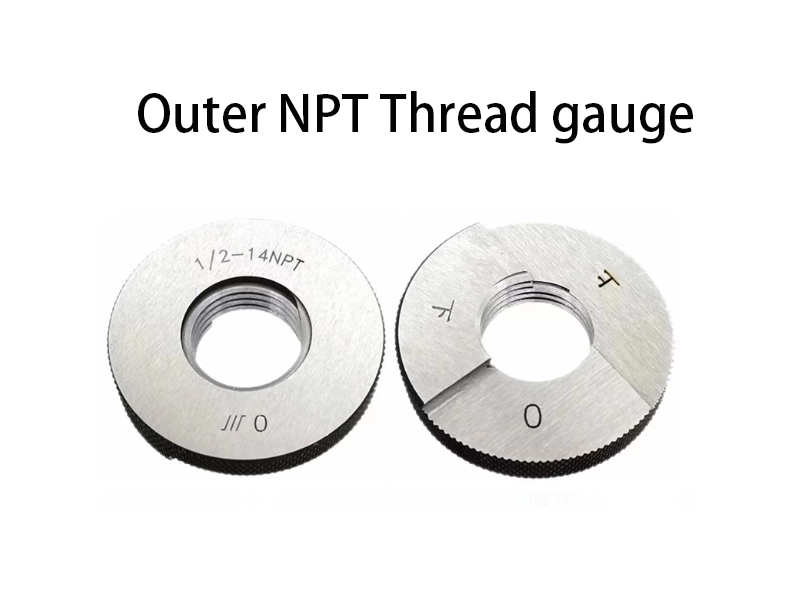
B. Sub-Standard Thread Precision (The 2B Barrier)
Inferior fittings often fail to meet the 2B thread standard or specific NPT/BSPT tolerances.
-
The Risk: Poor thread engagement leads to “Galling” (cold welding). Once a stainless steel thread seizes during installation because of poor precision, the entire joint is ruined.
-
The Detection: Professionals use Go/No-Go gauges. If your supplier doesn’t mention gauge testing, they are likely skipping this step to save time.
C. Micro-Porosity in Casting
To lower costs, some foundries use lower-grade scrap metal with high impurities. This results in Internal Porosity—tiny air bubbles inside the metal. These won’t show up on the day of installation but will develop into “pinhole leaks” after 12–18 months of vibration and pressure cycles.
D. Management & Traceability Gaps
Quality control is a management cost. Factories “cut” this by skipping PMI (Positive Material Identification) on every batch or failing to provide accurate MTCs (Material Test Certificates). If a factory cannot trace a fitting back to the original heat number of the steel, your project is at risk.
3. Five Strategic Steps to Reduce Costs Without Sacrificing Quality
Step 1: Standardize Your SKU Audit
Identify 6 to 12 core fittings that represent 80% of your volume. By standardizing these sizes and materials (e.g., sticking to standard 1-inch 316L elbows), you allow the factory to run larger batches. Larger batches mean lower setup costs and better “Bulk Purchase Discounts.”
Step 2: Use “Landed Cost” Thinking
Always ask for quotes that include:
-
Unit Price + Testing (PMI/Pressure)
-
Export Packaging (Thread protectors are vital!)
-
Freight and Duties
A $4.00 fitting with $2.00 shipping is more expensive than a $5.00 fitting with $0.50 shipping.
Step 3: Specify the Right Alloy (304 vs. 316L)
Don’t over-specify.
-
304/304L: Perfect for indoor, plumbing, and non-corrosive environments.
-
316/316L: Necessary only for marine, chemical, or high-chloride environments.
Choosing 304 where it’s appropriate can save you 25–40% on material costs. However, always insist on the “L” grade (Low Carbon) for any parts that require welding to prevent intergranular corrosion.
Step 4: Leverage Blanket Purchase Orders (BPOs)
If you know you need 5,000 units over a year, don’t buy 500 units ten times. Issue a Blanket PO for 5,000 units. This allows the manufacturer to buy raw materials at a lower price point and schedule production during “off-peak” hours, passing those savings to you while you only pull stock as needed.
Step 5: Pre-Qualify with a “First-Article” Inspection
Before a full production run of 20,000 units, insist on a stamped sample and a full MTC. Verifying the weight, thread precision, and chemical composition of one sample can prevent a $50,000 mistake.
4. Technical Comparison: Forged vs. Cast vs. Pressed Fittings
Understanding the manufacturing process is key to cost-optimization. You shouldn’t pay for forging if casting is sufficient, but you shouldn’t risk a cast part in a high-pressure system.
| Fitting Type | Cost Level | Strength | Best Use Case |
| Forged | High | Highest | High-pressure, critical safety, oil & gas. |
| Investment Casting | Medium | Good | General industrial, food & beverage, water. |
| Pressed/Welded | Low | Moderate | Low-pressure plumbing, HVAC, decorative. |
5. Global Logistics & GEO-Optimization: Why Taizhou Matters
For international buyers, the “where” is as important as the “how.” Taizhou, Zhejiang, has emerged as a global hub for precision CNC machining and stainless steel valve/fitting production. Unlike other regions that focus on mass-produced low-grade hardware, Taizhou factories often integrate advanced CNC technology with strict quality management systems (ISO 9001).
By sourcing from an integrated factory that handles both casting and precision machining, you eliminate the “middleman markup” and ensure that the quality of the raw material matches the precision of the final thread.
6. Common Mistakes to Avoid in Bulk Buying
-
Ignoring Weight: If a quote is significantly lower than others, check the unit weight. They are likely thinning the walls.
-
Skipping Thread Protectors: Stainless steel is relatively soft. Without plastic caps, 5% of your threads will be damaged during sea transit.
-
Vague Specifications: Never just say “Stainless Steel Fittings.” Use specific standards like ASTM A182 or ANSI B16.11.
Chasing the Lowest Unit Price: As shown in our TCO model, the lowest price
7. The Critical Role of Material Testing (Why Every Batch Must Be Verified)
In real manufacturing environments, material integrity is not always what it seems.
As a factory with hands-on experience in stainless steel processing and material handling, we have observed a common industry practice that highlights the importance of strict material verification.
For example, when dealing with stainless steel scrap materials, some buyers may request to intentionally mix in a portion of iron (carbon steel) and still classify the material as “stainless steel scrap” in order to increase short-term profit margins. While this may appear harmless at first glance, it fundamentally changes the composition and performance of the material.
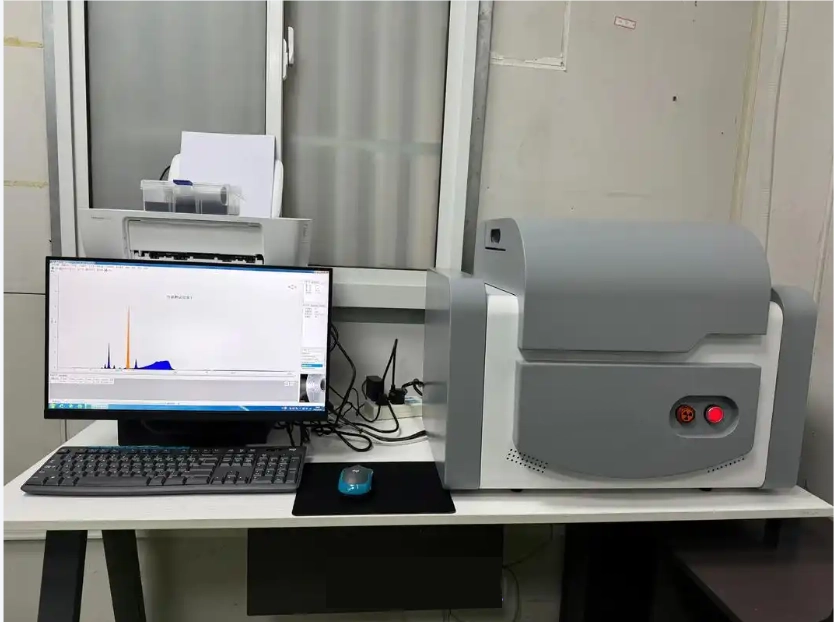
This is precisely why spectrometer-based chemical analysis (PMI) is not optional—it is essential.
Why Material Testing Cannot Be Skipped
In competitive supply chains, cost pressure can lead to subtle compromises at multiple stages:
- Mixing of lower-grade materials into higher-grade stainless steel
- Substitution of 304 with 201, or 316 with lower-nickel variants
- Inconsistent alloy composition between batches
- Use of recycled materials without proper composition verification
Without proper testing, these deviations are nearly impossible to detect visually.
The Only Reliable Solution: Spectrometer (PMI) Testing
To ensure consistent quality, every batch of raw material and finished stainless steel pipe fittings should be verified using:
- Spectrometer (PMI) analysis
- Material Test Certificates (MTC)
- Batch traceability with heat numbers
These methods confirm the exact chemical composition, including key elements such as:
- Chromium (Cr)
- Nickel (Ni)
- Molybdenum (Mo)
Industry Best Practice: 100% Batch Control
Professional manufacturers do not rely on supplier claims alone.
Instead, they implement strict internal quality control procedures:
- Incoming raw material inspection (before production)
- In-process verification (during machining or forming)
- Final inspection (before shipment)
This ensures that every stainless steel pipe fitting delivered meets specification—not just by appearance, but by actual material performance.
Key Takeaway
In modern manufacturing, material cost is the largest hidden variable—and also the easiest place to cut corners.
For this reason:
No matter how precise the machining is, or how perfect the surface finish appears, without material verification, there is no guarantee of performance.
CTA: Get Reliable Stainless Steel Pipe Fittings with Verified Quality
If you are sourcing stainless steel pipe fittings for industrial, plumbing, or critical applications, quality verification should never be optional.
We help global buyers reduce risk by providing:
- ✔ 316 / 316L stainless steel pipe fittings with verified composition
- ✔ Threaded pipe fittings (NPT / BSPT) with strict tolerance control
- ✔ CNC machined custom fittings based on your drawings
- ✔ Full material inspection reports (PMI + MTC) for every batch
- ✔ Batch traceability with heat number tracking
- ✔ Stable production for long-term supply
Before You Place an Order, We Recommend:
- Request a material test certificate (MTC)
- Verify composition with PMI (spectrometer) reports
- Confirm thread accuracy and dimensions
- Check unit weight and wall thickness
- Evaluate supplier manufacturing capability, not just price
Contact Us Today
Send us your requirements or drawings to get:
- A fast and accurate quotation
- Technical recommendations for material selection
- Sample evaluation (First Article Inspection available)
Avoid costly mistakes—choose verified stainless steel pipe fittings from a reliable manufacturer.
