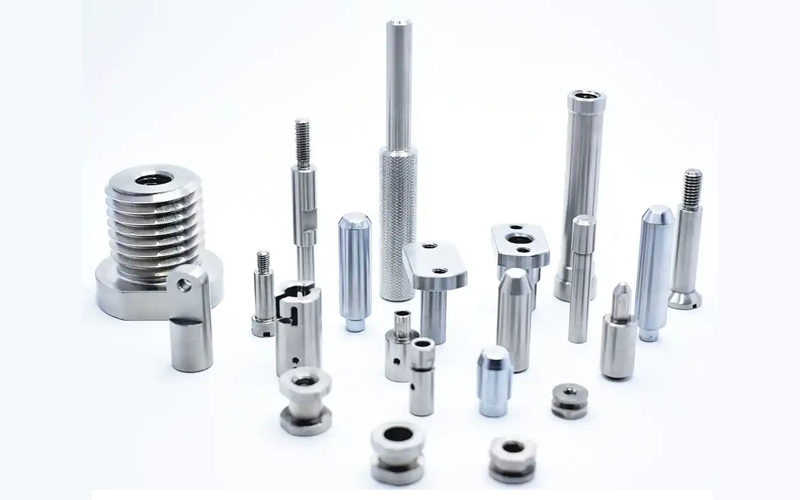
The most common challenge in a CNC machine factory is maintaining good quality, while fast and cost-effective inspection is also a major concern for us.
Moreover, if a quality issue occurs and products are returned for inspection, the labor costs involved can easily consume the entire order’s profit, or even result in a loss.
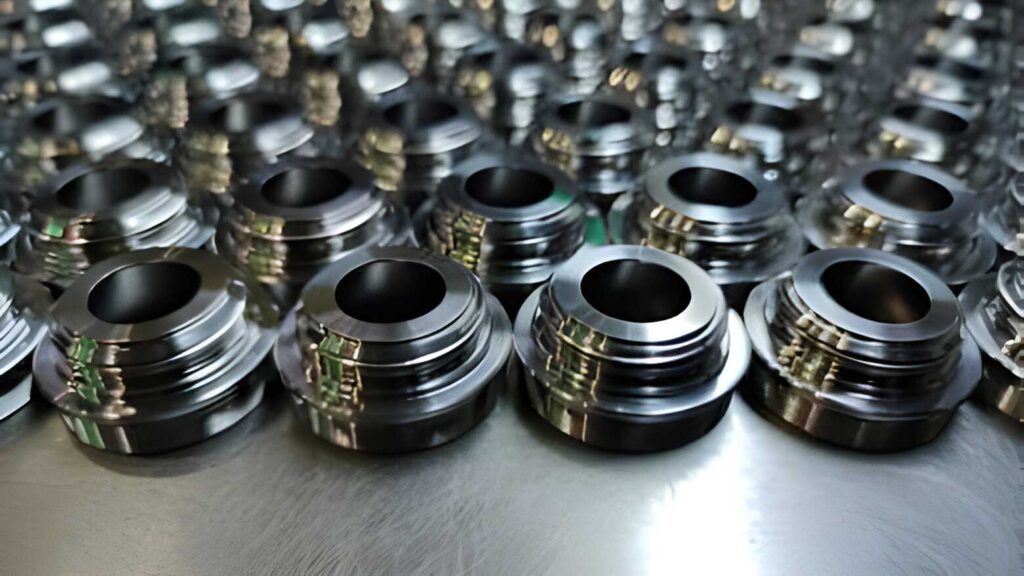
Therefore for this article we will give one way to fast inspection internal bore and external diameter for mass production /tube fiting / fittings .
This way is Pneumatic Measuring Instrument Inspection .
What is Pneumatic Measuring Instrument Inspection ?
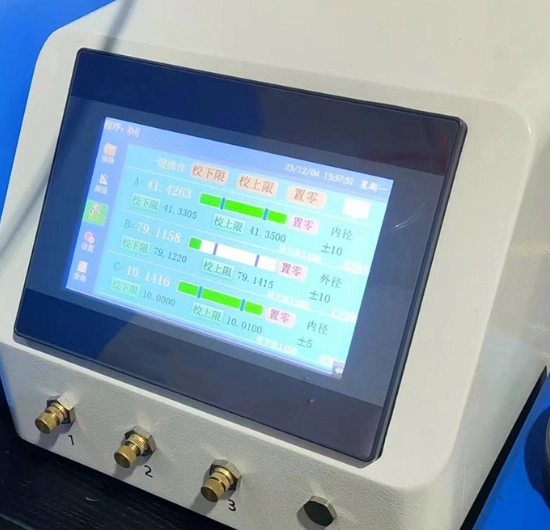
Pneumatic measuring instrument inspection is the process of using air-powered gauges or devices to quickly and accurately measure the dimensions and tolerances of parts, such as pipe fittings or machined components. These instruments are designed to test internal bores, external diameters, and other critical features, ensuring consistent quality while reducing inspection time and labor costs in production
Pneumatic Measuring Instrument Advantages and Disadvantages
Advantages:
-
Fast and Efficient Measurement – Quickly inspects internal bores and external diameters of pipe fittings, improving production line efficiency.
-
High Precision – Measurement accuracy up to 0.005 mm, ensuring reliable CNC quality control.
-
Low Skill Requirement – Operators can easily check parts using red/green indicators, without needing expertise in traditional measuring tools.
-
Reduced Labor Costs – Automated inspection reduces manual labor and speeds up pipe fitting inspection.
-
Consistent Quality Control – Repeatable measurements ensure stable product quality and minimize human errors.
Disadvantages:
-
Initial Investment Required – Purchasing molds and pneumatic measuring instruments involves upfront costs.
-
Limited Flexibility – May not be suitable for highly complex or non-standard parts.
-
Regular Calibration Needed – To maintain high precision, instruments require periodic calibration and maintenance.
How to Use Pneumatic Measuring Instrument Inspection
Pneumatic measuring instrument inspection is designed for fast and accurate dimensional checking, especially for pipe fittings and CNC machined parts. The basic steps are as follows:
-
Calibrate the Instrument
Before inspection, calibrate the pneumatic measuring instrument using a master part or setting gauge to ensure measurement accuracy. -
Connect the Air Supply
Ensure a stable and clean compressed air supply at the specified pressure to maintain consistent measurement results. -
Insert or Position the Workpiece
Place the part into the measuring fixture to inspect the internal bore or external diameter. -
Read the Indicator
The result is displayed through red and green indicators or a gauge scale.-
Green indicates the part is within tolerance
-
Red indicates out-of-tolerance
-
-
Remove the Part and Repeat
Remove the inspected part and continue the process for the next piece, enabling high-speed inspection on production lines. -
Perform Regular Calibration
Periodically recalibrate the instrument to maintain high precision (up to 0.005 mm) and reliable CNC quality control.
Conclusion
Pneumatic measuring instrument inspection is an efficient and reliable solution for fast internal bore and external diameter inspection, especially in CNC machining and pipe fitting production.
By reducing inspection time, lowering labor costs, and minimizing human error, this method helps manufacturers prevent quality issues before they occur and protect profit margins in mass production.
If you are looking for a cost-effective inspection solution for your CNC machined parts or pipe fittings, pneumatic measuring instrument inspection is worth considering.
Feel free to contact us for more details or to discuss your inspection requirements.