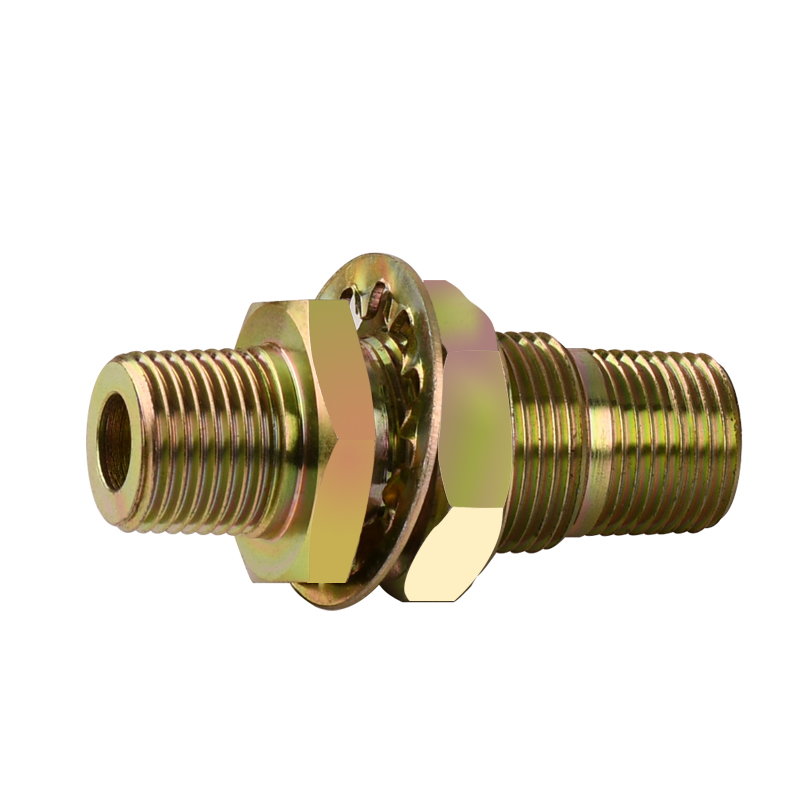
Introduction: The Critical Role of Material Integrity in Modern Piping
In the demanding landscape of global industrial infrastructure, the selection of carbon steel pipe fittings is never merely a procurement line item; it is a critical engineering decision that dictates the safety, efficiency, and longevity of fluid power systems. From high-pressure hydraulic lines in heavy machinery to complex municipal steam networks, the physical properties of carbon steel provide a unique balance of tensile strength, thermal resistance, and ductility that other materials often struggle to match.
For North American facility managers, procurement officers, and lead engineers, the challenge lies in navigating a market flooded with varying quality levels. Reliability in this sector is defined by more than just a part number—it is defined by adherence to rigorous standards such as ASME and ASTM, and the microscopic precision that only advanced CNC machining can provide.
This comprehensive guide explores the technical nuances of carbon steel pipe fittings, their regional applications across the United States, and why precision manufacturing is the ultimate driver of Return on Investment (ROI) in a high-stakes industrial environment.
1. Regional Industrial Challenges: Navigating the American Landscape
The United States presents a diverse range of environmental and operational stresses that directly impact the performance and selection of carbon steel pipe fittings. Understanding these regional variables is essential for specifying components that will not fail prematurely.
The Midwest: Retrofitting Legacy Infrastructure and Fatigue Resistance
In the industrial heartland of the Midwest, many manufacturing facilities and power plants operate with legacy piping systems. The primary challenge here is the integration of new, high-precision components into older networks where pressure fluctuations and vibrations are common.
In these brownfield projects, carbon steel pipe fittings must exhibit exceptional fatigue resistance. Old steam and water lines often experience “water hammer” effects—sudden pressure surges that can momentarily spike the internal PSI far beyond standard operating limits. Precision-machined fittings with perfectly consistent wall thickness are vital. Any thin spots or internal irregularities become stress concentrators where micro-fractures develop over thousands of cycles, leading to catastrophic bursts. For Midwest facilities, the focus is on “over-engineered” durability to handle the unpredictability of aging infrastructure.
Texas and the Southwest: Extreme Pressure in Energy and Petrochemicals
The oil and gas sector in Texas and the Southwest operates under some of the highest PSI requirements in the world. Here, the focus shifts to material grades like ASTM A234 WPB. These fittings are designed to maintain structural integrity under both extreme internal force and high ambient temperatures.
When fluid moves at high velocities through a 2-inch or 4-inch line, any internal turbulence caused by poor machining—such as burrs or uneven transitions—can lead to localized erosion. High-quality carbon steel pipe fittings produced via advanced CNC turning ensure a smooth internal bore. This minimizes turbulence and prevents “flow-accelerated corrosion,” a phenomenon that can thin a fitting’s wall from the inside out until it fails under pressure. In the Southwest, precision is the difference between a safe operation and a multi-million-dollar environmental disaster.
Coastal Regions: Combating Salt Spray and Atmospheric Corrosion
From the Gulf Coast refineries to the Eastern Seaboard’s maritime facilities, high salt spray and humidity present a constant threat of external oxidation. While carbon steel is inherently robust, its vulnerability to rust necessitates advanced surface treatments for components exposed to the atmosphere.
In these saline environments, standard anti-rust oil is insufficient for long-term storage or operation. Procurement managers prioritize carbon steel pipe fittings with Zinc Plating or Dacromet finishes. These sacrificial coatings provide a chemical barrier against the electrolyte-rich coastal air. By extending the service life of the fittings’ exterior, facilities reduce the frequency of maintenance shutdowns and the need for expensive “scrape-and-paint” cycles.
To ensure global interchangeability and safety, carbon steel pipe fittings must conform to established dimensional and material frameworks. At Yuhuan Hongqian Machinery, our production is strictly aligned with the two most critical North American standards.
ASME B16.9: Factory-Made Wrought Buttwelding Fittings
This standard covers the overall dimensions, tolerances, and testing of buttweld components. Whether it is a long-radius elbow, a tee, or a concentric reducer, the fitting must be able to withstand the same bursting pressure as the pipe it is connected to.
In a CNC environment, complying with ASME B16.9 means maintaining a strict tolerance on the bevel end. A perfectly machined bevel ensures that the welder can achieve full penetration during the root pass. If the bevel angle or the “land” thickness varies by even a fraction of an inch, the weld quality is compromised, creating a weak point in the entire piping system.
ASME B16.11: Forged Fittings, Socket-Welding and Threaded
For smaller diameter piping—typically under 4 inches—ASME B16.11 is the gold standard. This involves high-pressure components like hex nipples, couplings, and street elbows. For these carbon steel pipe fittings, the focus is primarily on thread accuracy and socket depth.
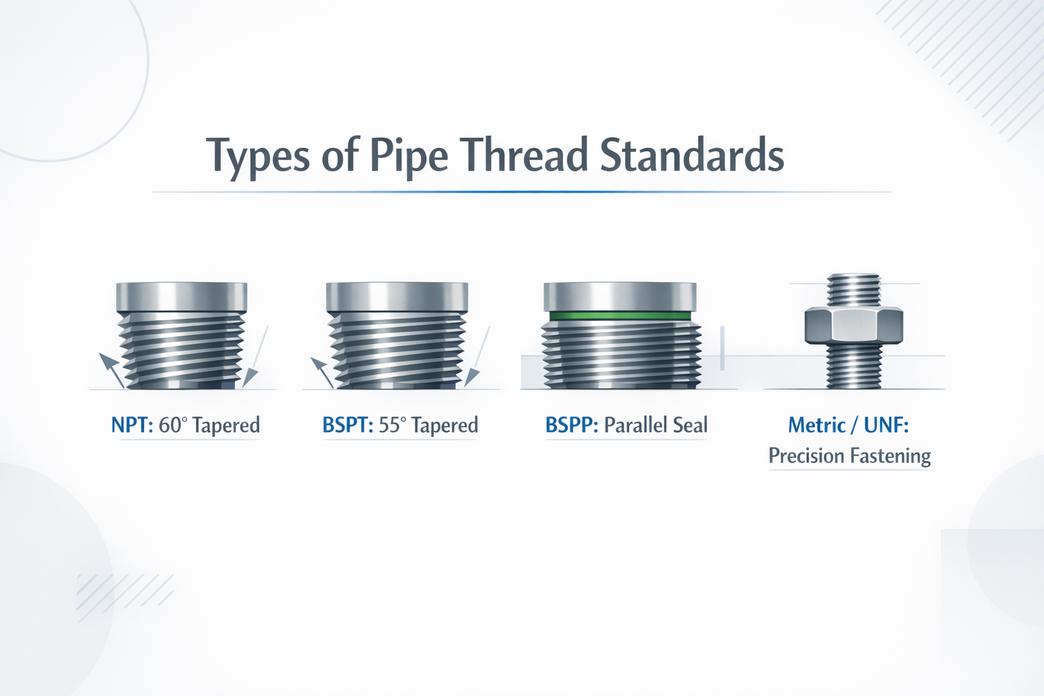
A deviation in thread taper or pitch can lead to a “slow leak” at 3,000 PSI. These leaks are often undetectable during initial testing but cause significant cumulative fluid loss and environmental contamination over time. Our fleet of over 80 CNC lathes allows us to maintain exact pitch and depth required by NPT (National Pipe Thread) standards, ensuring a metal-to-metal seal that remains leak-proof even under vibration.
3. B2B Marketing Strategy: The ROI of Precision
For a B2B buyer, the “cheapest” fitting often becomes the most expensive after accounting for the total cost of ownership. High-precision carbon steel pipe fittings are a strategic investment in system uptime.
Protecting Expensive Commercial Equipment
In high-speed automation and heavy industrial manufacturing, hydraulic pumps and actuators are the heart of the operation. These components are extremely sensitive to particulate contamination. Low-quality carbon steel pipe fittings often have microscopic metal shavings or “chips” left in the threads or internal passages due to poor deburring.
When the system is pressurized, these chips are swept into the fluid stream, where they act as sandpaper, scouring the internal seals of expensive hydraulic pumps. By choosing fittings from a supplier like Yuhuan Hongqian Machinery Co., Ltd, who utilizes ultrasonic cleaning and rigorous inspection, facility managers protect assets worth hundreds of thousands of dollars. “Zero-leak” and “zero-contaminant” fittings are the primary defense against unexpected downtime.
Enhancing Installation Efficiency and Brand Reputation
Labor is frequently the highest cost in any industrial project. If a technician has to fight with a cross-threaded fitting or a part that is slightly out-of-round, the “man-hours” per joint increase exponentially.
Consistent carbon steel pipe fittings allow for seamless “drop-in” installation. When every fitting from a batch of 10,000 pieces is identical to the first, the assembly line moves faster, and the project stays under budget. Furthermore, for OEM manufacturers who build machines for other companies, the quality of the fittings reflects their own brand reputation. A single leaking union on a delivered machine can sour a long-term client relationship.
4. Material Science and Manufacturing Excellence
The performance of carbon steel pipe fittings starts with the raw material and ends with the machining process. Understanding the difference between forging and casting is essential for high-stress applications.
Strategy Comparison: Forged Fittings vs. Cast Fittings
-
Forged Fittings: Created through a process of heat and intense mechanical pressure, the internal grain structure of the steel is compressed and aligned with the shape of the part. This makes forged carbon steel pipe fittings significantly stronger and more resistant to impact. They are the mandatory choice for high PSI hydraulic and steam systems.
-
Cast Fittings: Created by pouring molten metal into a mold. While cost-effective for low-pressure drainage or decorative use, casting can introduce internal porosity (tiny air bubbles) and “sand holes.” Under high pressure, these invisible defects become points of failure.
At Yuhuan Hongqian Machinery, we specialize in machining high-performance parts from forged blanks and solid bars. Our 2,000-square-meter facility is equipped with over 80 CNC machines that transform raw carbon steel into precision-engineered carbon steel pipe fittings that meet the most stringent global公差 (tolerances).
| Feature | Precision CNC Fittings (Hongqian) | Standard Mass-Market Fittings |
| Dimensional Tolerance | Consistently within +/- 0.001 inches | Variable, often exceeding 0.01 inches |
| Surface Roughness | Low Ra values for superior sealing | Rougher finish, requires more sealant |
| Thread Integrity | 100% gauged for NPT/BSPP compliance | Statistical sampling only; high defect risk |
| Internal Cleanliness | Ultrasonic cleaned; free of chips/oils | Often contains machining debris |
| Material Traceability | Full MTC available for every batch | Often missing or unreliable |
6. Facility Manager’s Maintenance Guide: Ensuring Longevity
To get the most out of your carbon steel pipe fittings, facility managers should implement a technical monitoring protocol.
-
Pressure Drop Monitoring: A sudden change in PSI between two points in a system often indicates internal erosion or a partial blockage at a fitting junction.
-
External Inspection for “Sweating”: In high-pressure gas systems, a fitting that appears to “sweat” or frost over might have a microscopic pinhole leak. Carbon steel’s high thermal conductivity makes these temperature changes easy to spot with thermal imaging.
-
Thread Protection: During maintenance, always use high-quality thread lubricants or anaerobic sealants. Because carbon steel is prone to galling if forced, the precision of the initial CNC thread is your best protection against “frozen” joints.
7. FAQ: Addressing High-Stake Procurement Questions
Q: Why is ASTM A234 WPB the preferred material for North American pipe fittings?
A: This grade offers the ideal combination of carbon and manganese to ensure high yield strength while remaining easy to weld. It is the “workhorse” material that provides the best ROI for general industrial use.
Q: How does Hongqian Machinery ensure a 99.9% yield rate?
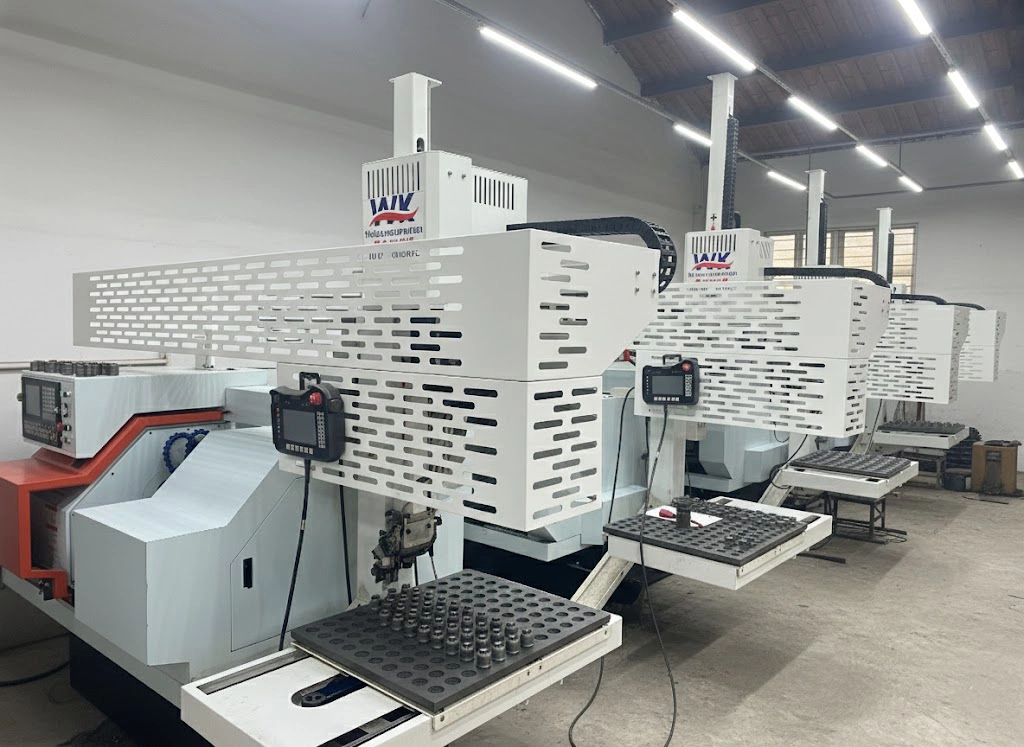
A: We utilize a combination of truss robots for consistent loading and SPC (Statistical Process Control). By measuring parts in real-time during the CNC turning process, we can adjust for tool wear before a part ever falls out of tolerance.
8. The 20-Step Precision Protocol: How We Achieve a 99.9% Yield Rate
At Yuhuan Hongqian Machinery Co., Ltd, we understand that in a high-pressure PSI environment, there is no such thing as a “minor” defect. A microscopic burr or a slight deviation in thread pitch can lead to catastrophic system failure. To mitigate these risks, every batch of carbon steel pipe fittings undergoes a rigorous 20-step manufacturing and quality control protocol.
Raw Material Verification and Spectral Analysis
The process begins long before the first CNC machine starts turning. We conduct a primary spectral analysis on all incoming forged bars and blanks. This ensures that the chemical composition—specifically the carbon and manganese levels—perfectly matches the requirements for ASTM A234 WPB or AISI 1020. By verifying the material grain structure early, we prevent the “brittle fracture” issues that often plague lower-end products.
Precision CNC Turning and Robotic Integration
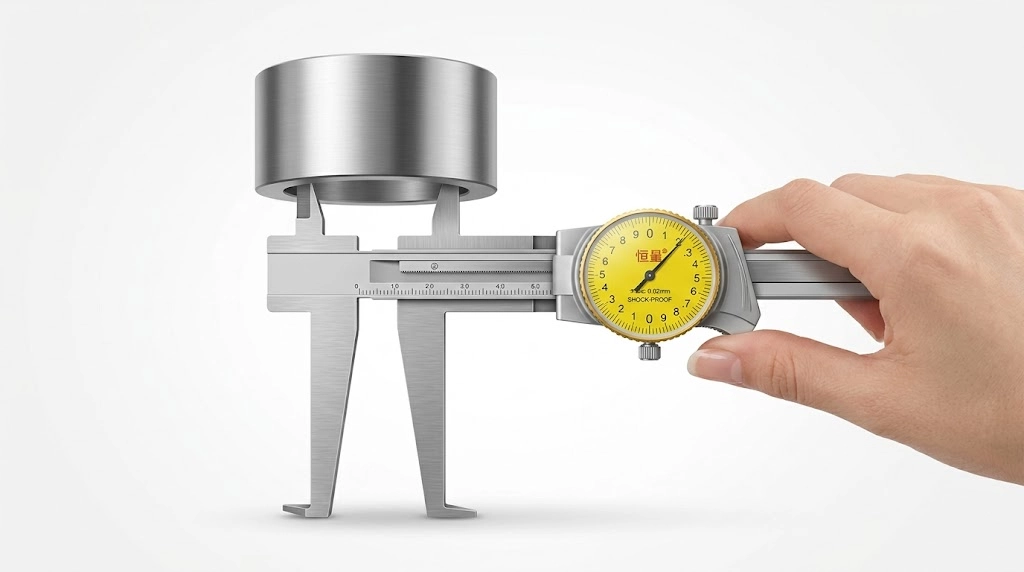
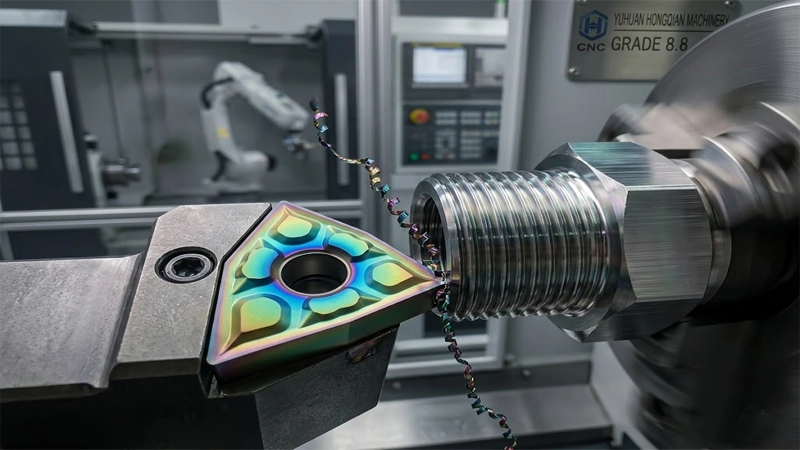
Utilizing our fleet of over 80 CNC machines, we execute the “Rough Machining” and “Precision Finishing” phases in a single setup whenever possible. This preserves the concentricity of the carbon steel pipe fittings. For high-volume orders, our 15 truss robots ensure that the loading and unloading process is identical every time, removing human fatigue from the equation and maintaining a tolerance control within 0.001 inches.
Advanced Deburring and Ultrasonic Cleaning
Internal burrs are the silent killers of hydraulic pumps. Following the machining process, each fitting undergoes specialized deburring to ensure all internal flow paths are smooth. This is followed by ultrasonic cleaning in a multi-stage solvent bath to remove all traces of cutting oils and metallic micro-chips. The result is a “clean-room ready” component that can be installed directly into sensitive automated production lines.
9. Material Encyclopedia: Beyond Standard Carbon Steel
For American engineers, choosing the right grade of steel is as important as the fitting design itself. While ASTM A234 WPB is the industry standard, different applications require specialized carbon steel alloys.
AISI 1020: The Workhorse of Industrial Piping
AISI 1020 is a low-carbon steel known for its excellent weldability and ductility. It is the ideal choice for carbon steel pipe fittings used in general industrial applications where high-strength welding is required. Its ability to be “case-hardened” through heat treatment makes it versatile for components like shafts and valve stems within a piping assembly.
AISI 1045: For High-Stress Mechanical Applications
When a project demands higher tensile strength and wear resistance, we utilize AISI 1045. This medium-carbon steel is often used for heavy-duty couplings and adapters that must withstand significant mechanical torque alongside internal fluid PSI. While it requires more careful pre-heating during welding, its durability in rugged environments is unmatched.
4140 Alloy Steel: The Solution for High-Impulse Systems
In systems where pressure spikes are frequent and violent—such as heavy hydraulic presses or deep-well extraction—we recommend alloy steels like 4140. While it contains chromium and molybdenum, it is often categorized with high-end carbon steel pipe fittings due to its similar machining characteristics. Its high fatigue strength prevents the “crack propagation” that can occur in standard grades under cyclical loading.
10. Facility Manager’s Troubleshooting Guide: Identifying Potential Failures
Even the highest quality carbon steel pipe fittings require proper monitoring. We provide this guide to help North American facility managers prevent unplanned downtime through proactive observation.
Detecting “Galling” in Threaded Connections
Galling occurs when the threads of two metal components seize together during installation. This is particularly common in dry-fit carbon steel systems. If a technician feels a “grinding” sensation during assembly, the fitting should be inspected immediately. Precision CNC threads from Yuhuan Hongqian Machinery are designed with optimal clearance to minimize this risk, but the use of proper thread lubricants remains a best practice for systems operating above 2,000 PSI.
Identifying Erosion-Corrosion Patterns
If you notice a consistent failure at a specific 90-degree elbow, it may be due to “erosion-corrosion.” This happens when high-velocity fluid carries abrasive particles that “sandblast” the internal wall of the fitting. In these cases, upgrading to a higher-density carbon steel pipe fittings with a smoother internal CNC finish can significantly extend the time between replacements.
11. FAQ: Technical and Logistics Mastery
Q: How do you manage Material Traceability for high-volume B2B orders?
A: Every batch of our carbon steel pipe fittings is assigned a unique heat number. This allows us to trace the part back to the specific raw material melt, ensuring that you can provide full compliance documentation to your end-users or safety inspectors.
Q: Can you accommodate custom surface treatments for high-humidity environments?
A: Yes. Beyond standard Zinc Plating, we offer Phosphating, Black Oxide, and specialized Electrophoresis. These treatments are verified for adhesion and thickness to ensure they do not interfere with thread tolerances or PSI ratings.
Q: What is the impact of “Tolerance Control” on system ROI?
A: Tight tolerances mean less stress on the connecting pipes and seals. When a fitting is perfectly round and the threads are perfectly centered, the “assembly stress” on the entire system is reduced. This prevents the premature failure of expensive seals and gaskets, directly lowering your annual maintenance budget.
Conclusion: Engineering the Future of Fluid Power
Precision is not an option; it is a necessity. In the competitive world of North American manufacturing, the quality of your carbon steel pipe fittings defines the reliability of your entire operation. By partnering with Yuhuan Hongqian Machinery Co., Ltd, you are not just buying a component—you are investing in a decade of engineering expertise, a 2,000-square-meter state-of-the-art facility, and a commitment to 99.9% yield-rate excellence.
From the high-pressure oil fields of Texas to the legacy plant retrofits in the Midwest, our mission is to provide the “hidden strength” that keeps your systems running.
Request a Custom Quote or Technical Specification Sheet for your next industrial project.
Connect with our global sales and engineering team today: info@justcncturningparts.com.