Introduction
In modern CNC turning, maintaining consistent quality across high-volume production requires more than just advanced machines. Process control—including cutting speed, feed rate, and operational stability—is the backbone of reliable precision parts manufacturing.
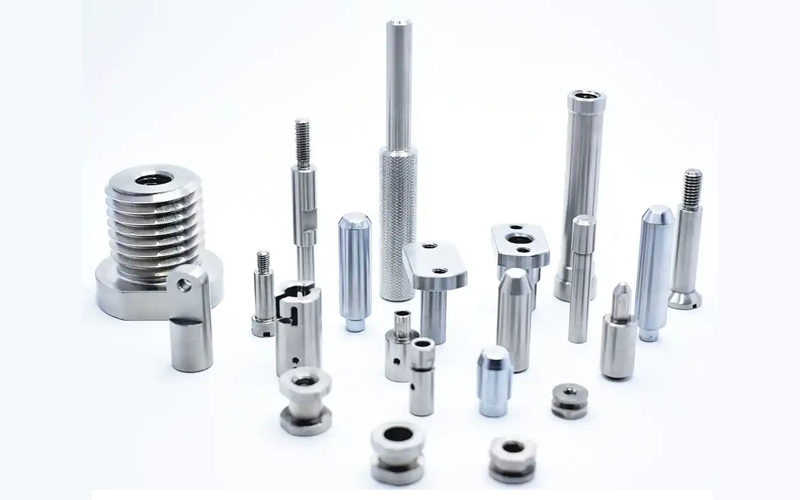
As a CNC turning factory ,yuhuan hongqian serving industries such as automotive, hydraulic systems, and aerospace, we produce high-precision stainless steel, carbon steel, brass, and aluminum parts in batches of over 2,000 units daily, with a total daily output of 30,000 pieces and 80 CNC machines. Our approach combines real-world process control, tool management, in-process inspection, and systematic quality tracking to ensure consistent, reliable parts.
Key Machining Parameters in CNC Turning
Controlling cutting parameters is critical for both efficiency and quality. Different materials and tooling require specific speed and feed combinations:
| Material | Typical Cutting Speed (m/min) | Tool Type | Recommended Feed / Speed Notes |
|---|---|---|---|
| Stainless Steel | 300–800 | Thread Tool: 300–400, External Turning: 600–800 | Requires cutting fluid; high speed can reduce tool life |
| Carbon Steel | 400–1000 | Single Insert: 50–100 parts per insert | Iron parts also generally require cutting fluid |
| Brass | 800–1200 | Thread & External | Excellent machinability, watch for porosity affecting threads |
| Aluminum | 1000–1500 | External / Internal | Soft material; proper fixturing prevents deformation |
Special Processing Constraints:
- Thin-walled parts must maintain at least 0.5 mm wall thickness.
- Deep holes can be processed up to 100 mm without compromising stability.
- Single insert tool life is typically 50–100 parts depending on part structure.
Our factory adjusts speeds and feeds according to each part’s geometry and machining requirement, ensuring both tool longevity and part quality.
How Improper Parameters Cause Quality Problems
Even small deviations in speed or feed can affect:
- Dimensional Accuracy – Variations in cutting force cause drift, particularly in high-precision components like hydraulic fittings or automotive shafts.
- Surface Finish – Excessive speed or feed can lead to chatter, poor finish, and burr formation.
- Tool Life – Overloading a tool increases wear and risk of breakage.
- Process Stability – Instabilities in vibration, thermal expansion, or feed inconsistency can propagate across an entire batch.
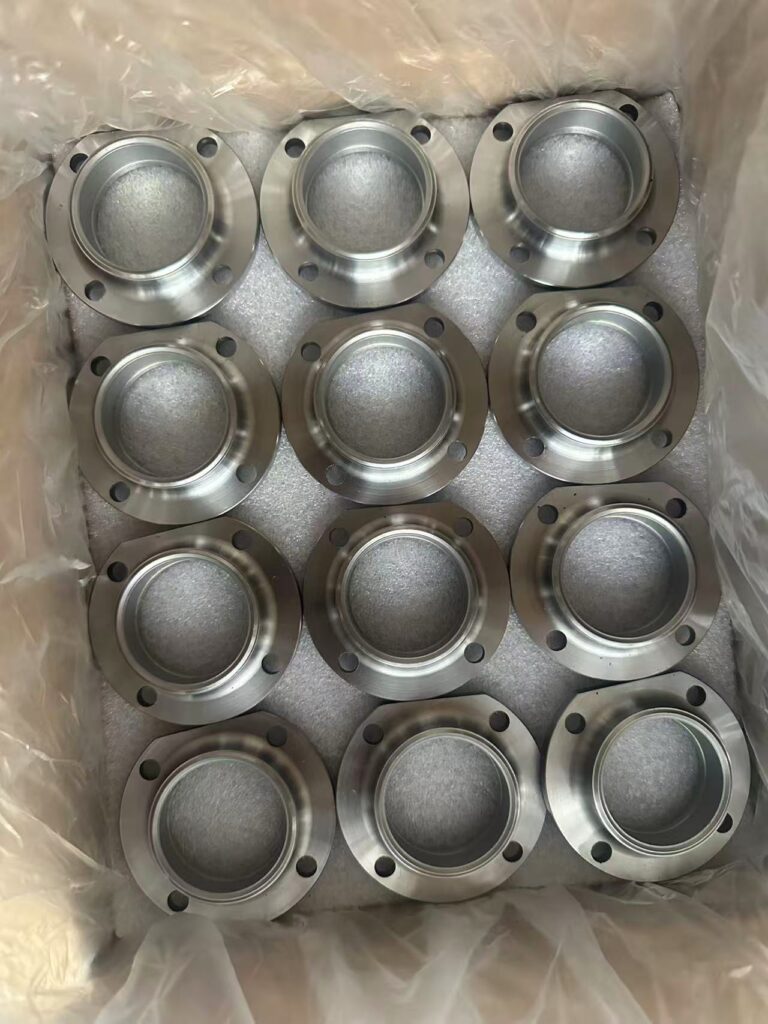
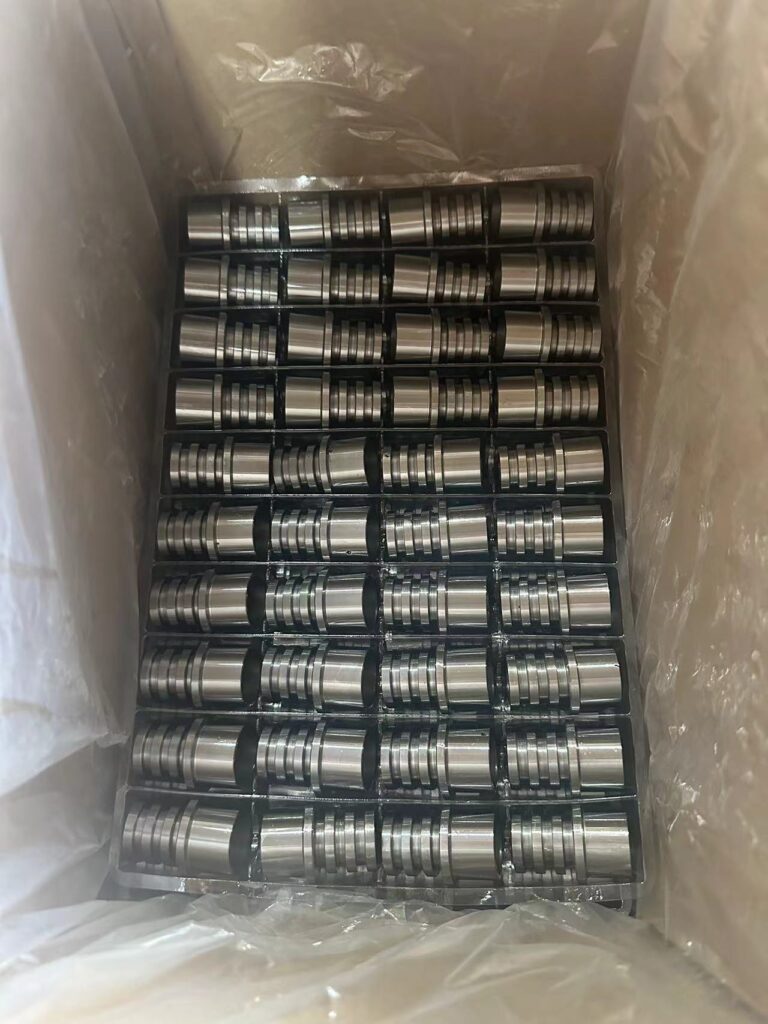
To prevent sudden dimensional jumps, we store every 30–50 pieces in separate trays for verification. Only after passing inspection are parts moved to bulk storage. Any deviations are immediately isolated and flagged, minimizing quality risks.
Roughing vs Finishing Process Control
Roughing Process:
- Focuses on material removal with conservative parameters to ensure tool longevity.
- Leaves uniform allowance for finishing.
- Uses robust tooling capable of withstanding higher cutting forces.
Finishing Process:
- Focuses on tight tolerances (±0.02 mm) and surface quality.
- Slower speeds and optimized feeds prevent chatter and ensure surface integrity.
- Critical for threads, sealing surfaces, and precision features.
Table: Roughing vs Finishing Parameters Example
| Process | Tool Type | Speed Range | Feed Rate | Purpose |
|---|---|---|---|---|
| Roughing | Single Insert | 600–800 | Medium | Remove bulk material safely |
| Finishing | Thread / External | 300–500 | Slow | Tight tolerance, smooth finish |
In-Process Monitoring and Sampling Inspection
Quality monitoring is integrated throughout production:
- Inspection Tools: Calipers, gauges, optical projectors, and coordinate measuring machines (CMM) are all used.
- Sampling Frequency: 10% of production batches are sampled, and each sample is 100% checked.
- Feedback Loop: Any deviation triggers a non-conformance report with time, inspector name, and reason. Non-conforming parts are isolated to prevent mixing with compliant batches.
This workflow ensures immediate detection of process drift without waiting for large batch inspection.
Using SPC to Detect Quality Trends
While our factory does not currently implement full Statistical Process Control (SPC) software, we rely on structured monitoring:
- Batch trays and sampling allow trend observation.
- Critical dimensions (OD, ID, thread profile) are visually and dimensionally tracked.
- When deviations are detected, we adjust machining parameters or isolate affected batches immediately.
Even without formal SPC, this method ensures predictable quality across large production volumes.
Conclusion: Stable Processes Create Consistent Parts
For global buyers seeking high-precision CNC turned parts, process control is as important as material quality and tool management. Our factory’s approach—based on real batch data, adjusted cutting speeds, careful tool monitoring, and rigorous in-process inspection—ensures:
- Dimensional stability and consistent surface finish.
- Reduced tool wear and minimized scrap.
- Reliable production for automotive, hydraulic, aerospace, and industrial machinery clients.
Optional FAQ for Buyers
Q1: How do you maintain stability in high-volume CNC turning?
A1: Through controlled cutting speeds, dedicated trays for small batch checks, tool management, and in-process inspection.
Q2: What materials and tooling do you specialize in?
A2: Stainless steel, carbon steel, brass, aluminum, and tooling including thread tools, external turning tools, and single insert tools.
Q3: How often are tools replaced?
A3: Based on tool life (50–100 parts per insert) or quality trends observed in small batch inspections.
Q4: Can thin-walled or deep-hole parts be processed reliably?
A4: Yes, with minimum wall thickness 0.5 mm and holes up to 100 mm, using proper fixturing and cutting fluids.
Q5: Do you provide documentation or inspection reports?
A5: Yes, non-conforming batches are logged, inspected, and isolated, ensuring traceability and quality assurance.