In the industrial piping industry, quality begins long before the CNC machine starts turning. The performance of stainless steel 304 pipe fittings is fundamentally determined by the purity and grade of the raw material.
Many “non-standard” 304 materials circulate in the market, often with nickel levels below the required threshold, leading to premature intergranular corrosion and stress cracking in high-pressure environments. At our facility, we eliminate these risks at the source. Whether we are processing round bars, hot forgings, or investment castings, every batch undergoes strict PMI (Positive Material Identification) testing via spectrometer to ensure the chemical composition strictly adheres to ASTM A182 and international standards.
Technical Specifications: Chemical Composition of Stainless Steel 304 Pipe Fittings
To ensure superior corrosion resistance and mechanical strength, our 304 material maintains a precise balance of elements. Below is the standard chemical profile we adhere to for all our stainless steel 304 pipe fittings:
Chemical Composition (ASTM A182 / A276)
| Element | Symbol | Composition (%) |
| Chromium | Cr | 18.00 – 20.00 |
| Nickel | Ni | 8.00 – 10.50 |
| Carbon | C | ≤ 0.08 |
| Manganese | Mn | ≤ 2.00 |
| Silicon | Si | ≤ 1.00 |
| Phosphorus | P | ≤ 0.045 |
| Sulfur | S | ≤ 0.030 |
Mechanical Properties & Performance Indicators
Beyond the chemistry, our stainless steel 304 pipe fittings meet the following physical benchmarks to handle demanding industrial applications:
- Tensile Strength: ≥ 515 MPa
- Yield Strength (0.2% Offset): ≥ 205 MPa
- Elongation: ≥ 40%
- Hardness (Brinell): ≤ 201 HBW
How 304 Material Properties Enhance Different Manufacturing Processes
Understanding the metallurgy of 304 allows us to optimize various production methods for stainless steel 304 pipe fittings:
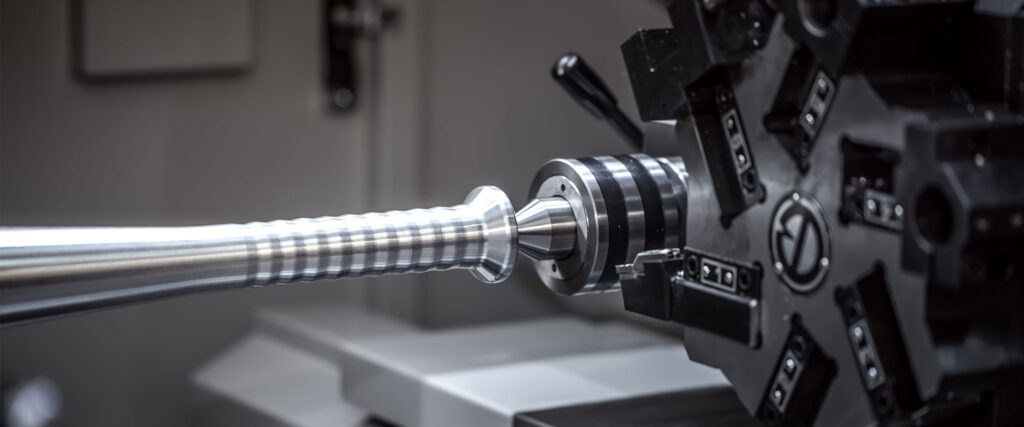
Round Bar Machining: The excellent ductility of 304 ensures smooth chip breaking during high-speed CNC turning, resulting in a superior surface finish.
Hot Forging : Precise temperature control during forging refines the grain structure of the 304 alloy, maximizing the pressure-bearing capacity of the fittings.
Silica Sol Casting : Our high-purity 304 melt ensures excellent fluidity in the mold, eliminating internal defects like gas pores or shrinkage.
Manufacturing Methods: 5 Core Processes for Stainless Steel 304 Pipe Fittings
At Yuhuan Hongqian Machinery, we believe there is no “one-size-fits-all” process. To ensure every stainless steel 304 pipe fitting performs optimally in its specific environment, we offer five distinct manufacturing solutions tailored to your technical and budgetary requirements.
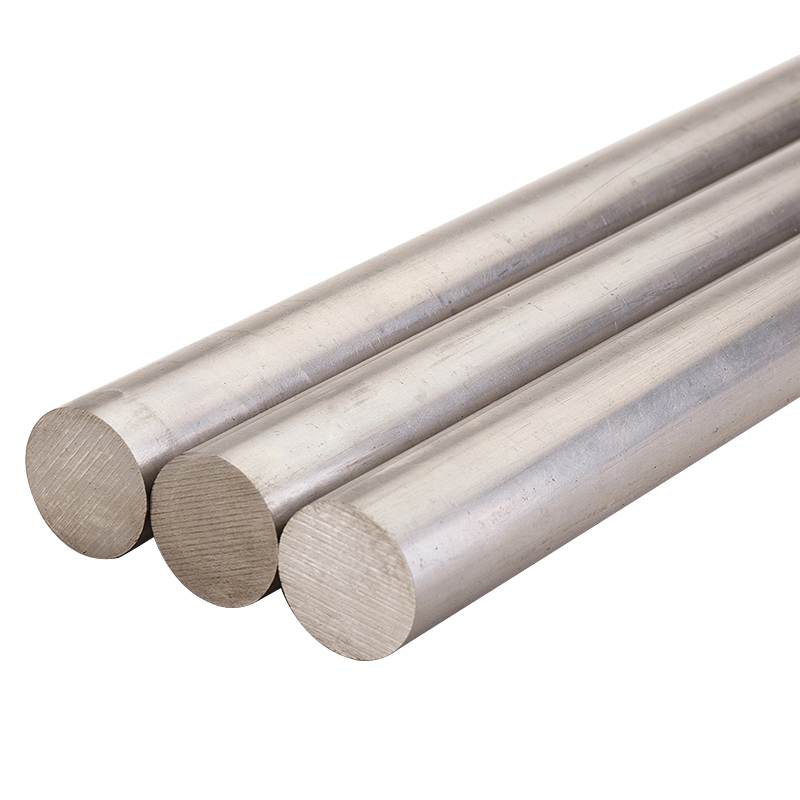
1. CNC Machined Pipe Fittings from Round Bar
Best For: Instrumentation fittings, high-pressure hydraulic adapters, and custom precision parts.
-
The Process: We utilize our fleet of 80+ advanced CNC lathes to machine fittings directly from solid 304 stainless steel round bars.
-
Core Advantage: This method provides the highest dimensional accuracy and a superior surface finish (Ra 0.8-1.6). Since the raw material is a rolled bar, the internal structure is 100% dense with zero porosity.
-
Expert Insight: We exclusively use bar stock with Nickel content ≥ 8%. By using single-clamping CNC processes, we guarantee the coaxiality and verticality of every thread.
2. Hot Forging for Forged Pipe Fittings
Best For: Heavy-wall bushings, high-pressure unions, and critical safety components.
-
The Process: 304 blanks are heated to a plastic state and instantly forged into shape using high-pressure dies.
-
Core Advantage: Hot forging refines the metal’s grain flow and significantly increases surface hardness. This makes the fittings more resistant to wear and prevents “thread galling” during installation.
-
Factory Detail: We strictly monitor forging temperatures to prevent grain coarsening. This ensures our forged stainless steel 304 pipe fittings remain leak-proof even under extreme pressure.
3.Cold Heading Process for Pipe Fittings
Best For: High-volume fasteners and standard connector blanks.
-
The Process: Metal is formed at room temperature by forcing it into dies using high-speed mechanical pressure.
-
Core Advantage: Exceptional production speed and high material utilization, making it the most cost-effective solution for bulk orders.
-
Quality Critical: We implement a mandatory Tempering process after cold heading. Without this heat treatment to relieve internal stress, cold-headed blanks are highly susceptible to microscopic cracks.

4. Silica Sol Investment Casting for Precision Pipe Fittings
Best For: Complex elbows, tees, and sanitary-grade fittings.
-
The Process: A premium “lost-wax” casting method using a high-grade silica sol ceramic shell.
-
Core Advantage: Produces “near-net shape” products with excellent aesthetics and tight tolerances (CT4-CT6).
-
Practical Truth: All castings have an inherent risk of “shrinkage porosity.” Therefore, we perform a 100% Water Pressure Test on all silica sol fittings to ensure zero-leakage performance before shipment.
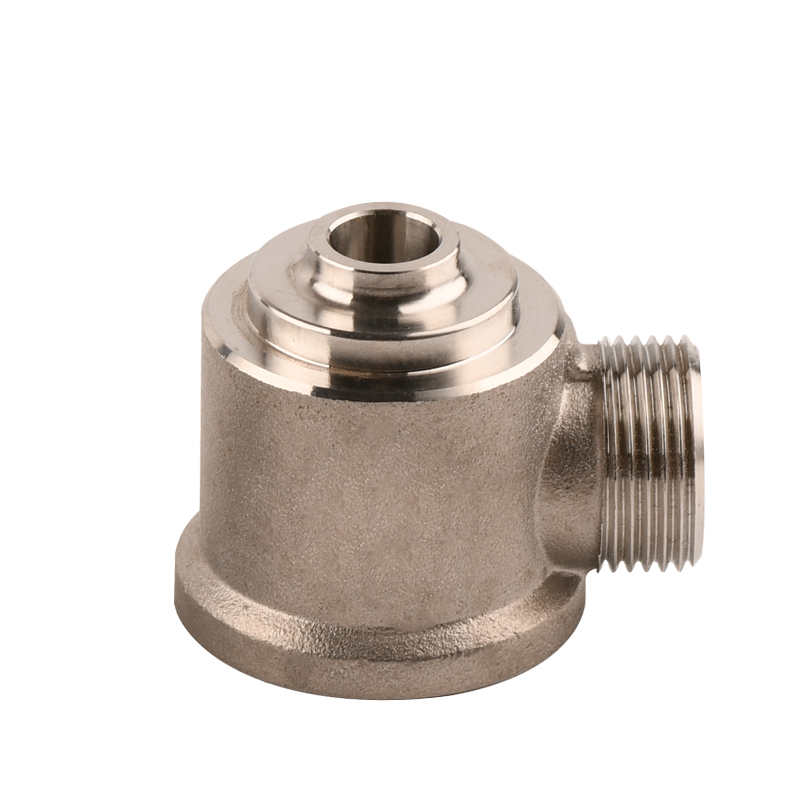
Silica sol investment casting for complex 304 stainless steel fittings
5. Water Glass Casting
Best For: Large industrial valve components and non-critical pipe supports.
-
The Process: A traditional and cost-efficient investment casting method using sodium silicate as the binder.
-
Core Advantage: Provides a massive price advantage for large-diameter products while maintaining the chemical integrity and corrosion resistance of the 304 alloy.
-
Best Scenario: Ideal for large-scale projects where surface finish is secondary to cost-optimization.
Deep Insight: Choosing Between 304 vs 304L pipe fittings
While standard 304 is the “workhorse” of the industry, many high-end projects specifically request 304L (Low Carbon) for their pipe fittings. Understanding the subtle difference in carbon content can save your piping system from premature failure.
1. The Carbon Difference & Intergranular Corrosion
The primary difference lies in the Carbon (C) content:
-
Standard 304: Carbon content is capped at 0.08%.
-
304L (Low Carbon): Carbon content is limited to a maximum of 0.03%.
2. Why it Matters for Welding
When you weld stainless steel 304 pipe fittings, the high temperature can cause “chromium carbide precipitation” at the grain boundaries. This depletes the chromium near the weld, leading to Intergranular Corrosion (often called “weld decay”).
-
Our Solution: By using 304L, the lower carbon level prevents this precipitation, ensuring the fitting remains corrosion-resistant even after heavy welding without the need for post-weld annealing.
3. Mechanical Strength vs. Corrosion Resistance
-
304: Offers slightly higher mechanical strength due to higher carbon.
-
304L: Offers superior reliability in corrosive environments after welding.
Final Verdict: Excellence Beyond the Surface
Choosing the right manufacturing process for stainless steel 304 pipe fittings is about more than just cost—it’s about ensuring the safety and longevity of your industrial system. Whether you prioritize the extreme precision of CNC Machining, the rugged durability of Hot Forging, or the cost-efficiency of Casting, the foundation remains the same: Raw material integrity.
At Yuhuan Hongqian Machinery, we don’t just sell fittings; we provide engineering peace of mind. With our 10+ years of industrial expertise and a fleet of 80+ CNC machines in Taizhou, we guarantee that every piece meets the 8% Nickel threshold and undergoes rigorous quality checks.
Ready to Optimize Your Piping System?
Don’t leave your project’s success to chance. Contact our technical team today for:
-
Custom Material Analysis: 304 vs. 304L recommendations for your specific environment.
-
Process Consulting: Finding the perfect balance between performance and budget.
-
Rapid Quotations: Competitive pricing for both small-batch precision parts and high-volume orders.
[Button: Get a Professional Quote Now]