
Yuhuan honqgian machinery col.,ltd company is a professional produce pipe fitting ,include iron , stainless steel , aluminum ,brass material .
During work for these material , we met many problem in past , today mainly discuss what problems we met when produce aluminum pipe fittings .
Aluminum pipe fitting is a machined or cast component used to connect aluminum pipes together. Aluminum fittings are commonly made from alloys like 6061, 6063, or 5052, which offer good strength, durability, and excellent corrosion resistance.
Aluminum pipe fittings are chosen for several reasons:
About 1/3 the weight of steel, easy to install and ideal for mobile machinery, automotive, and aerospace systems.
Aluminum naturally forms an oxide film that protects it from rust—useful for outdoor, marine, and chemical environments.
Works well with CNC machining, CNC turning, CNC milling—suitable for custom pipe fittings.
Cheaper than stainless steel and easier to machine than brass.
Especially alloys like 6061-T6.
Automotive piping and connectors
Hydraulic & pneumatic systems (low to medium pressure)
Water lines and irrigation
HVAC systems
Fuel, oil, and air lines
Marine fittings
Industrial machinery
Before cnc processing aluminum pipe fitting blank, it is necessary to clean the surface of dust and oil to avoid affecting the next step of processing. Keeping the work area clean can also prevent serious surface damage caused by foreign particles mixing with the aluminum.
Aluminum is a relatively fragile metal, so it is important to control the force applied during cnc processing to avoid aluminim pipe fitting surface damage. Using appropriate tools, such as milling cutters or grinding heads, can help minimize damage to the surface.
During the processing of aluminum products, the surface can easily be damaged, which not only affects appearance but may also reduce service life. To prevent this, avoid scratches from contact with other metals and take precautions to protect the surface during processing.
When processing aluminum products, lubricants should be used to prevent surface damage caused by friction and high temperatures. Proper lubricants can reduce the friction coefficient of aluminum, decrease processing pressure, and prevent sharp cutting tools from scratching the surface. Avoid to use mistake lubricants, it is easy cuase the aluminum pipe fitting surface corrission and have White spots.
Aluminum anodizing is a crucial surface treatment that enhances corrosion resistance and durability while providing decorative options. Among anodizing types, natural (clear) anodizing and colored anodizing are the most common. Natural anodizing creates a transparent oxide layer that preserves aluminum’s original silver-white metallic color, typically with a thin layer of 5–20 μm. It is ideal for applications where the natural aluminum appearance is preferred, such as appliances, automotive parts, and industrial components.
Colored anodizing, on the other hand, allows the aluminum surface to be dyed in various shades like black, gold, or red. It provides both protective and decorative benefits, with film thickness generally between 10–25 μm. This type is widely used in architectural panels, electronics enclosures, and decorative hardware where aesthetics are important.
The following table summarizes the key differences between natural (clear) anodizing and colored anodizing:
| Feature | Natural/Clear Anodizing | Colored Anodizing |
|---|---|---|
| Definition | Transparent oxide layer, keeps aluminum’s original color | Oxide layer, can be dyed in various colors |
| Appearance | Silver-white, natural metallic look | Black, gold, red, or other colors |
| Film Thickness | 5–20 μm | 10–25 μm (industrial applications can be thicker) |
| Function | Corrosion protection while preserving natural look | Corrosion and wear protection, decorative appeal |
| Applications | Appliances, automotive, industrial parts | Architectural panels, electronics, decorative hardware |
| Surface Character | Slightly matte, natural metal feel | Glossy or matte, customizable appearance |
💡 Summary: Natural anodizing is a type of anodizing focused on preserving aluminum’s natural color, whereas anodizing in general includes both clear and colored treatments. Choosing the right anodizing type depends on whether you prioritize natural appearance or decorative versatility.
When you produce Aluminum pipe fittings , the drawing must remark the detail surface demand .When it demands natural anodizing . It is suitable to use bar ,pipe ,forging material . No limited demand . But when the aluminum pipe fittings blank is red-forging process ,must need take the samples to natural anodizing . After anodizing ,check the surafce carefully . Yuhuan hongqian machinery co.,ltd have experience that the mould design not suitable . Then after natural anodizing , bath goods have the crack inside . It casue a big problem loss .
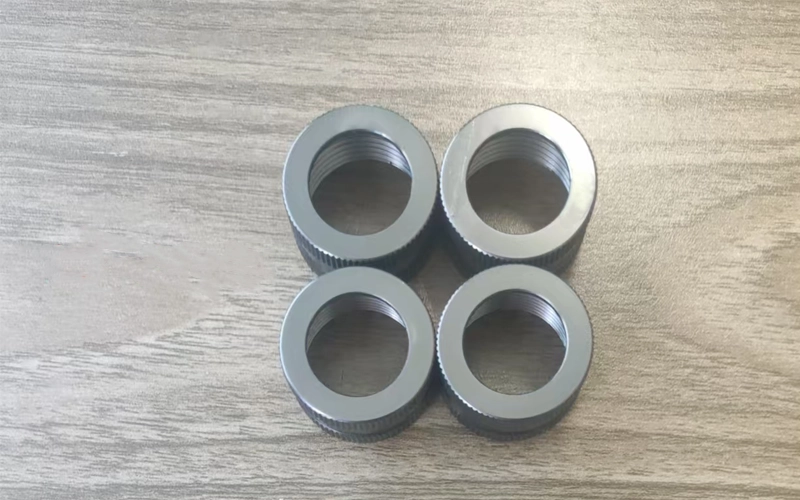
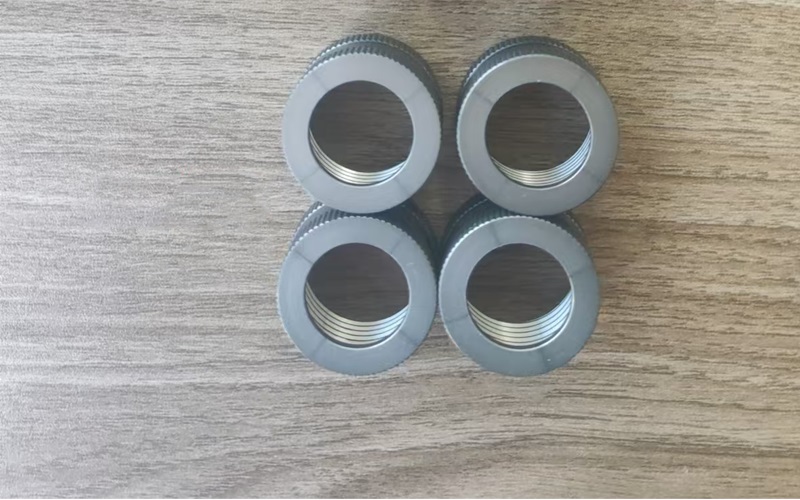
And when the custom aluminum parts demand colored anodizing . It is important to choose raw material . Must choose bar or forging type blank to cnc machining produce . When you choose pipe type blank , then after cnc turning process, All are perfect before colored anodizing . But when you after surface treatment . There will be have a clear line in the pipe fitting surafce . This line is the Aluminum extrusion line by the mould . More detail you can check the photo Bar meterial made and pipe material made as follow :
Anodizing color variation is one of the most common challenges in the production of aluminum pipe fittings, especially when dealing with small-batch orders. In the anodizing process, each color tone must be precisely matched, and any slight difference in electrolyte concentration, temperature, alloy composition, or immersion time can cause visible inconsistencies. For small quantities, it is nearly impossible to eliminate major color differences because anodizing factories cannot afford to custom-tune color formulas for every micro-batch. Consistent color can only be achieved when producing large volumes, where manufacturers can coordinate directly with the anodizing plant to develop a dedicated dye formulation specifically matched to the approved sample. However, this customized color calibration comes with significantly higher production costs and setup time. Therefore, small-batch aluminum pipe fittings often show unavoidable shade variations, while large-batch production offers the best chance to achieve uniform, sample-level color consistency in anodized finishes. This is why communication with your anodizing supplier and proper batch planning are crucial for maintaining stable color quality in aluminum pipe fittings.
Aluminum is one big advantange material to produce aluminum pipe fittings, aluminum pipe tee fitting,aluminum irrigation pipe fittings,aluminum air pipe fittings , we are the china cnc turning parts manufacture that could supply different material , include aluminum , stainless steel , carbon steel , brass material parts , based on your drawing , samples . In our past 10 years , we get a lot of experience to help solve your problem . For this article we focus on help people understand what is aluminum pipe fittings , aluminum material advantage , when you choose aluminum material , what problem you will met and what you should know before you purchase and place order .