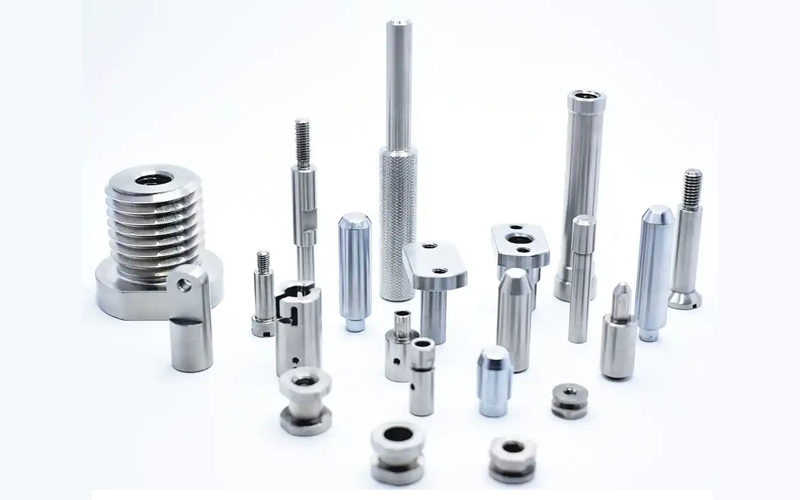
The topic of male and female adapter
Adapter fittings are essential components used in hydraulic systems, brake lines, pneumatic equipment, and fluid transfer pipelines. Whether you are working with carbon steel adapters, SS304, or SS316 stainless steel, understanding how these fittings work — and how they are manufactured — is key to ensuring a safe and reliable connection.
What Is a Male and Female Adapter?
Adapter fittings are connectors that allow two different thread types, sizes, or pipe systems to join together. The terms male and female describe how the threads interact.
Male Adapter
A male adapter has external (outside) threads.
It screws into another fitting.
You’ll typically see male adapters described as:
-
Male NPT / NPTF
-
Male BSPT
-
Male flare
-
Male straight thread
Male adapters are common in hydraulic systems, automotive brake lines, and industrial piping.
Female Adapter
A female adapter has internal (inside) threads.
It receives a male thread.
Examples include:
-
Female NPT /NPTF
-
Female BSPP
-
Female straight thread
Why Use Male-Female Adapters?
Adapters exist because real-world applications rarely use the same thread standards. A machine might use BSPP threads while your tubing is NPT. A male × female adapter solves this mismatch safely and easily.
Common configurations include:
-
Male NPT × Female NPT
-
Male BSP × Female BSPP
-
Male metric × Female NPT
-
Male JIC × Female NPT
Which Is Correct — “Adapter” or “Adaptor”?
Both spellings exist, but the correct version depends on region and industry.
“Adapter” (More Common in Engineering & North America)
-
Standard spelling in the U.S. and most technical industries
-
Used in mechanical engineering, CNC machining, automotive, and hydraulics
-
Seen in terms like adapter fitting, adapter cable, NPT adapter
“Adaptor” (More Common in the UK)
-
Seen in general British English
-
More common for electrical accessories (such as “plug adaptor”)
Which one should you use?
In the machining, pipe fitting, and hydraulic world, the preferred spelling is:
➡️ adapter
So if you want better SEO for industrial customers, always use adapter fitting, not adaptor fitting.
How to Tell if a Thread Is Male or Female
Identifying thread type is essential before selecting or manufacturing an adapter. Misidentifying threads leads to leaks, cross-threading, or even equipment failure.
Male Thread Characteristics
-
Threads are on the outside
-
Visible, raised ridges around the exterior
-
Screws into another fitting
-
Often marked as: M, Male, EXT, External
Female Thread Characteristics
-
Threads are on the inside
-
Located inside a hex body or round body
-
Receives a male thread
-
Marked as: F, Female, INT, Internal
Quick Field Methods to Identify
-
Look with your eyes → Outside threads = male; inside threads = female
-
Feel with your finger → Inside grooves = female
-
Check connection direction → If it receives another thread, it is female
-
Use a thread gauge for accuracy
Bonus Tip: Thread Standard Identification
Adapter fittings may use:
-
NPT / NPTF (American tapered thread)
-
BSPP / BSPT (British parallel/taper)
-
Metric threads
-
JIC 37° flare threads
Correct identification is critical before machining or installing.
How to CNC Turning Process an Adapter Fitting
Manufacturing adapter fittings requires precision because threads must seal perfectly under pressure. Most adapters are produced by CNC turning, especially when made from SS304, SS316, or carbon steel.
Below is a simplified version of the CNC machining workflow.
Step 1 — Material Selection (Carbon Steel, SS304, SS316)
-
Carbon Steel (Iron)
Strong, economical, machinable. Ideal for hydraulic systems and general industry. Often needs galvanizing, zinc plating, black oxide, or electrophoresis for corrosion resistance. -
SS304
Excellent corrosion resistance. Suitable for general fluids, water systems, low-chloride environments. -
SS316
Superior resistance to corrosion and chemicals. Best for:-
Marine environments
-
Chemical lines
-
High-pressure hydraulic systems
-
Food-grade or medical applications
-
The choice of material depends on pressure, corrosion, cost, and fluid type.
Step 2 — Cutting Raw Material
Adapter blanks come from:
-
Round bar stock
-
Cold forging blanks
-
Hot forging blanks
For small batches, bar stock turning is most cost-effective.
For high-volume production, cold forging or hot forging blanks reduce machining time and cost.
Step 3 — Turning the Outer Shape
A CNC lathe performs:
-
Facing
-
OD turning
-
Grooving
-
Chamfering
-
Hex shape machining (if required, via CNC milling or broaching)
Adapter fittings often use hex bodies like:
-
Hex 9/16″
-
Hex 3/4″
-
Hex 7/8″
-
Hex 1″
A precise hex is important for wrench installation.
Step 4 — Drilling & Boring the Inner Port
This step creates:
-
The internal hole
-
The female thread cavity (if needed)
-
Different diameters for stepped adapters
Machine must ensure:
-
Concentricity
-
Smooth surface roughness
-
Correct diameter tolerance before threading
Step 5 — Threading (Male or Female)
Depending on the design:
-
External threading → male adapter
-
Internal threading → female adapter
Threading is done by:
-
CNC single-point threading
-
Thread rolling (for some carbon steel types)
-
Thread cutting taps for female threads
Common threads include:
-
NPT / NPTF
-
BSPP / BSPT
-
Metric
-
UNF / UNC
-
JIC 37° flare seating surface
For NPT/NPTF threads, taper angle and pitch accuracy are critical to seal properly.
Step 6 — Deburring & Surface Treatment
After machining, adapters must be deburred to avoid thread damage.
Surface treatments vary by material:
-
Carbon steel → zinc plating, black oxide, galvanizing
-
SS304/SS316 → usually no plating, but may need passivation
Step 7 — Pressure Testing & Quality Inspection
High-quality adapter fittings must pass:
-
Thread gauge inspection
-
Go/No-Go tests
-
Surface roughness check
-
Pressure test (especially for hydraulic adapters)
-
Visual inspection for burrs and surface defects
This ensures fittings are safe and leak-free.
Why Material Choice Matters (Carbon Steel vs SS304 vs SS316)
Carbon Steel Adapters
-
Strong and cost-effective
-
Common in hydraulic machinery
-
Needs protective coatings
Best for: General industry, construction equipment, automotive hydraulics.
SS304 Adapters
-
Good corrosion resistance
-
Affordable stainless solution
-
Suitable for water systems and food machines
Best for: Water lines, moderate corrosion environments, industrial equipment.
SS316 Adapters
-
Extra corrosion resistance
-
Excellent in chemical and marine environments
-
Highest performance
Best for: Chemical plants, marine applications, high-pressure fluid lines.
Conclusion
Male and female adapter fittings play a critical role in connecting pipes, hoses, and hydraulic systems. Understanding thread gender, correct spelling, CNC manufacturing steps, and material differences helps you choose the right adapter for your application.