 When it comes to assembling machinery, industrial equipment, or even simple household fixtures, fasteners play an essential role in ensuring stability and durability. Among the most commonly used fasteners are hex nuts, bolts, and other types of nuts. Despite their frequent use, many people often confuse these components and are unsure about their specific differences and applications. This article will provide a detailed overview of hex nuts, heavy hex nuts, and bolts, explaining their definitions, types, functions, and unique characteristics.
What is a Hex Nut?
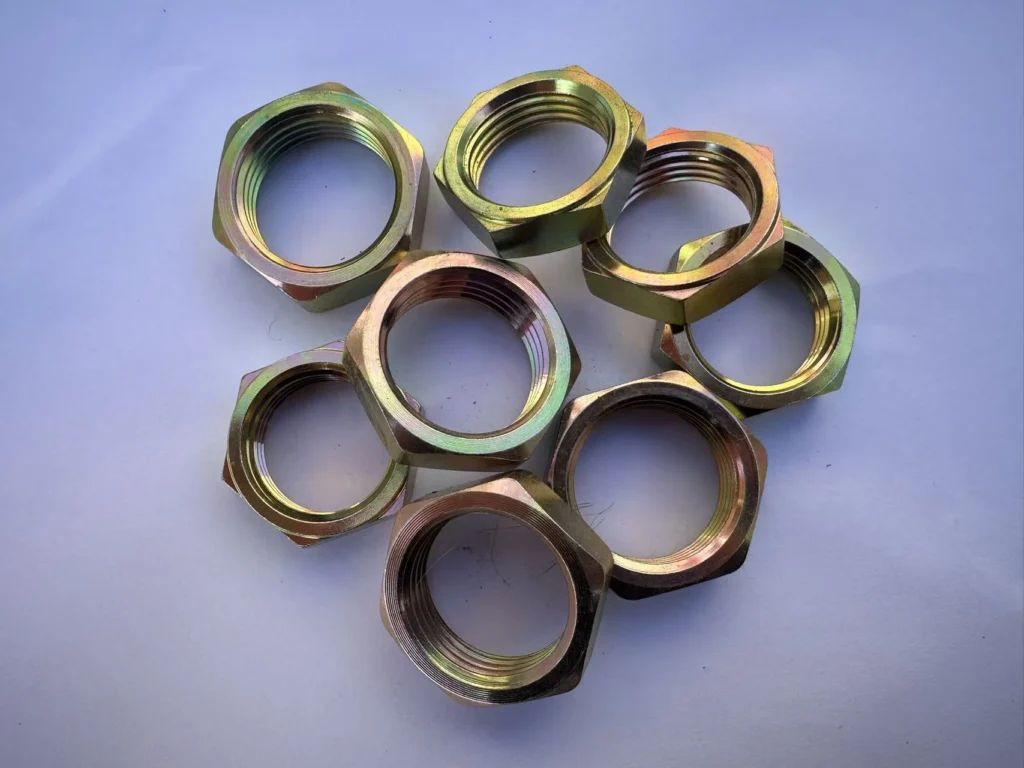
A hex nut is a type of fastener characterized by a hexagonal (six-sided) shape and an internal threaded hole. It is designed to mate with a bolt or threaded rod to secure two or more components together. Hex nuts are one of the most widely used nuts in both industrial and residential applications due to their ease of installation and strong holding capability.
Types of Hex Nuts
Hex nuts come in various types, each suited for specific applications:
-
Standard Hex Nut: The most common hex nut used in general machinery, construction, and automotive applications.
-
Heavy Hex Nut: A thicker and larger version of the standard hex nut, providing extra strength for high-stress environments such as structural steel connections.
-
Lock Nuts: Designed to resist loosening due to vibration or torque. Examples include nylon-insert lock nuts and all-metal lock nuts.
-
Flange Hex Nuts: These nuts include a flange at one end that acts like a built-in washer to distribute load and reduce damage to the mating surface.
Function of Hex Nuts
The primary function of a hex nut is to secure components together by threading onto a corresponding bolt or screw. It can provide a tight, stable connection that resists loosening under mechanical stress. In industrial applications, hex nuts are commonly used to attach machinery parts, structural elements, and pipelines.
Features and Materials
-
Shape: Hexagonal, making them easy to grip with wrenches or pliers.
-
Threading: Internal threads match the external threads of bolts or screws.
-
Materials: Typically made of carbon steel, stainless steel, brass, or other alloys for corrosion resistance and durability.
Heavy Hex Nut: A Stronger Alternative
A heavy hex nut is similar in function to a standard hex nut but is larger and thicker, offering greater strength and load-bearing capacity. Heavy hex nuts are often used in construction, structural steel assemblies, and high-strength bolting applications.
Key Characteristics
-
Dimensions: Larger across the flats and thicker than standard hex nuts.
-
Strength: Designed to handle higher torque and stress without deforming.
-
Applications: Ideal for heavy machinery, bridge construction, and structural frameworks where durability is critical.
What is a Bolt?
A bolt is a fastener with an external threaded shaft that pairs with a nut or threaded hole to join two or more components securely. Bolts are designed to provide a removable or adjustable connection, making them essential for maintenance and repair operations.
Types of Bolts
Bolts are available in numerous varieties depending on their intended use:
-
Standard Bolts: Commonly used in machinery and construction.
-
High-Strength Bolts: Made from hardened steel for structural applications requiring high tensile strength.
-
Anchor Bolts: Used to secure objects to concrete or masonry.
-
Stud Bolts: Threaded on both ends and often used for flange connections.
Functions of Bolts
Bolts function by creating a strong clamping force when tightened with a corresponding nut. They are widely used in machinery assembly, automotive components, piping systems, and construction projects. Bolts provide secure, removable connections, allowing disassembly for maintenance or replacement.
Features and Materials
-
Shape: Cylindrical with external threads; one end often features a head for wrenching.
-
Materials: Typically made from carbon steel, stainless steel, alloy steel, and sometimes brass or aluminum for corrosion resistance.
-
Head Types: Hex head, square head, or socket head to suit different installation tools.
The Difference Between Hex Nuts, Bolt Nuts, and Standard Nuts
Many beginners confuse hex nuts, bolt nuts, and other types of nuts, but understanding their differences is essential for selecting the right fastener:
| Feature | Hex Nut | Heavy Hex Nut | Bolt Nut |
|---|---|---|---|
| Shape | Hexagonal | Hexagonal, thicker | Hexagonal or other shapes, matches bolt threads |
| Thickness | Standard | Thicker | Standard or heavy |
| Strength | Medium | High | Depends on material and type |
| Typical Use | General machinery, light assembly | Structural steel, heavy machinery | General fastening with bolts |
| Material | Steel, stainless steel, brass | Steel, alloy steel | Steel, stainless steel, alloy steel |
In simple terms, a hex nut is the standard nut for most applications, a heavy hex nut is its stronger version for demanding environments, and a bolt nut is any nut used specifically with a bolt to secure components.
Applications of Hex Nuts and Bolts in Industry
Hex nuts and bolts are indispensable in various industries:
-
Construction: Used to assemble steel frameworks, scaffolding, and building structures. Heavy hex nuts are preferred for high-stress joints.
-
Machinery Manufacturing: Essential for assembling equipment, engines, and production machinery.
-
Automotive: Secures parts like engines, chassis components, and suspension systems.
-
Plumbing and Piping: Used in flanges and pipe fittings to provide a secure, leak-proof connection.
-
DIY and Home Projects: From furniture assembly to repairing household appliances, hex nuts and bolts are versatile fasteners.
Tips for Choosing the Right Nut and Bolt
Selecting the correct combination of nut and bolt ensures durability and safety:
-
Material Compatibility: Match the nut and bolt material to prevent corrosion.
-
Strength Requirements: Use heavy hex nuts for high-load applications.
-
Thread Type: Ensure the internal and external threads match perfectly.
-
Environmental Factors: Consider stainless steel or coated fasteners in corrosive or outdoor environments.
Conclusion
Understanding the distinctions between hex nuts, heavy hex nuts, and bolts is crucial for anyone involved in assembly, construction, or machinery maintenance. Hex nuts provide general fastening, heavy hex nuts handle high-strength applications, and bolts serve as the external fastener that holds everything together. By choosing the right fasteners for your project, you can ensure stability, safety, and long-lasting performance.
For businesses looking for quality fasteners, investing in reliable suppliers of hex nuts, heavy hex nuts, and bolt nuts is essential to meet both industrial and commercial standards.