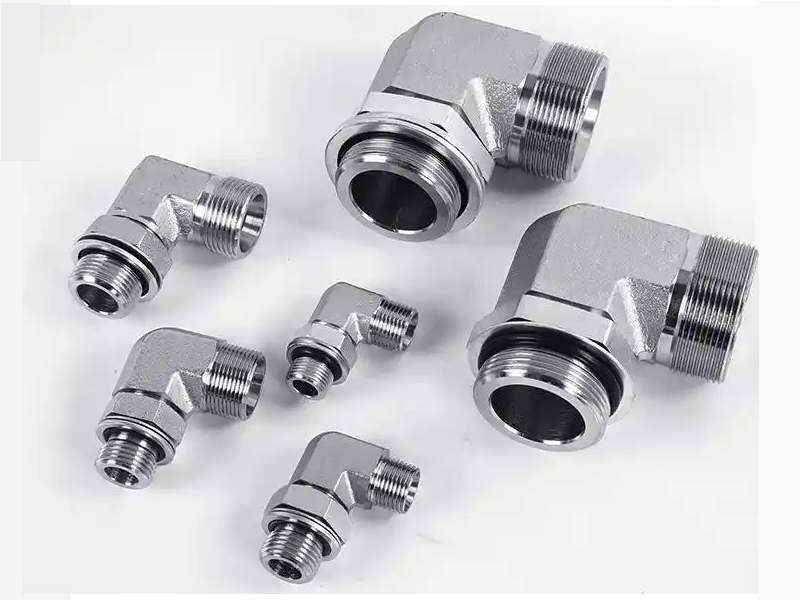
When designing piping or hydraulic systems, the choice of elbows plays a crucial role in directing flow efficiently. 90° and 45° elbow fitting are two of the most common fittings, each serving a distinct purpose in controlling fluid direction, pressure, and turbulence. Choosing the right type elbow connectors can ensures smoother operation, reduces wear, and optimizes space in your system.
What is a 90 degree elbow?
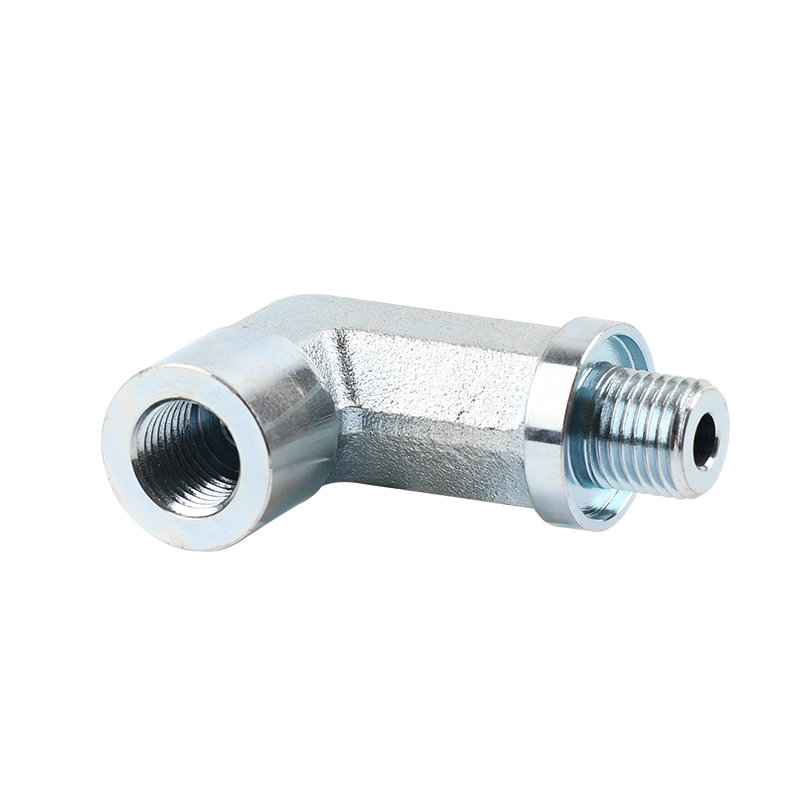
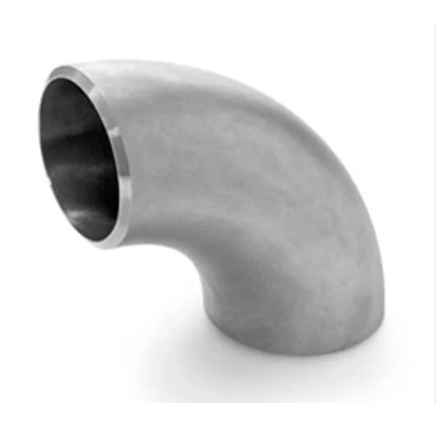
90-degree elbow is a common pipe fittings or hose fittings used to change the direction of flow by exactly 90° (a right angle). It connects two pieces of tubing, pipe, or hose and redirects liquid, gas, or air in plumbing, hydraulic, pneumatic, and HVAC systems.
Key Features
-
Shape: L-shaped, forming a quarter turn
-
Function: Changes flow from horizontal to vertical or vice-versa
-
Ends: Can have threaded, compression, push-fit, welding, soldering, or flanged ends depending on application
-
Materials: Brass, stainless steel, carbon steel, copper, PVC, PPR, CPVC, etc.
Where 90-Degree Elbows Are Used
-
Hydraulic lines (excavators, industrial machinery,cnc euquipment)
-
Pneumatic systems (air compressors, valves)
-
Plumbing water lines
-
Heating & cooling systems
-
Oil & gas pipelines
-
CNC machining coolant lines
-
Automotive fuel and brake systems
Types of 90-Degree Elbows
| Type | End Style | Application |
|---|---|---|
| Threaded 90° elbow | NPT, BSP male/female | High-pressure hydraulic & gas systems |
| Compression 90° elbow | Ferrule + nut | Brass fittings for plumbing & instrumentation |
| Push-fit 90° elbow | Tool-free push connection | Quick installation for water pipes |
| Welded 90° elbow | Butt-weld / socket weld | Heavy industrial pipelines |
| Long radius (LR) 90° elbow | Large bending radius | Smooth flow, reduced pressure drop |
| Short radius (SR) 90° elbow | Tight turn radius | Space-limited installations |
What is the difference between a 90 and 45 elbow?
A 90° elbow and a 45° elbow are both directional pipe fittings, but their bend angles and flow effects are different.
Core Difference
| Feature | 90° Elbow | 45° Elbow |
|---|---|---|
| Angle of Direction Change | Changes direction by a full 90 degrees | Changes direction by 45 degrees |
| Flow Direction | Creates a right-angle turn | Creates a gentle half-right turn |
| Flow Resistance | Higher turbulence & pressure loss | Lower turbulence & pressure loss |
| Space Requirement | Needs more installation space | Needs less space |
| Common Use | When piping needs to turn vertically/horizontally | When smoother redirection is required |
| Stress on System | Higher due to abrupt change | Lower due to gradual change |
How many types of 90 degree elbows are there?
here are several types of 90-degree elbows, categorized by material, end connection, and radius. Here’s a comprehensive breakdown:
1. By Material
-
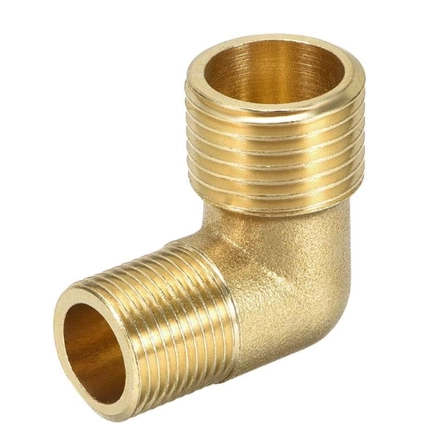
Brass 90° elbow – Common in plumbing, instrumentation, and hydraulic systems.
-
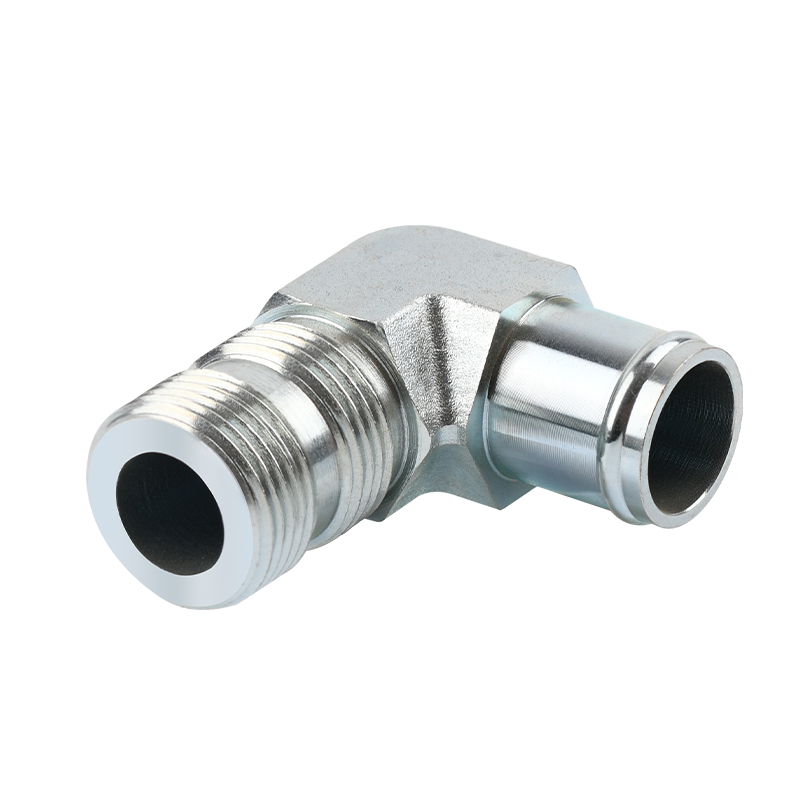
Stainless steel 90° elbow – Resistant to corrosion, used in chemical, food, and marine applications.
-
Carbon steel 90° elbow – Suitable for high-pressure industrial pipelines.
-
Copper 90° elbow – Often used in water supply and HVAC systems.
-
PVC / CPVC 90° elbow – Lightweight and corrosion-resistant for drainage and irrigation.
-
PEX / PPR 90° elbow – Flexible piping systems in residential plumbing.
2. By End Connection
-
Threaded 90° elbow – With male or female threads (NPT, BSP) for easy assembly/disassembly.
-
Compression 90° elbow – Uses a ferrule and nut for leak-free connections, common in brass fittings.
-
Push-fit 90° elbow – Tool-free connection for quick installation.
-
Welded 90° elbow – Butt-weld or socket-weld ends for permanent industrial pipelines.
-
Flanged 90° elbow – Bolted flanges for large pipes, easy maintenance.
3. By Bend Radius
-
Short radius (SR) 90° elbow – Radius = 1× pipe diameter.
-
Advantages: Saves space, fits tight layouts.
-
Disadvantages: Higher pressure drop, more turbulence.
-
-
Long radius (LR) 90° elbow – Radius = 1.5× pipe diameter.
-
Advantages: Smoother flow, lower pressure drop.
-
Disadvantages: Requires more space.
-
Quick Summary Table
| Type | Description | Common Use |
|---|---|---|
| Material-based | Brass, SS, Carbon Steel, PVC, Copper, PEX | Plumbing, hydraulic, industrial |
| Connection-based | Threaded, Compression, Push-fit, Welded, Flanged | Easy assembly, high-pressure, industrial pipelines |
| Radius-based | Short radius, Long radius | Tight spaces vs. smooth flow lines |
How to fit a 90 degree elbow?
Fitting a 90-degree elbow depends on the type of connection (threaded, compression, push-fit, or welded). Here’s a clear step-by-step guide for the most common types:
1. Threaded 90° Elbow
Tools needed: Pipe wrench, thread seal tape (Teflon tape), or pipe joint compound
Steps:
-
Clean the pipe threads to remove dirt or debris.
-
Wrap Teflon tape clockwise around the male threads (2–3 layers).
-
Screw the elbow onto the pipe by hand, ensuring alignment for the 90° turn.
-
Tighten with a pipe wrench, being careful not to overtighten (to avoid cracking).
-
Connect the other pipe to the elbow the same way.
2. Compression 90° Elbow
Tools needed: Wrench
Steps:
-
Slide the compression nut onto the pipe, then the ferrule (small ring).
-
Insert the pipe into the elbow until it stops.
-
Slide the ferrule and nut towards the elbow and hand-tighten the nut.
-
Use a wrench to tighten the nut 1/4–1/2 turn past hand-tight, ensuring a secure seal.
3. Push-Fit 90° Elbow
Tools needed: None (tool-free)
Steps:
-
Cut the pipe end squarely and remove any burrs.
-
Push the pipe fully into the fitting until it clicks and locks.
-
Pull gently to check that it is secured.
4. Welded 90° Elbow
Tools needed: Welding machine, safety equipment
Steps:
-
Clean and prepare the pipe and elbow ends (remove rust, scale, or paint).
-
Align the elbow at 90° to the pipe.
-
Tack-weld in a few spots to hold alignment.
-
Perform full welding around the joint.
-
Inspect for leaks and grind smooth if needed.
.6 Tips for a Proper Fit
-
Always check the flow direction (some elbows are directional for fluid systems).
-
For threaded fittings, do not over-tighten; it may crack brass or deform threads.
-
For compression and push-fit fittings, ensure pipes are fully inserted for leak-free operation.
-
For welded elbows, maintain correct alignment before final welding.
The production of different type 90 degree elbow .
The production of 90-degree elbows varies depending on the material and connection type. Brass elbows are typically made by casting or forging, followed by machining threads or compression fittings and surface finishing. Stainless steel and carbon steel elbows are often hot-formed or bent, with welding and heat treatment applied for strength and durability. PVC, CPVC, and PEX elbows are usually produced via injection molding or extrusion, while copper elbows are bent and machined for soldered or push-fit connections. Each process ensures the elbow meets precise dimensions, pressure ratings, and corrosion resistance for its intended application.