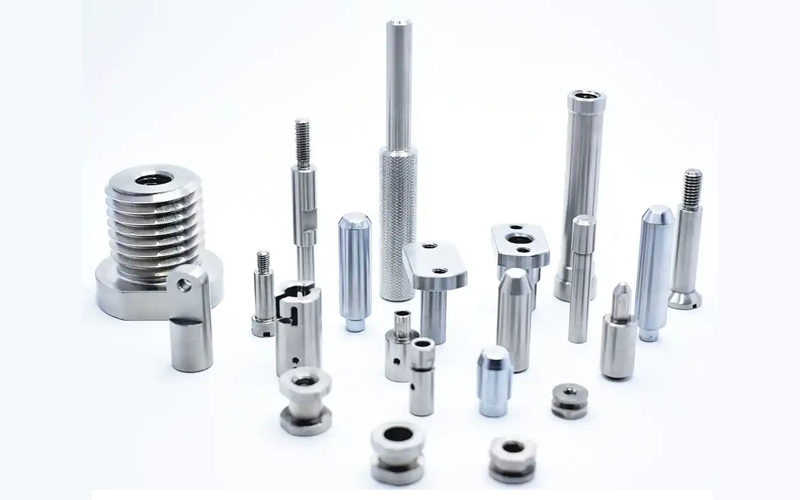
In the manufacturing industry , AISI 1020 (SAE 1020) low-carbon steel is one of the most commonly used materials .Yuhuan honqian keep purchase this type material to produce different type iron components , machanical parts and steel fittings .Today, we will detail introduce about 1020 material Chemical composition,Mechanical properties, and practical applications.
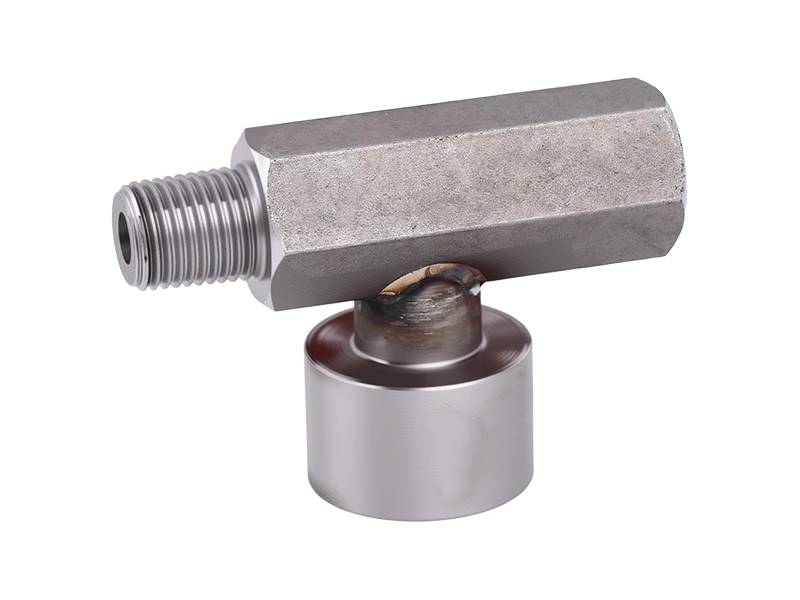
Chemical Composition of 1020 Steel
1020 material (AISI 1020 carbon structural steel) is a low-carbon steel with a carbon content ranging from 0.18% to 0.23%, providing a good balance of strength and ductility. It also contains a certain amount of manganese (Mn) (0.30%–0.60%), as well as silicon (Si), phosphorus (P), and sulfur (S), which help improve strength, toughness, and machinability. The contents of phosphorus and sulfur are strictly controlled to reduce brittleness and ensure stable mechanical performance. In some cases, 1020 steel may also contain small amounts of copper (Cu) (≤ 0.25%), which can further enhance machinability and corrosion resistance.+
| Element | Content Range |
|---|---|
| C (Carbon) | 0.18% – 0.23% |
| Mn (Manganese) | 0.30% – 0.60% |
| Si (Silicon) | 0.10% – 0.40% (varies slightly by standard) |
| P (Phosphorus) | ≤ 0.040% |
| S (Sulfur) | ≤ 0.050% |
| Cu (Copper) | ≤ 0.25% (sometimes included) |
Common Notations of AISI/SAE 1020 Steel and Their Applications
| Notation | Full Name / Explanation | Typical Usage | Notes |
|---|---|---|---|
| AISI 1020 | American Iron & Steel Institute 1020 | Technical documents, standard specifications, engineering drawings | Official technical designation in the U.S. standard system |
| SAE 1020 | Society of Automotive Engineers 1020 | Automotive, machinery, and mechanical parts documentation | SAE standard system, widely used in mechanical industry |
| CS1020 | Carbon Steel 1020 | Material labels, purchase orders, ERP systems, inventory management | Simplified label for internal use, easy identification |
| 1020 Steel | – | Product pages, marketing materials, informal documents | General simplified notation, informal but easy for clients to understand |
| AISI 1020 Carbon Steel | – | Product pages, technical introductions, material descriptions | Highlights both standard and material type, suitable for websites and brochures |
| UNS G10200 | Unified Numbering System 1020 | International standard references, some technical documents | U.S. Unified Numbering System code for 1020 steel |
What is a 1020 material equivalent to china material ?
As a cnc turning parts manufacture , the most frequent question is oversea customer send the drawing . But the oversea material Grade equivalent to China which detail material grade .
So first we have already know what is ANSI 1020 , next we need study what is a 1020 material euquivalent to ?
In china ANSI 1020 equivalent to 20# and A3 material . 20# material is a new name instead of A3 material . They are the same material .
What is a 1020 material equivalent to other country material ?
Equivalent Grades of AISI 1020 Steel in Different Countries
| Country / Region | Standard | Equivalent Grade / Designation | Notes |
|---|---|---|---|
| USA | AISI / SAE | 1020 | Standard low-carbon steel, widely used in USA |
| China | GB / T 699 | 20# | Domestic low-carbon steel, roughly equivalent to AISI 1020 |
| Europe | EN / DIN | C20 / 1.1141 | European standard low-carbon steel, EN 10083 series |
| Japan | JIS | SS400 | Common structural steel, low-carbon, similar to 1020 |
| Russia / CIS | GOST | St 20 / Ст 20 | Roughly equivalent low-carbon steel |
| UK / BS | BS 970 | 070M20 / 070A20 | Mild carbon steel grades, comparable properties |
Notes / Remarks
Functional Equivalence: These steel grades have similar carbon content, mechanical properties, and machinability to AISI 1020, though exact composition and performance may vary slightly.
Procurement & Drawings: For international orders or technical drawings, it is recommended to specify the standard system (e.g., AISI 1020 / GB 20# / EN C20) to avoid confusion.
Machining & Applications: All equivalent grades are generally suitable for CNC turning, milling, welding, and general structural components.
What the different chemical composition of ANSI 1020 AND 20# steel?
Chemical Composition of ANSI 1020
| Element | AISI/SAE 1020 | GB/T 699 20# |
|---|---|---|
| C (Carbon) | 0.17 – 0.24% | 0.18 – 0.23% |
| Mn (Manganese) | 0.30 – 0.60% | 0.35 – 0.65% |
| Si (Silicon) | 0.10 – 0.40% | 0.17 – 0.37% |
| P (Phosphorus) | ≤ 0.040% | ≤ 0.035% |
| S (Sulfur) | ≤ 0.050% | ≤ 0.035% |
| Cu (Copper) | ≤ 0.25% (optional) | ≤ 0.25% |
| Cr (Chromium) | – | ≤ 0.25% |
| Ni (Nickel) | – | ≤ 0.30% |
Notes / Analysis:
-
Carbon content: Both standards have similar carbon levels, providing moderate strength and good ductility; AISI 1020 has slightly wider limits.
-
Manganese and Silicon: GB 20# allows slightly higher Mn and Si, which can enhance strength and toughness.
-
Sulfur and Phosphorus: GB 20# has stricter limits to reduce brittleness and improve mechanical consistency.
-
Copper, Chromium, Nickel: GB 20# may include small amounts of Cr and Ni, while AISI 1020 typically only specifies optional Cu.
-
Overall: Both steels are functionally similar for CNC machining, turning, milling, welding, and general mechanical applications. GB 20# is commonly used in domestic production, while AISI 1020 is suitable for international orders and standards compliance.
Conclusion
AISI 1020 (SAE 1020) low-carbon steel is a commonly used material with good strength, ductility, and machinability. It is suitable for CNC turning, milling, welding, and various mechanical and structural parts. Understanding the international equivalents of 1020 steel—such as China’s 20#, Europe’s C20, and Japan’s SS400—helps manufacturers and buyers choose the right material for domestic or overseas projects, ensuring consistent quality and reliable performance.