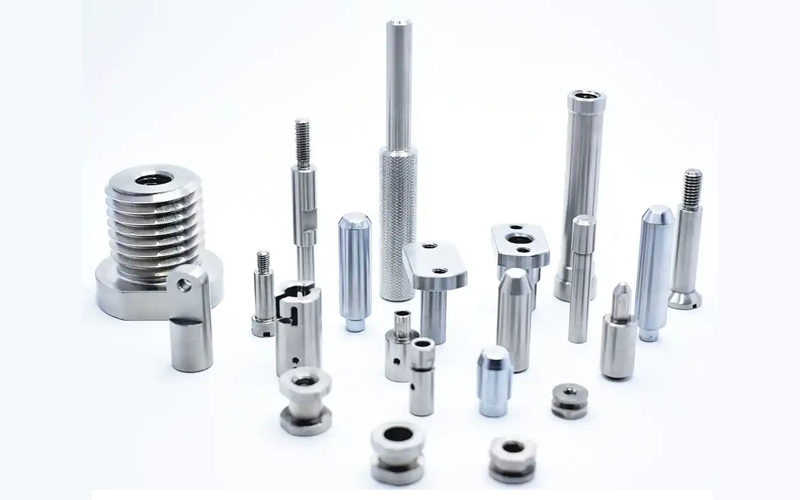
CNC turning is one of the most widely used machining processes in modern manufacturing, quietly powering critical components in everyday life. From precision shafts and threaded connectors to industrial fittings and fasteners, many essential parts are produced with CNC turning.
CNC turning is valued for its accuracy, repeatability, and production efficiency, making it indispensable in industries where reliability is critical, including automotive, industrial equipment, hydraulics, electronics, and medical applications.
This guide explains what CNC turning is, how the process works, common operations, suitable materials, and why manufacturers rely on CNC turning for mission-critical components.
What Is CNC Turning?
CNC turning is a subtractive machining process performed on computer-controlled lathes. The workpiece rotates at high speed while a stationary cutting tool removes material to achieve the desired shape, diameter, and surface finish.
Unlike CNC milling, where the tool moves around a fixed workpiece, CNC turning revolves the workpiece around a central axis, making it ideal for rotational and symmetrical components such as shafts, bushings, sleeves, pins, and threaded fittings.
Modern CNC lathes allow manufacturers to achieve tight tolerances and excellent repeatability. Once the program is set from a CAD model, identical parts can be efficiently produced in both small and large batches.
Common CNC Turning Operations
Straight Turning
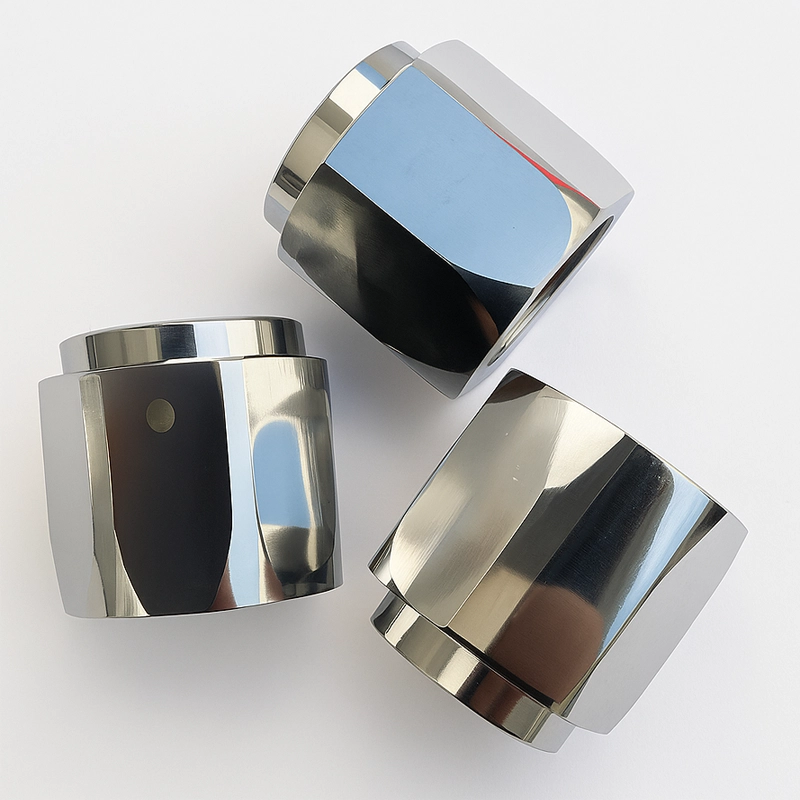
The cutting tool moves parallel to the axis of rotation, reducing the workpiece diameter. Commonly used for shafts, rods, and carbon steel structural components.
Taper Turning
Creates a gradual diameter change by angling the tool. Often used in mechanical connectors, alignment components, or parts requiring a conical profile.
Grooving
Cuts narrow channels or recesses for retaining rings, seals, or assembly alignment.
Facing
Produces a clean, flat end surface, preparing parts for precise assembly.
Threading
Generates internal or external threads meeting metric, UNC, or UNF standards. CNC turning ensures precise thread pitch, depth, and concentricity.
Tool compensation (G41/G42) ensures accurate cutting and prevents scrap due to tool wear.
Materials Used in CNC Turning
Metal Materials
Carbon Steel (Primary Material)
Carbon steel is strong, stable, and cost-effective, making it the main material in our CNC turning operations. Common grades include 1018, 1020, and 1045. Applications include:
- Shafts and axles
- Mechanical connectors
- Industrial fittings
- Load-bearing and structural components
Stainless Steel
Excellent corrosion resistance and strength, ideal for medical and food-grade components.
Aluminum
Lightweight and machinable, used in electronics, automotive, and aerospace.
Brass
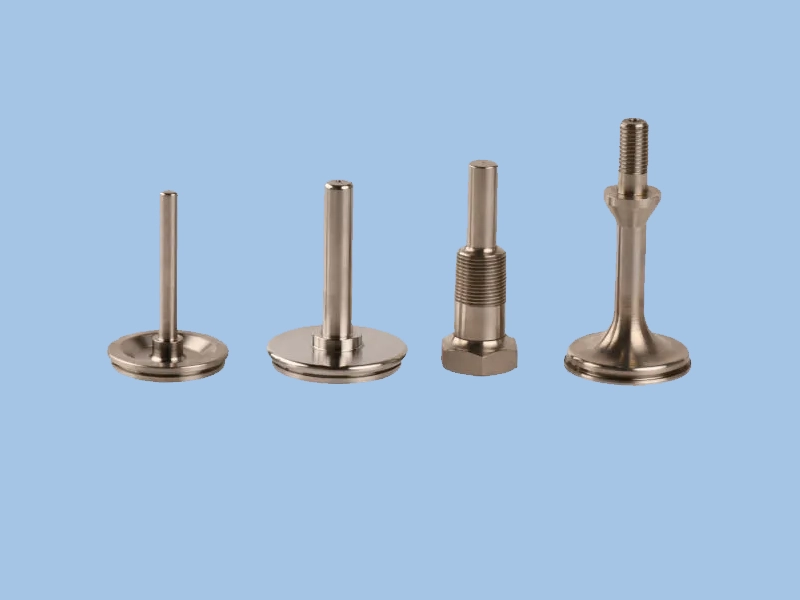
Smooth cutting and great surface finish, ideal for precision fittings and valves.
Titanium
High strength-to-weight ratio and corrosion resistance for aerospace and medical use.
Plastics
- Nylon (PA) – durable and wear-resistant
- PTFE (Teflon) – heat and chemical-resistant
- ABS – cost-effective for non-structural parts
Material Comparison
| Material | Machinability | Strength | Corrosion Resistance | Typical Applications |
|---|---|---|---|---|
| Carbon Steel | Good | High | Fair | Shafts, fittings, industrial parts |
| Stainless Steel | Good | High | Excellent | Medical, food-grade components |
| Aluminum | Excellent | Medium | Good | Automotive, electronics |
| Brass | Excellent | Medium | Good | Precision fittings, valves |
| Titanium | Moderate | Very High | Excellent | Aerospace, medical |
| Nylon | Good | Medium | Fair | Bushings, wear components |
Manufacturing Experience & Capability
Yuhuan Hongqian Machinery Co., Ltd. has over a decade of CNC turning experience, specializing in carbon steel CNC turning parts, as well as stainless steel, aluminum, and brass.
Our workshop is equipped with over 100 CNC lathes, projection measuring machines, and professional inspection tools, enabling precise dimensional control. We also have sandblasting, laser marking, ultrasonic cleaning, drilling, and tapping machines for complete secondary processing and finishing.
Typical CNC turning parts we manufacture include:
hose fittings, quick couplings, pipe joints, thread fittings, bulkhead fittings, elbow fittings, T connectors, barrel nipples, bolts, and hex nuts.
These components are widely used in fluid control systems, industrial equipment, hydraulic and pneumatic systems, and other precision applications.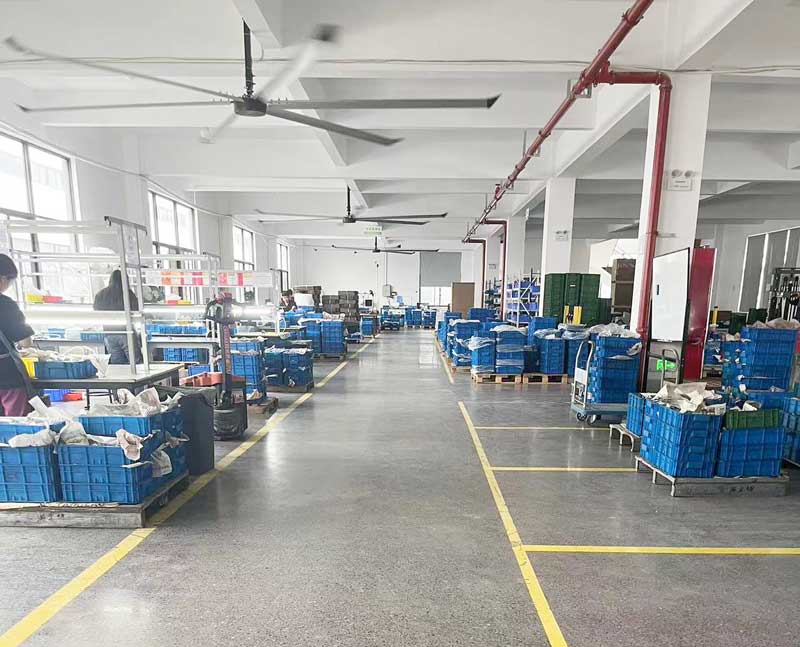
Application Scenarios
- Hose fittings & quick couplings – hydraulic and fluid systems
- Pipe joints & thread fittings – industrial piping
- Bulkhead & elbow fittings – panel and space-limited installations
- T connectors & barrel nipples – multi-branch connections
- Bolts & hex nuts – mechanical assembly and structural applications
By combining machining precision with production experience, we ensure each part meets application requirements and maintains consistent quality across batches.
Serving Global Industrial Customers
We supply CNC turning parts to international industrial clients, adhering to global standards and supporting medium- to high-volume production. Our expertise in materials, equipment, and inspection ensures reliability for overseas customers in automotive, industrial, and fluid control industries.
Advantages of CNC Turning
- High precision – tolerances as tight as ±0.01 mm
- Consistent repeatability – stable results across batches
- High efficiency – suitable for medium and large production volumes
- Cost-effective – especially for carbon steel parts
- Flexible design capability – threads, grooves, stepped profiles, and complex shapes achievable in one setup
Industries That Rely on CNC Turning Parts
- Automotive – shafts, bushings, transmission components
- Industrial equipment – mechanical connectors and fittings
- Hydraulics & pneumatics – precision fluid components
- Electronics – metal connectors and housings
- Medical & instrumentation – high-precision parts
FAQs About CNC Turning
What tolerance can CNC turning achieve?
Typically ±0.01 mm, depending on material and design.
Is carbon steel and ss material suitable for CNC turning?
Yes. Carbon steel and ss is the primary material for CNC turning due to strength, stability, and cost-effectiveness.
Is CNC turning suitable for high-volume production?
Yes. CNC turning is ideal for medium- and high-volume production thanks to automation and repeatability.
Conclusion
CNC turning is an efficient, reliable, and versatile method for manufacturing precision rotational parts. With the right materials—particularly carbon steel—advanced equipment, and experienced process control, CNC turning delivers consistent quality for demanding industrial applications.
Working with an experienced manufacturer such as Yuhuan Hongqian Machinery Co., Ltd. ensures dependable CNC turning solutions from prototype to full-scale production, serving customers worldwide.