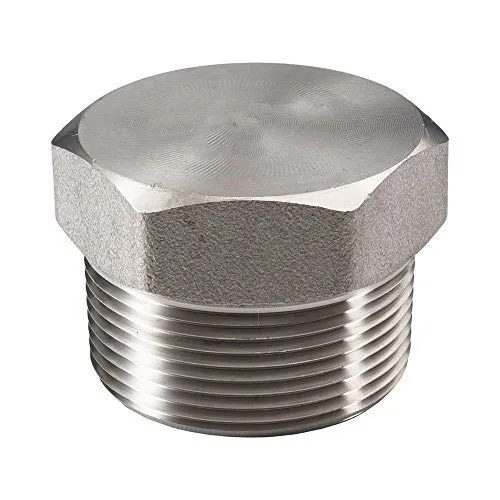
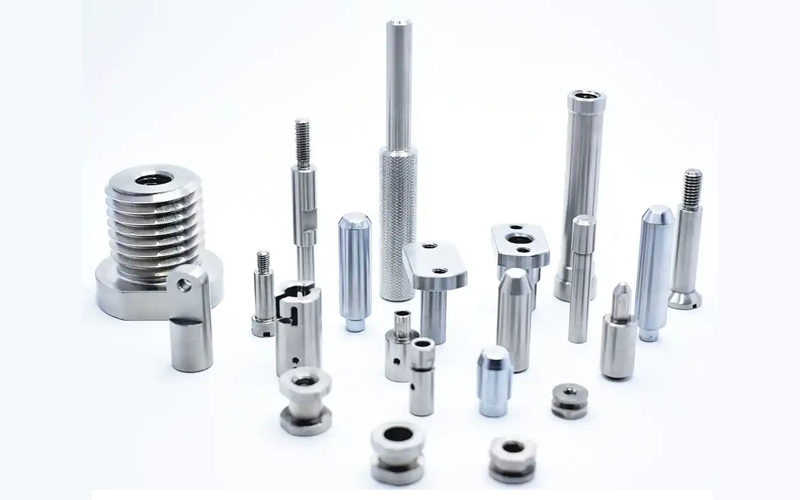
In the manufacturing of high-performance carbon steel pipe fittings, “hardness” is more than just a number—it is a critical indicator of tensile strength, wear resistance, and structural integrity. At Yuhuan Hongqian Machinery Co., Ltd., we rely on the precise relationship between Brinell (HBW) and Rockwell (HRC) scales to ensure our products meet the most rigorous industrial standards.
1. Defining the Relation: HB vs. HRC
While there is no absolute linear conversion, industry standards such as DIN 50150 provide a reliable empirical framework.
Approximate Conversion & Strength Table
This table illustrates how hardness correlates to the tensile strength of carbon steel pipe fittings.
| Rockwell (HRC) | Brinell (HBW) | Approx. Tensile Strength (N/mm2) |
| 20 | 197 | 690 |
| 30 | 269 | 840 |
| 40 | 341 | 11030 |
| 50 | 413 | 1260 |
-
Standard Updates: Since 2003, the Brinell scale has unified under the HBW symbol (tungsten carbide ball), replacing the obsolete HBS.
-
Scale Limits: HRC is most accurate between 20 and 70 HRC. Below 20 HRC, we switch to HRB; above 70 HRC, we use HRA to protect the diamond indenter.
2. Hardness Testing: The Precision Process
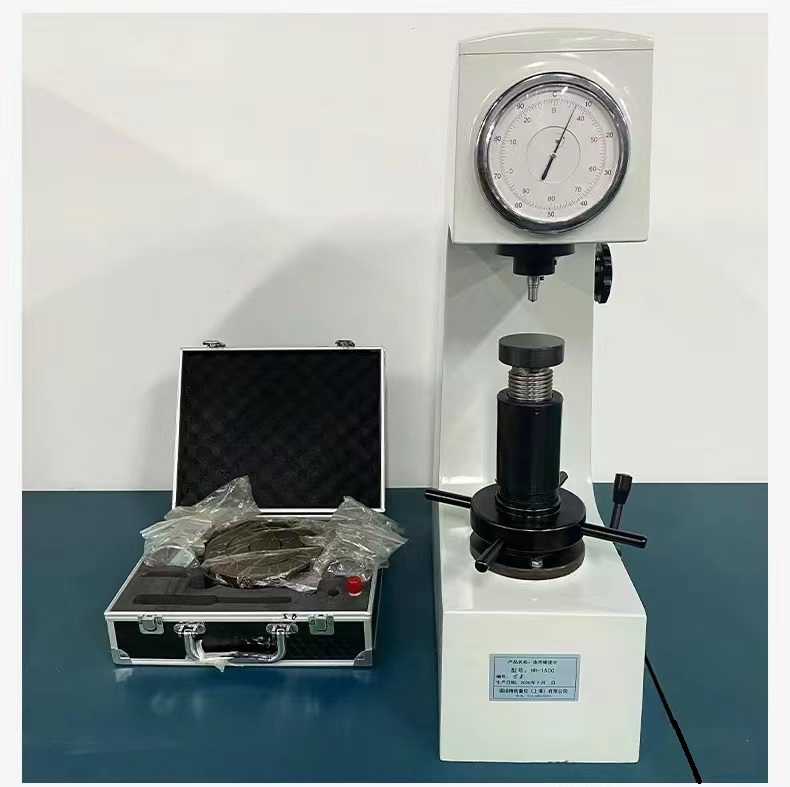
At our facility, we don’t just estimate; we verify using precision Hardness Testing Machines.
How We Test Carbon Steel Fittings:
-
Surface Preparation: The testing surface must be flat and smooth. Any oxide scale or roughness can lead to inaccurate readings.
-
Rockwell (HRC) Testing: We apply a diamond cone indenter with a total load of 150kg. The machine measures the depth of penetration to provide an instant HRC value.
-
Brinell (HBW) Testing: A 10mm tungsten carbide ball is pressed into the surface. We measure the diameter of the resulting indentation to calculate the HBW value.
-
Frequency: In CNC production, we perform regular checks to ensure consistency across the entire batch of carbon steel pipe fittings.
3. The Synergy: Heat Treatment & Hardness
For carbon steel pipe fittings to reach their full potential, the relationship between material selection and heat treatment is paramount.
-
Material Selection: We typically use Medium Carbon Steel (such as 45# steel) as the foundation for high-strength fittings.
-
Quenching & Tempering (调质处理): This is our core process. By heating the steel to its critical temperature (Quenching) and then reheating it to a lower temperature (Tempering), we achieve a superior balance of hardness and toughness.
-
Meeting Drawing Requirements: Every customer drawing specifies a required hardness range (e.g., 28-32 HRC). By adjusting the tempering temperature, we can precisely control the final HB/HRC values to match your blueprint exactly.
4. Engineering Estimation Hacks
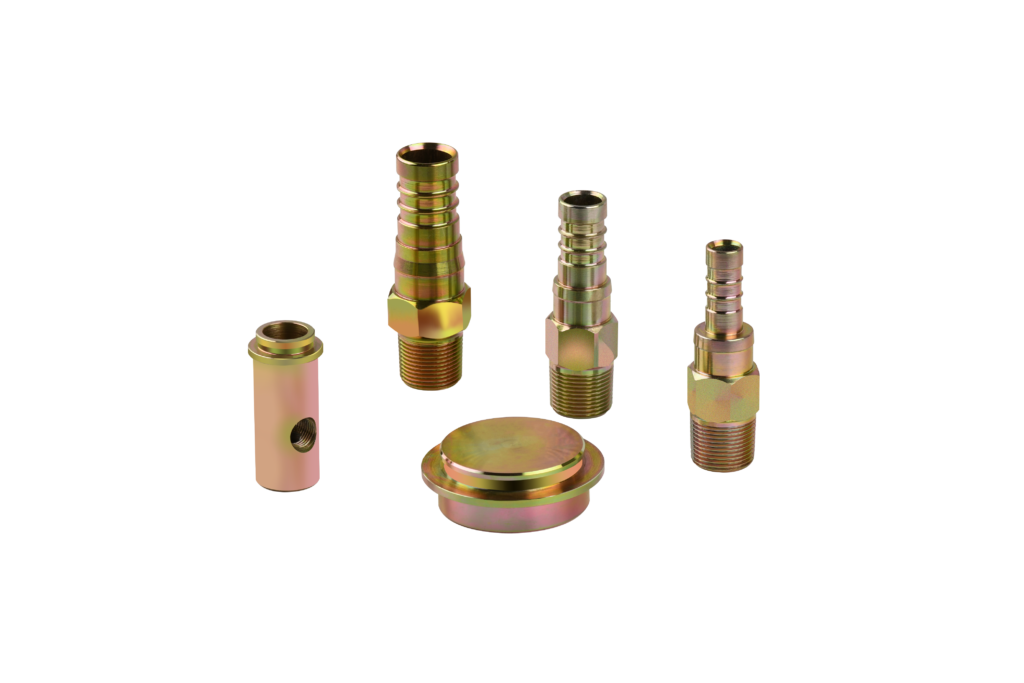
For quick onsite verification, our engineers use these proven shortcuts:

Why Choose Yuhuan Hongqian Machinery?
At Yuhuan Hongqian Machinery Co., Ltd., we understand that the safety of your piping system depends on the “Quenching and Tempering” quality of every fitting. We combine advanced hardness testing machines with expert heat treatment protocols to deliver carbon steel pipe fittings that are built to last.
Do you have a project requiring specific hardness and heat treatment?
[Contact our technical team today for a professional consultation!]