Introduction
Excavators are the backbone of heavy construction, mining, and infrastructure projects around the world. Despite their robust design, certain components, particularly hydraulic fittings, hose fittings , such as hex nuts and bolt , thread pipe fittings , which made by the iron material , are highly susceptible to rust and corrosion. In real-world conditions—rain, mud, debris, chemicals, and fluctuating temperatures—these fittings can deteriorate much faster than expected, leading to costly downtime, leaks, and maintenance.
This article explains why hydraulic fittings rust, identifies key environmental and mechanical factors, and provides practical anti-corrosion strategies to extend the lifespan of excavator fittings. Whether your machines operate in North America, Europe, Asia, or coastal regions, understanding corrosion mechanisms and preventive measures is critical for maintaining operational efficiency.
1. The Harsh Environment Excavators Operate In
Excavators face some of the harshest environmental conditions of any machinery. Factors contributing to hydraulic fitting corrosion include:
-
Water and Humidity: Rain, puddles, condensation, and cleaning water introduce moisture that triggers rust.
-
Dirt, Sand, and Gravel: Jobsite debris acts as natural abrasives, slowly wearing protective coatings on fittings.
-
Chemicals and Salts: Road salts, fertilizers, and industrial chemicals accelerate corrosion. Coastal or winter conditions can be especially aggressive.
-
Temperature Fluctuations: Daily and seasonal temperature changes can cause condensation, which penetrates micro-cracks in the plating.
Table 1: Environmental Factors and Corrosion Risk
| Factor | Description | Corrosion Impact | Geographic Relevance |
|---|---|---|---|
| Water / Humidity | Rain, puddles, condensation | Initiates oxidation on exposed steel | Global, high rainfall areas |
| Abrasive Debris | Mud, sand, gravel | Wears protective coatings, scratches steel | Construction sites worldwide |
| Chemicals / Salts | Fertilizers, road salt, industrial chemicals | Pitting, galvanic corrosion | Coastal regions, agricultural sites, winter climates |
| Temperature Changes | Daily and seasonal fluctuations | Condensation, accelerates corrosion in micro-cracks | Temperate and tropical regions |
2. How Corrosion Develops on Hydraulic Fittings
Hydraulic fittings are typically made from carbon steel, which is coated with a thin layer of protective plating such as zinc plated, zinc-nickel, or nickel. This plating is the first line of defense but is susceptible to wear and damage, especially in harsh operating conditions.
2.1 Water, Moisture, and Oxidation
When the carbon steel parts is exposed to water and oxygen, oxidation begins almost immediately. Condensation, residual water after cleaning, or even humidity trapped in hoses can accelerate this process. Once rust initiates, it becomes self-propagating: the corrosion layer retains moisture, further accelerating degradation.
2.2 Mechanical Wear and Abrasion
Excavator operations create vibrations and movements that cause abrasive debris to wear down protective coatings. Even a small scratch or gouge on a fitting can expose bare steel, leading to rapid rust formation. This is often exacerbated by improper tool usage during installation or maintenance.
2.3 Chemical and Galvanic Corrosion
Chemical exposure is another major factor. Chlorides, acids, and alkalis from road salts, fertilizers, or industrial chemicals penetrate plating layers, causing pitting corrosion. Additionally, when different metals contact each other (e.g., carbon steel fittings with brass or aluminum adapter fittings), galvanic corrosion can occur under moist conditions, leading to accelerated metal loss.
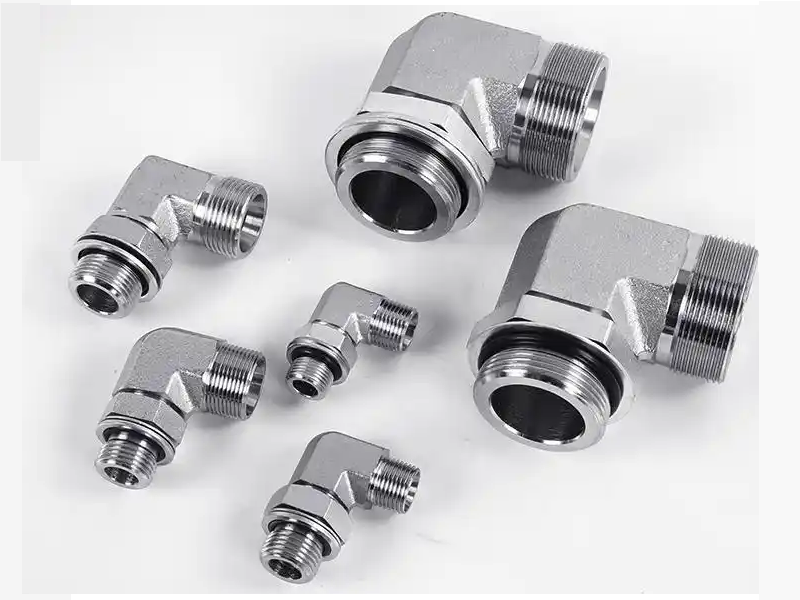
3. Common Weak Points in Hydraulic Fittings
Despite the thin protective coating, certain areas are more vulnerable:
| Component Area | Vulnerability | Effect |
|---|---|---|
| Hex corners (wrench flats) | Tool slips / improper torque | Plating scratches → bare steel exposed |
| Threads | Assembly / disassembly | Abrasion, dirt infiltration → pitting |
| Sealing surfaces | Misalignment, sand, water | Localized rust → leaks |
| Coupling ends | Mechanical stress, vibration | Coating wear → corrosion propagation |
These weak points are often the first signs of rust, highlighting the importance of correct installation, tool selection, and routine inspection.
4. Installation and Maintenance Mistakes That Accelerate steel parts Rust
Many operators unintentionally accelerate corrosion due to improper installation or maintenance practices:
-
Using incorrect tools: Adjustable wrenches or pipe wrenches can mar hex surfaces.
-
Installing fittings in dirty or wet conditions: Residual debris or moisture trapped in threads accelerates rust formation.
-
Neglecting lubrication or protective coatings: Fittings left exposed without anti-corrosion treatment are more likely to rust.
-
Ignoring routine inspection: Early-stage corrosion can go unnoticed, eventually leading to leaks, thread seizure, and system contamination.
5. Best Practices for Preventing Rust on Hydraulic Fittings
To minimize corrosion and maximize the lifespan of hydraulic fittings, follow these best practices:
5.1 Material and Plating Selection
-
High-quality plating: Zinc-nickel (Zn-Ni) offers 5–10× more corrosion resistance than standard zinc plating.
-
Stainless steel alternatives: In highly corrosive environments, stainless steel fittings can provide long-term durability.
5.2 Correct Installation Procedures
-
Use properly sized six-point wrenches or sockets.
-
Ensure threads and sealing surfaces are clean and dry before assembly.
-
Avoid over-torque or slipping tools that damage plating.
5.3 Protective Coatings and Lubrication
-
Apply anti-corrosion sprays, grease, or wax coatings post-installation.
-
Reapply protective coatings after cleaning or washing the machine.
5.4 Routine Inspection and Cleaning
-
Inspect fittings weekly or according to operating environment severity.
-
Clean off mud, debris, and salts; dry fittings thoroughly.
-
Check for early signs of plating damage, pitting, or rust.
5.5 Proper Storage and Idle Protection
-
Cover machinery during idle periods.
-
Store in ventilated, dry areas to minimize moisture exposure.
6. The Risks of Ignoring Rust
Rust is not just cosmetic — it compromises hydraulic system performance:
| Risk | Description | Consequence |
|---|---|---|
| Thread weakening | Rust reduces material strength | Difficult assembly/disassembly, potential breakage |
| Seal surface degradation | Corrosion distorts sealing areas | Leaks, fluid contamination |
| Hydraulic fluid contamination | Rust particles enter fluid | Valve wear, blockages, reduced system efficiency |
| Increased maintenance costs | Frequent replacement and repair | Downtime and productivity loss |
7. Case Study: Excavators in Coastal Regions
Excavators working near coastal areas face severe corrosion due to salt-laden air. A Zn-Ni plated carbon steel fitting lasts approximately 5 years, whereas standard zinc plating may fail in 1–2 years. Regular anti-corrosion maintenance (weekly cleaning, protective spray) can extend lifespan by up to 50%, reducing downtime and replacement costs.
8. Conclusion
Hydraulic fittings on excavators are exposed to a unique combination of water, abrasion, chemicals, and mechanical stress. Without proactive measures, rust will inevitably form, causing leaks, equipment damage, and costly downtime.
Preventing corrosion requires a holistic approach:
-
Choose the right material and plating.
-
Ensure proper installation and torque application.
-
Apply protective coatings.
-
Conduct regular inspection and maintenance.
-
Consider storage conditions and environmental factors.
By integrating these practices into daily maintenance, operators can significantly extend the service life of hydraulic fittings and maintain excavator reliability, whether in North America, Europe, Asia, or other global regions.
Table 3: Recommended Anti-Corrosion Measures
| Measure | Purpose | Frequency | Notes |
|---|---|---|---|
| Zn-Ni or stainless steel fittings | High corrosion resistance | One-time / material choice | Suitable for salt, chemical, and tropical environments |
| Correct torque & tools | Prevent plating damage | Each installation | Use six-point sockets/wrenches |
| Anti-corrosion spray / grease | Barrier against water and dirt | Weekly or after cleaning | Reapply after washing |
| Cleaning & drying | Remove salt, mud, debris | Weekly or per usage | Prevents pitting & early rust |
| Routine inspection | Detect early rust & coating damage | Weekly | Early intervention avoids major failures |