Introduction
Aluminum anodizing is one of the most common and reliable surface treatments in industrial manufacturing. It provides corrosion resistance, surface hardness, and aesthetic finishes to aluminum components. While anodizing is a mature technology, real-world factory experience shows that many quality issues, especially color inconsistency or surface defects, are often not caused by the anodizing process itself.
In our recent manufacturing experience, we received a client order involving four different types of aluminum products, each with varying specifications. After the anodizing process, the products exhibited dark cross-shaped marks and uneven coloration . Initially, our anodizing partner claimed that this was a material problem. At first, we were skeptical — it seemed unlikely that all four products could have material defects.
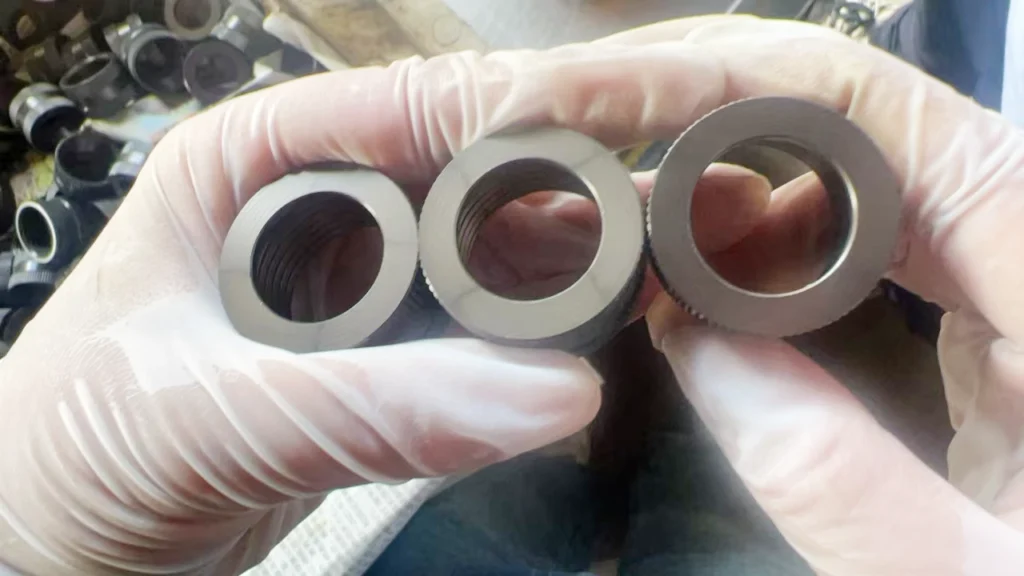
So try to seek out the truth , we produce the products second times , finally it approves that the problems not comes from anodizing supplier mistake . The problem may be mainly due to the material.
We start check the information and consulting industry peers, we discovered that the root cause lies in aluminum tubing produced by extrusion. The extrusion process inherently leaves die marks and flow lines on the material surface, which become highly visible after anodizing. After check these , finally we change the aluminum tube to bar raw material . Then produce third time , fianlly approve the orginal problem is material problem .
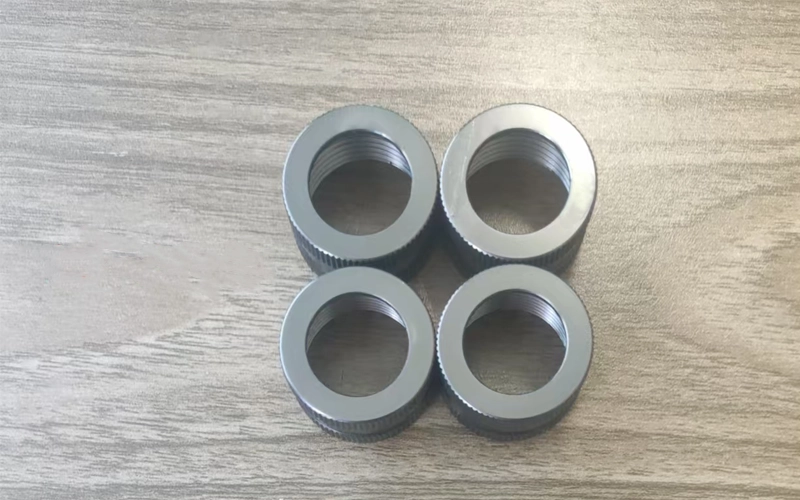
This case study explains the practical lessons we learned about material selection, machining, and anodizing for aluminum parts.
Real-World Challenge in Manufacturing Aluminum Anodizing
In industrial manufacturing, there is always a tension between batch production, cost control, and consistent surface quality. Unlike high-end decorative components, many industrial aluminum parts are functional but may still have surface appearance requirements.
For this particular client order, the four products differed in size and geometry, but all required anodized finishes. After the first batch, dark cross-shaped marks appeared on multiple components. This raised immediate concerns, as surface uniformity is critical for client acceptance and quality assurance.
Our initial investigation involved reviewing the anodizing process parameters, but the defects persisted. This experience highlights a common reality: in mass production, surface appearance problems are rarely caused by a single factor and often involve a combination of material properties, machining, and surface treatment.
How Anodizing Reveals Material Organization
An important insight from this case is that aluminum anodizing acts as a “reveal” process rather than a covering process. While anodizing forms a protective oxide layer on aluminum surfaces, it does not mask internal material inconsistencies. In fact, anodizing tends to amplify variations in the aluminum microstructure.
For extruded aluminum tubing, differences in grain orientation, density, and flow lines directly affect:
- Oxide film growth rate
- Pore distribution
- Dye absorption consistency
These differences manifest as visible color variations, dark marks, or streaks on anodized surfaces. In other words, what appears as anodizing defects are often actually reflections of the underlying material characteristics.
Material Types and Their Impact on Anodized Appearance
3.1 Red-Hot Rolled and Aluminum Bars: Ideal for Uniform Anodizing
From our experience, aluminum parts produced from aluminum bars or red-hot rolled (RHR) material have a more uniform internal structure. The advantages include:
- Even grain orientation and size
- Consistent surface finish after machining
- Stable anodic oxide film growth
For components where surface appearance is important, using bars or red-hot rolled material minimizes the risk of color variation and surface markings after anodizing.
3.2 Aluminum Tubing (Extruded Material): High Risk for Marks
Extruded aluminum tubing is widely used for functional components due to its strength-to-weight ratio and cost efficiency. However, extrusion inherently produces:
- Flow lines along the longitudinal axis
- Die marks or impressions from the extrusion tooling
- Uneven crystal orientation and density
These subtle features are generally invisible before anodizing. After anodizing, however, the oxide film reacts differently along flow lines and die marks, leading to:
- Dark streaks or cross-shaped marks
- Uneven coloration across the surface
- Streaks amplified by reflective light
From a manufacturing perspective, this is not an anodizing error, but a material characteristic that becomes highly visible during anodizing.
Machining Effects and Their Interaction with Anodizing
Machining operations such as CNC turning, milling, or drilling can further accentuate marks on extruded aluminum tubing:
- Variations in cutting direction or tool path
- Differences in feed rate or tool wear
- Localized heating during machining
These machining marks overlay the intrinsic extrusion patterns, resulting in a compounded visual effect after anodizing. For example, in cylindrical or decorative faces, the combination of extrusion flow lines and machining marks produces noticeable dark cross or streak patterns.
Surface Pre-Treatment as an Amplifier
Before anodizing, aluminum surfaces typically undergo degreasing, alkaline etching, neutralization, and other pre-treatment steps. Uneven reaction rates across different microstructural regions can amplify pre-existing material marks, creating:
- Grayish patches
- Cloudy or misty shadows
- Variations in brightness or color uniformity
Thus, even careful anodizing cannot fully hide these intrinsic variations.
High-Risk Combinations to Watch For
Based on our practical experience, the following combinations are especially prone to visible marks or uneven coloration:
- 6061 / 6063 extruded tubes
- Large diameter, thin-wall components
- Light anodizing colors (natural or champagne)
- High-gloss, smooth surfaces
For manufacturing teams and customers, these should be considered high-risk scenarios for visible anodized marks.
Practical Measures for Improving Anodized Appearance
While marks cannot be entirely eliminated on extruded tubing, there are practical steps manufacturers can take to improve the appearance:
7.1 Material Selection
- Prefer high-uniformity extrusion if tubing must be used ,and must inform supplier the detail surface treatment .As i know , it can press two times to shrink the tube to reduce the mould line to improve anodizing surface.
- Priority to choose aluminum bars or Hot forgingparts for decorative or appearance-critical components
7.2 Machining Adjustments
- Maintain consistent cutting direction
- Minimize local heat generation
- Optimize CNC tool paths to reduce surface pattern exaggeration
7.3 Surface Pre-Treatment
- Moderate alkaline etching to avoid over-reaction
- Consider brightening or fine polishing before anodizing
- Fine glass bead or ceramic blasting to uniformize surface texture
7.4 Color Strategy
- Darker anodized colors (black, dark gray) mask surface variations better
- Light or natural anodized finishes highlight extrusion and machining marks
Conclusion and Manufacturer’s Insight
From yuhuan hongqian manufacturing perspective, this case study demonstrates:
- Aluminum anodizing quality is highly influenced by material microstructure
- Extruded aluminum tubing will likely show marks or uneven coloration due to flow lines and die impressions
- Pre-treatment and machining can amplify these marks, but cannot fully eliminate them
- For appearance-critical components, material choice (bars or red-hot rolled) is essential
Proper communication with clients about material limitations and process realities is crucial for managing expectations and ensuring quality satisfaction.
In summary, anodizing does not create color inconsistency — it reveals material characteristics, and understanding this helps manufacturers optimize processes and select appropriate materials.