Bulkhead fittings don’t look like heroes. Small, quiet, easy to overlook. But in a CNC setup, one bad fitting can bleed pressure, flood coolant, and bring a six‑figure machine to its knees. That’s not pocket change—that’s production on pause and profits slipping out the back door.
Pick the wrong type or material and you’re patching leaks at 2 a.m., coffee in hand, wondering where it all went sideways.
The right choice keeps lines tight, pressure steady, and your shop humming like a well-tuned V8. Here’s how to get it right.
Quick Answers on Bulkhead Fittings
➔ Choose the right material: aluminum for coolant, brass for general use, stainless steel for corrosion and high pressure.
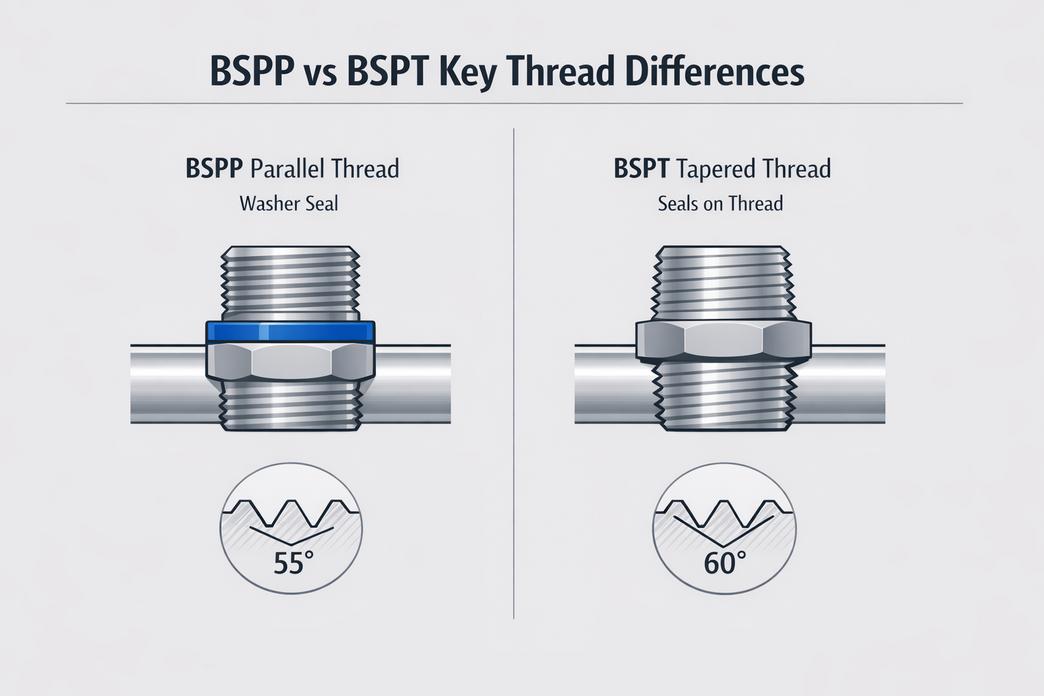
➔ Match thread standards: verify NPT, BSPT, ORB, JIC or metric to prevent leaks.
➔ Confirm pressure rating and seal integrity with FKM O-rings or metal-to-metal seals.
➔ Check machining tolerances, surface finish and quality control for reliable long-term performance.
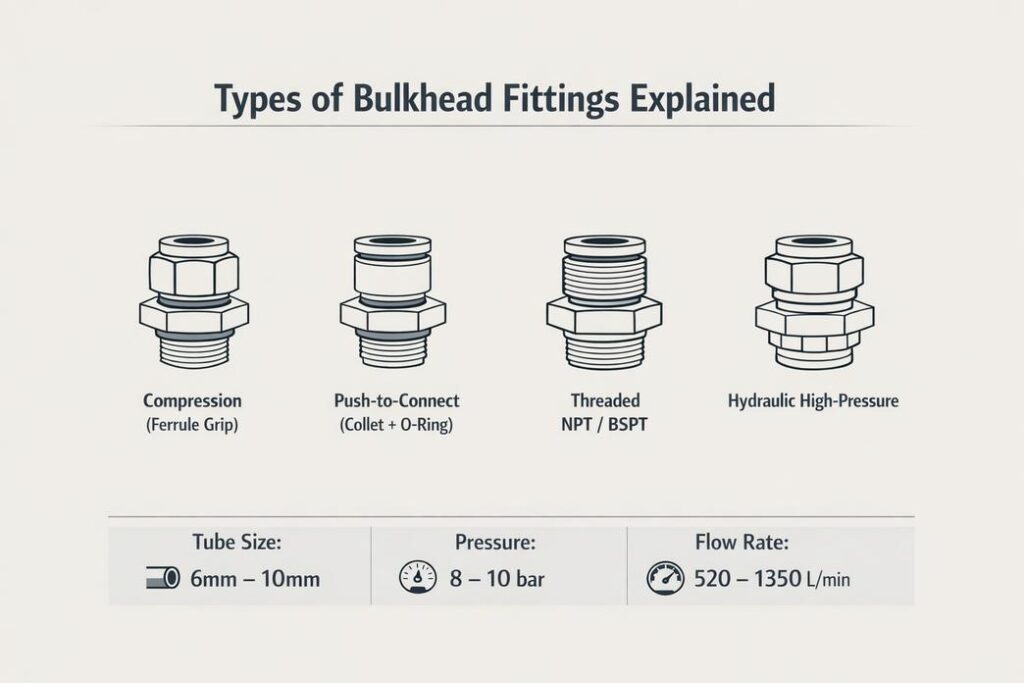
Types Of Bulkhead Fittings Explained
Bulkhead fittings keep pipes and tubing tight when lines pass through panels or tanks. In plain terms, the right bulkhead fittings stop leaks, hold pressure, and keep your setup running smooth without drama.
Compression bulkhead fittings for leak-proof fluid transfer
When clean fluid transfer matters, compression fittings built as bulkhead fittings are a safe bet. The trick sits in the ferrule.
- The nut tightens.
- The ferrule bites the tubing.
- The body locks against the panel wall.
Inside this setup:
- Sealing happens at the ferrule edge.
- Pressure resistance depends on tubing hardness.
- Panel thickness affects grip length.
In cooling and lube systems, bulkhead fitting placement usually follows this flow:
- Panel drilling
- Deburring edge
- Checking hole tolerance
- Fitting insertion
- Body through wall
- Locknut torque setting
- Tube assembly
- Ferrule alignment
- Final tightening for leak-proof hold
For stable mid-range pressure lines, many engineers stick with bulkhead connectors from yuhuan hongqian because machining tolerance stays consistent across batches.
Push-to-connect bulkhead fittings in pneumatic lines
In fast-moving pneumatic lines, speed matters. Push-to-connect bulkhead fittings snap in and out without tools.
Quick look at performance data for common air fittings:
| Tube OD (mm) | Max Air Pressure (bar) | Recommended Panel Thickness (mm) | Flow Rate (L/min) |
|---|---|---|---|
| 6 | 10 | 1–3 | 520 |
| 8 | 10 | 1–4 | 880 |
| 10 | 8 | 2–5 | 1350 |
In shop-floor talk, this means:
- Faster install on CNC air systems
- Stable air pressure handling
- Easy swap during maintenance
Under the hood:
- Collet teeth grip the tubing
- Internal O-ring seals the bore
- External thread locks the bulkhead fitting to the wall
For automation upgrades, bulk head fittings with quick connect design cut downtime big time.
Threaded bulkhead fittings with NPT and BSPT ends
Threaded fittings built as bulkhead adapters are common in oil and water lines. The choice often comes down to NPT threads or BSPT threads.
Connection types break down like this:
- Tapered pipe threads for pressure sealing
- Straight threads plus gasket for face sealing
Typical install path:
- Apply sealing tape or liquid sealant.
- Hand-tighten into the port.
- Torque to rated spec.
Inside a plant setup:
- Wall penetration
- Insert threaded bulkhead fitting
- Lock with rear nut
- External piping
- Align male NPT
- Tighten to avoid over-stress
Correct torque protects sealing faces and keeps bulkhead fittings from cracking under load.
Hydraulic bulkhead fittings for high-pressure circuits
For high-pressure oil flow, hydraulic fittings used as bulkhead fittings must guard full circuit integrity.
Key factors:
- Rated pressure ratings matching pump output
- Strong bulkhead seals
- Secure hose connections
In a typical fluid power layout:
- Pump outlet
- High-pressure hose
- Hydraulic bulkhead fitting through frame
- Frame wall
- Locknut clamp
- Seal inspection
- Downstream valve block
- Return line
- Pressure check port
Heavy equipment builders often source fluid power bulkhead fittings from yuhuan hongqian to meet SAE specs without chasing custom threads. When pressure spikes hit, a solid bulkhead fitting keeps the line steady and the machine calm.
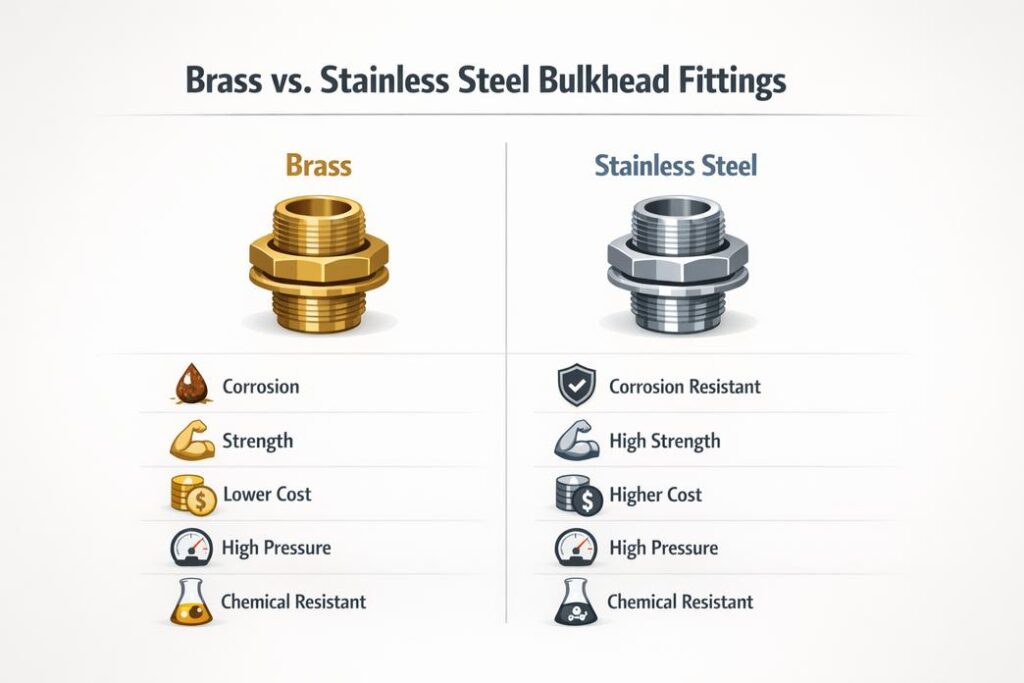
Brass Vs. Stainless Steel Bulkhead Fittings
Choosing between brass and stainless steel bulkhead fittings can feel like splitting hairs, yet the difference shows up fast in real-world installs. From pressure ratings to corrosion control, the right bulkhead fitting keeps leaks away and systems steady.
Brass bulkhead fittings
When talking about bulkhead fittings, brass often becomes the go-to for balanced performance and price. A brass bulkhead fitting works well in water lines, air systems, and cooling loops where stable sealing matters but extreme pressure does not dominate the setup.
- Core material traits
- Corrosion resistance
- Handles water exposure and mild environments with steady reliability
- Resists scale buildup in low-salinity systems
- Machinability
- Easy to thread and customize
- Clean internal surfaces support smoother flow through bulkhead connectors
- Cost-effectiveness
- Lower raw material cost than stainless
- Ideal for large-volume applications
- Corrosion resistance
- Mechanical behavior
- Strength
- Suitable for moderate pressure transfer
- Performs well in pneumatic panels
- Durability
- Long service life in indoor utility systems
- Stable under vibration when paired with proper sealing washers
- Strength
- Typical use cases
- Water tanks with tank fittings mounted through thin walls
- Air compressors using pass-through fittings
- Cooling manifolds needing compact bulkhead connectors
Many installers prefer brass bulkhead fittings from yuhuan hongqian for everyday industrial builds. The finish is clean, threads are precise, and the bulkhead fittings seat tightly without drama. In short, brass bulkhead fittings keep things simple and budget-friendly while still delivering dependable applications and balanced strength.
Stainless steel bulkhead fittings
Stainless steel bulkhead fittings step in when conditions get harsh. Chemical plants, offshore rigs, and high-pressure hydraulic frames demand more than average hardware.
- Material performance
- Strength
- Withstands higher PSI ratings
- Maintains sealing integrity under load
- Corrosion resistance
- Performs in salt spray and aggressive fluids
- Suitable for marine bulkhead fittings
- Chemical resistance
- Handles acids, solvents, and industrial cleaners
- Strength
- Environmental tolerance
- High-temperature performance
- Stable in heated process lines
- Resists scaling in thermal cycling
- Durability
- Less prone to cracking in vibration-heavy systems
- Extended longevity in outdoor installations
- High-temperature performance
- Application mapping
- Hydraulic panels
- Pressure transfer
- Reinforced bulkhead fitting threads
- Secure locknut engagement
- Vacuum systems
- Air-tight sealing
- Precision-machined sealing faces
- Minimal deformation under torque
- Chemical processing lines
- Fluid isolation
- Stainless steel bulkhead fittings reduce contamination risk
- Hydraulic panels
For demanding builds, yuhuan hongqian supplies stainless steel bulkhead fittings that hold steady under stress. When pressure climbs and fluids turn aggressive, stainless bulkhead fittings offer the extra durability, chemical resistance, and long-term applications support that serious systems require.
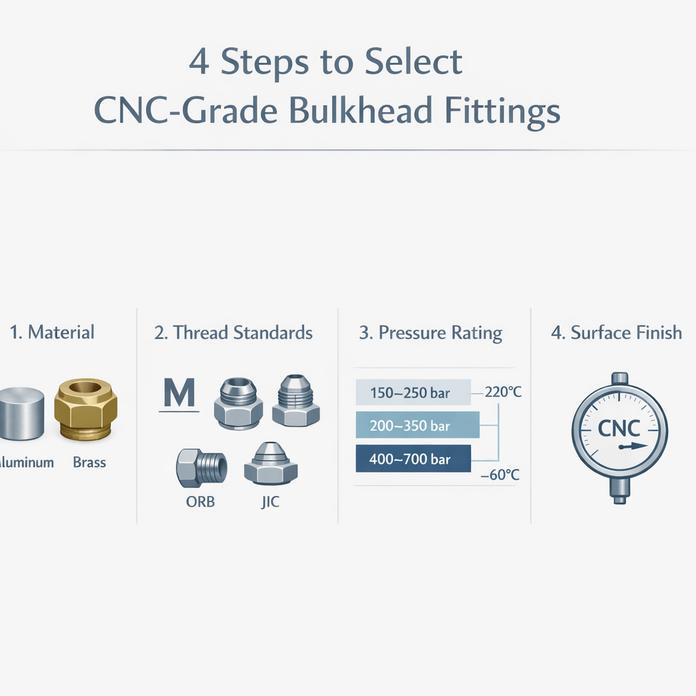
4 Steps To Select CNC-Grade Bulkhead Fittings
Bulkhead fittings look simple, yet picking the wrong one can wreck a CNC setup fast. A loose seal, mismatched thread, or weak metal will show up as leaks, downtime, and wasted coolant. This guide breaks down how to choose the right bulkhead fitting for real-world shop use, keeping your panel mount fittings tight and stress-free.
Step 1 – Match material: aluminum, brass or stainless steel
Choosing the right material selection for bulkhead fittings starts with the job environment, not the price tag.
- Aluminum fittings suit lightweight CNC coolant lines and lower operational pressure.
- Brass fittings handle general fluid transfer with steady corrosion resistance.
- Stainless steel fittings stand up to harsh chemicals and high-pressure washdowns.
When checking material compatibility, think in layers:
- Application type
- Coolant circulation
- Pneumatic control
- Hydraulic systems
- Environmental exposure
- Moisture
- Chemical splash
- Outdoor salt air
- Mechanical demand
- Vibration
- Temperature swings
- Continuous duty cycles
A bulkhead connector passing through a machine wall needs metal that won’t pit, crack, or deform. In tight CNC enclosures, even slight corrosion can weaken sealing faces. Shops working with aggressive media often upgrade from brass to stainless steel bulkhead fittings to avoid repeat maintenance.
Brands like yuhuan hongqian offer multiple alloy grades, making it easier to match bulk head fittings to actual shop stress instead of guessing.
Step 2 – Verify thread standards: metric thread, ORB or JIC
Thread mismatch is the silent killer of bulkhead fittings. One wrong connection type, and leaks show up under pressure.
Key thread standards to confirm:
- Metric thread – common in imported CNC systems.
- ORB fittings – rely on O-ring face sealing.
- JIC fittings – use 37° flare for metal-to-metal sealing.
Dig deeper into thread verification:
- Thread form
- Straight (parallel)
- Tapered
- Seal method
- O-ring groove
- Metal flare
- Thread sealant
- Measurement check
- Pitch gauge
- Caliper diameter reading
- Thread chart cross-reference
Mixing NPT with metric thread might look “close enough,” but under vibration, a bulkhead fitting will loosen. Good practice is simple: measure twice, install once. This keeps hydraulic circuits stable and avoids rework on panel mount fittings buried behind guards.
Step 3 – Confirm pressure rating and seal integrity
Pressure rating is not just a catalog number; it defines survival limits for bulkhead fittings in motion systems.
Below is a reference comparison for common materials used in bulkhead connectors:
| Material Type | Typical Working Pressure (bar) | Temp Range (°C) | Common Sealing Mechanism |
|---|---|---|---|
| Aluminum | 150–250 | -40 to 120 | O-ring face seal |
| Brass | 200–350 | -20 to 150 | Thread + gasket |
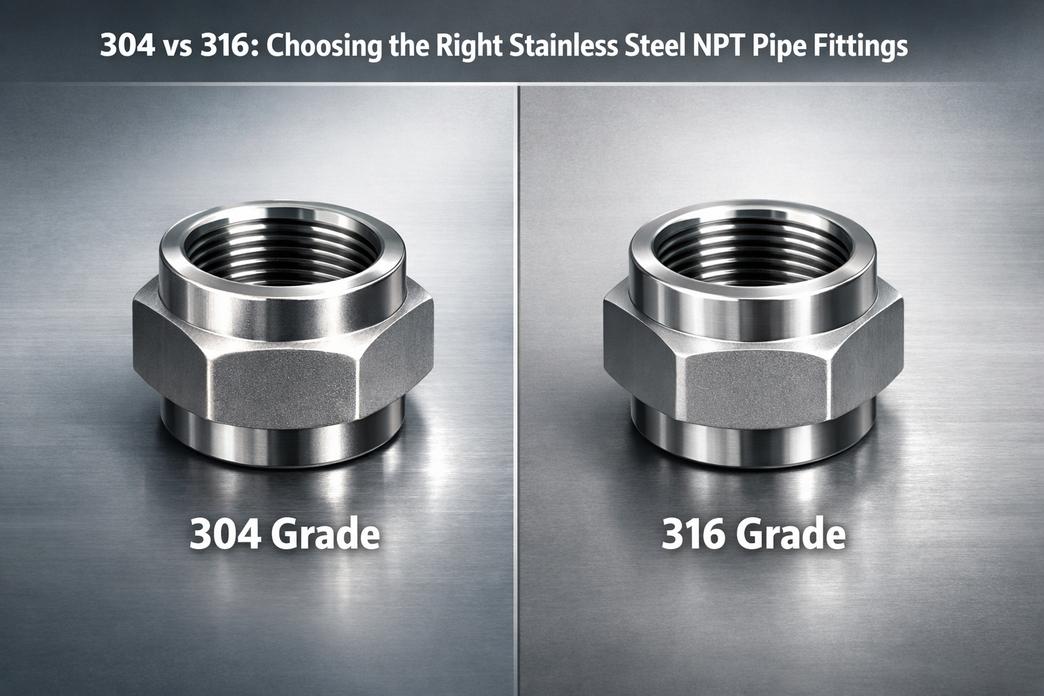
| Stainless Steel 316 | 400–700 | -60 to 220 | Metal flare / O-ring |
When reviewing pressure rating and seal integrity, break it down:
- System Factors
- Pump output spikes
- Thermal expansion
- Sealing Mechanism
- O-ring compression rate
- Surface flatness
- Testing Evidence
- Hydrostatic pressure test
- Air leak test
- Batch traceability
For high pressure applications, bulkhead fittings must maintain leak prevention even during shock loads. Reputable manufacturers like yuhuan hongqian provide test data to back up rated limits, which adds peace of mind when machines run long shifts.
Step 4 – Ensure surface finish and machining tolerances
Even strong metal fails if the surface finish is rough or the machining tolerances drift off spec.
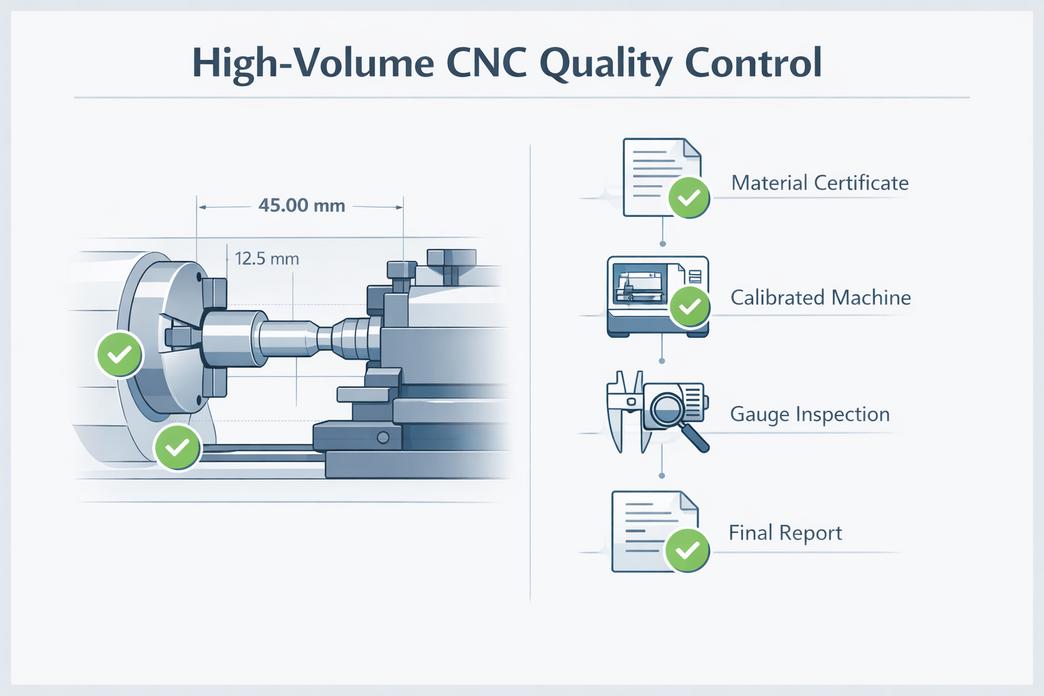
Look at three core quality signals:
- Dimensional accuracy
- Smooth sealing faces
- Consistent thread depth
Then review production control:
- Precision Engineering
- CNC turning stability
- Tool wear monitoring
- Inspection Routine
- Go/no-go gauges
- Coordinate measuring checks
- Fit Validation
- Trial assembly
- Torque verification
Poor component fit in bulkhead fittings leads to micro-gaps. Over time, vibration turns those gaps into leaks. A smooth finish supports better O-ring seating and stable torque values.
When bulkhead fittings, bulkhead fitting threads, and panel mount fittings all align with tight tolerances, installation feels easy. No forcing. No cross-threading. Just clean engagement and solid sealing performance that holds up shift after shift.
Worried About Leaks? Bulkhead Fittings That Seal Instantly
Leaks can wreck a system fast. One loose seal, one weak ring, and your bulkhead fittings turn into trouble. This guide breaks down how the right bulkhead fitting design—smart seals, strong materials, tight installation—keeps fluids locked in and stress levels low.
Fluoroelastomer O-rings for extreme temperature resilience
When bulkhead fittings face heat swings or chemical splash, sealing isn’t casual—it’s survival.
- Core Sealing Layer
- Fluoroelastomer material
- Built for extreme temperatures
- Handles rapid thermal cycling
- Precision-shaped O-rings
- Maintain elastic memory
- Support long-term sealing
- Fluoroelastomer material
- Performance Under Stress
- High chemical resistance prevents swelling
- Sustained temperature resilience protects against cracking
- Extended durability reduces maintenance calls
In hydraulic lines and vacuum chambers, bulkhead fittings with Fluoroelastomer O-rings create a tight barrier that stays stable even when pressure spikes. A solid bulkhead connector fitted with advanced O-rings simply holds its ground.
“Sealing materials capable of maintaining integrity under aggressive thermal and chemical exposure are driving reliability upgrades across fluid systems,” noted a 2025 materials outlook by MarketsandMarkets.
Brands like yuhuan hongqian engineer bulkhead fittings with material-matched O-rings so installers don’t gamble on compatibility.
Polypropylene compression rings for corrosion resistance
Not every leak starts with pressure. Corrosion eats away slowly.
- Material Defense System
- Polypropylene base
- High chemical compatibility
- Stable in harsh fluid handling environments
- Reinforced compression rings
- Even load distribution
- Long-cycle durability
- Polypropylene base
- Application Fit
- Cooling loops
- Pneumatic lines
- Chemical transfer ports
A smart bulkhead fitting using polypropylene compression support keeps surfaces isolated from corrosive media. Over time, that built-in corrosion resistance means fewer seal failures and better leak prevention. If your bulkhead fittings sit in damp or reactive zones, this setup just makes sense.
Integrated metal-to-metal seals for high-pressure vacuum systems
When pressure climbs or vacuum drops deep, soft seals alone may not cut it.
- Structural Sealing Core
- Precision-machined metal-to-metal seals
- Direct surface engagement
- Zero-gap contact zones
- Reinforced fitting body
- Improved structural integrity
- Stable alignment under load
- Precision-machined metal-to-metal seals
- System Compatibility
- High-pressure systems
- Deep vacuum systems
- Demanding process lines
This design creates a truly leak-tight joint. No creep. No compression fatigue. Just consistent performance and hard-earned reliability.
High-grade bulkhead fittings from yuhuan hongqian integrate metal sealing faces directly into the bulkhead connector body, giving industrial users confidence when tolerances are tight and failure isn’t an option.
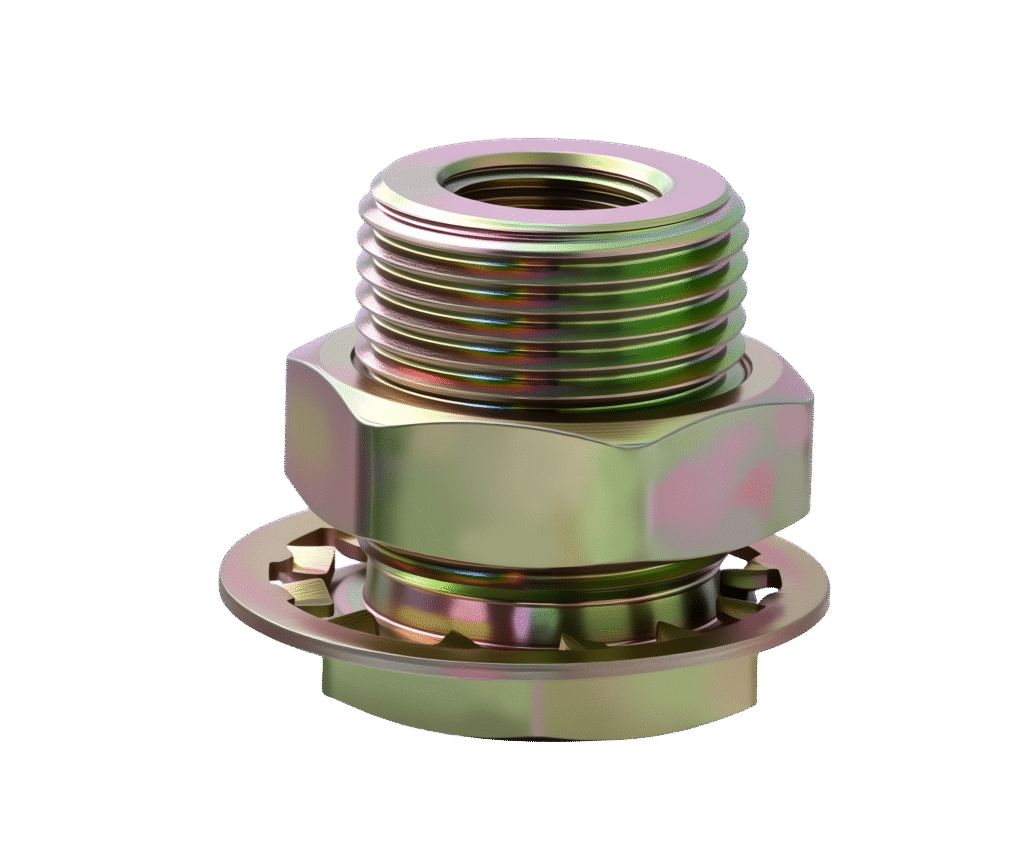
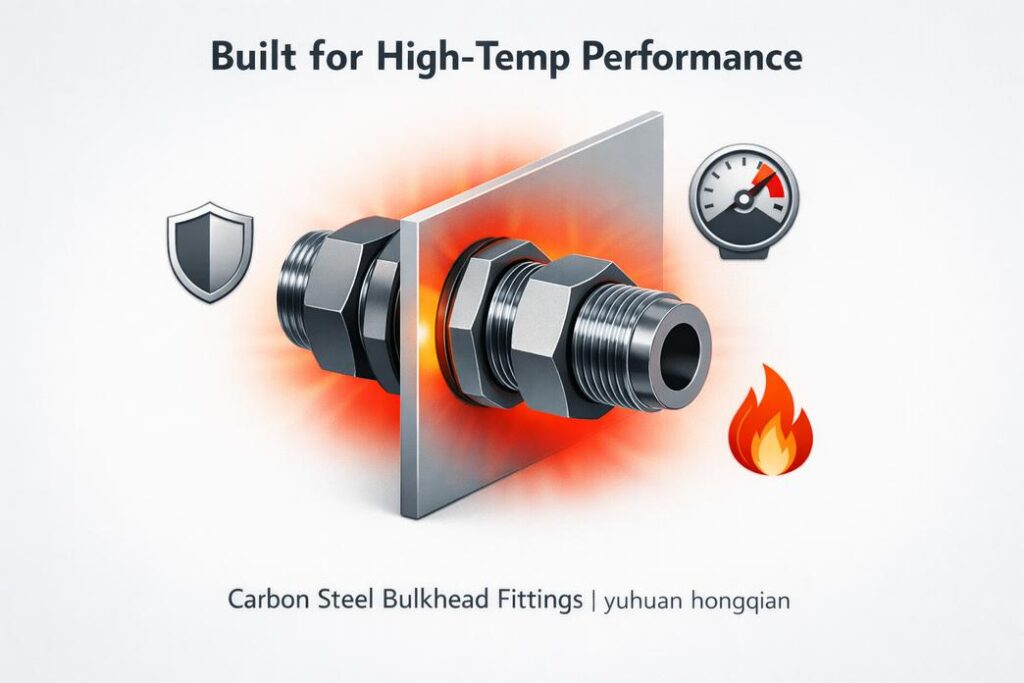
High-Temp Operations: Bulkhead Fittings That Endure
High heat can wreck weak connectors fast. In hydraulic lines and lubrication systems, bulkhead fittings have to handle pressure, vibration, and serious temperature swings without flinching. This is where smart material choices and careful assembly make all the difference. With yuhuan hongqian, every bulkhead connection is built to last, not just to pass inspection.
Carbon steel fittings rated for temperature extremes
When bulkhead fittings are exposed to high temperature and extreme temperatures, material choice drives everything.
- Core material
- Carbon steel
- High material strength under thermal stress
- Stable temperature rating in heated hydraulic loops
- Long-term durability in heavy equipment
- Carbon steel
- Structural advantages
- Thick-wall fitting bodies
- Resist deformation
- Maintain thread engagement
- Precision-machined sealing faces
- Support leak-free bulkhead connectors
- Reduce failure under pressure spikes
- Thick-wall fitting bodies
- Application performance
- Hydraulic manifolds
- Industrial burners
- High-heat lubrication systems
In demanding setups, bulkhead fittings made from carbon steel hold their line. yuhuan hongqian engineers each fitting to balance strength and machinability, keeping bulkhead connections tight even when temperatures climb hard.
Ceramic-coated seals to prevent thermal degradation
Heat attacks seals quietly. Over time, thermal degradation weakens elasticity and cracks surfaces. That is where ceramic coating steps in.
• Improved high heat resistance for sealing rings
• Stronger corrosion resistance in aggressive fluids
• Better material stability during repeated heating cycles
- Coating bonds directly to sealing surfaces.
- The barrier reduces friction and heat transfer.
- Seal integrity stays consistent under load.
In real-world bulkhead fittings, that means fewer shutdowns and less fluid loss. Bulkhead connectors with ceramic-coated seals simply stay reliable longer. The result feels straightforward: less worry, more uptime.
Quality-controlled assembly procedures for durable performance
Strong materials alone are not enough. Assembly discipline defines durable performance in bulkhead fittings.
- Manufacturing control
- Strict manufacturing standards
- Verified torque values
- Surface finish inspection
- Documented quality control
- Batch traceability
- Pressure testing for leak prevention
- Strict manufacturing standards
- Assembly workflow
- Component check
- Thread accuracy
- Seal placement
- Final validation
- Hydrostatic testing
- Visual confirmation of component integrity
- Component check
- Long-term assurance
- Focus on long-term reliability
- Consistent pressure ratings
- Stable bulkhead fitting performance in service
Every bulkhead fitting from yuhuan hongqian reflects disciplined assembly and careful inspection. Bulkhead connectors built this way do not just meet specs; they keep systems running when the heat is on.
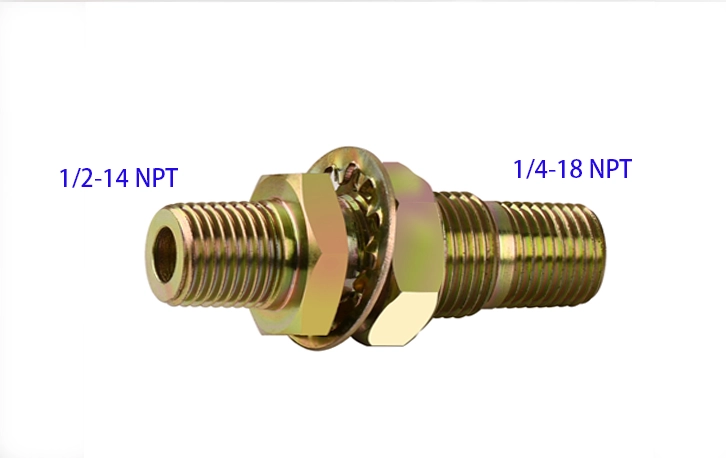
FAQs about Bulkhead Fittings
What types of bulkhead fittings work best in CNC machinery?
Bulkhead fittings serve as the guarded passage through panels and tanks, but the right type depends on the system’s pulse:
- Compression fittings – steady performers in CNC coolant and lubrication systems, valued for seal integrity under vibration.
- Push-to-connect fittings – quick, clean installation for pneumatic lines; ideal where ease of installation matters.
- Threaded fittings (NPT, BSPT, metric thread) – dependable in hydraulic circuits that demand tight pressure rating control.
- Hydraulic fittings (JIC, SAE, ORB) – built for fluid power under high pressure.
Each type balances flow rate, durability, and leak prevention in different ways.
How do I choose the right material for high-pressure bulkhead fittings?
Material defines survival under stress. In high pressure or temperature extremes:
- Stainless steel → excels in corrosive media, vacuum systems, and hydraulic circuits; long-term durability with certified pressure ratings.
- Carbon steel → strong and cost-efficient for demanding fluid transfer.
- Brass → suitable for moderate pressure in cooling systems or pneumatic fittings.
- Aluminum, nylon, polypropylene → lighter-duty or corrosion-sensitive environments.
Match material certification and testing protocols to your actual operating load—not just catalog specs.
How can leaks be prevented in fluid transfer systems?
Leak prevention is a discipline, not luck. It depends on three coordinated actions:
- Correct seal design: metal-to-metal seats for high pressure, compatible polymers for corrosive media.
- Accurate machining tolerances and surface finish to protect seal integrity.
- Proper assembly procedures and torque control.
When bulkhead fittings are aligned with the right threaded fittings standard—NPT, BSPT, or JIC—the system holds firm, even under vibration resistance demands.
Why are stainless steel bulkhead fittings preferred in CNC hydraulic circuits?
CNC hydraulic circuits operate under pressure spikes and heat cycles. Stainless steel answers with strength and corrosion resistance.
It maintains pressure rating stability, supports fluid power reliability, and resists wear in lubrication systems. Combined with strict quality control and material certification, it protects seal integrity over long production runs.
In high-pressure environments, that consistency keeps downtime at bay.
What should be checked before selecting bulkhead fittings for production lines?
A short review avoids long-term trouble:
- Connection standard: NPT, BSPT, metric thread, ORB, JIC, or SAE—match the machine.
- Application: hydraulic circuits, pneumatic lines, CNC coolant, or vacuum systems.
- Material: stainless steel for corrosive media, brass for cooling systems, carbon steel for strength.
- Performance factors: flow rate, pressure rating, vibration resistance.
- Manufacturing control: surface finish, machining tolerances, testing protocols.
When these elements align, bulkhead fittings stop being small parts—and start being silent guardians of the entire system.