Choosing a 304 stainless steel fittings manufacturer isn’t just another line item—it’s the hinge your whole project swings on. One bad batch, one missed shipment, and suddenly your timeline’s on life support. In heavy industry, a tiny elbow can cause a big headache. Pick right, and everything hums. Pick wrong, and you’re babysitting leaks at 2 a.m.
Here’s the kicker: the global stainless steel pipe and fittings market was valued at over $40 billion in 2023, according to Grand View Research. Big money, crowded field. As ASTM International puts it, material standards exist for a reason—consistency isn’t a luxury; it’s survival.
So how do you spot a manufacturer that won’t ghost you when deadlines get tight? That’s where this gets interesting.
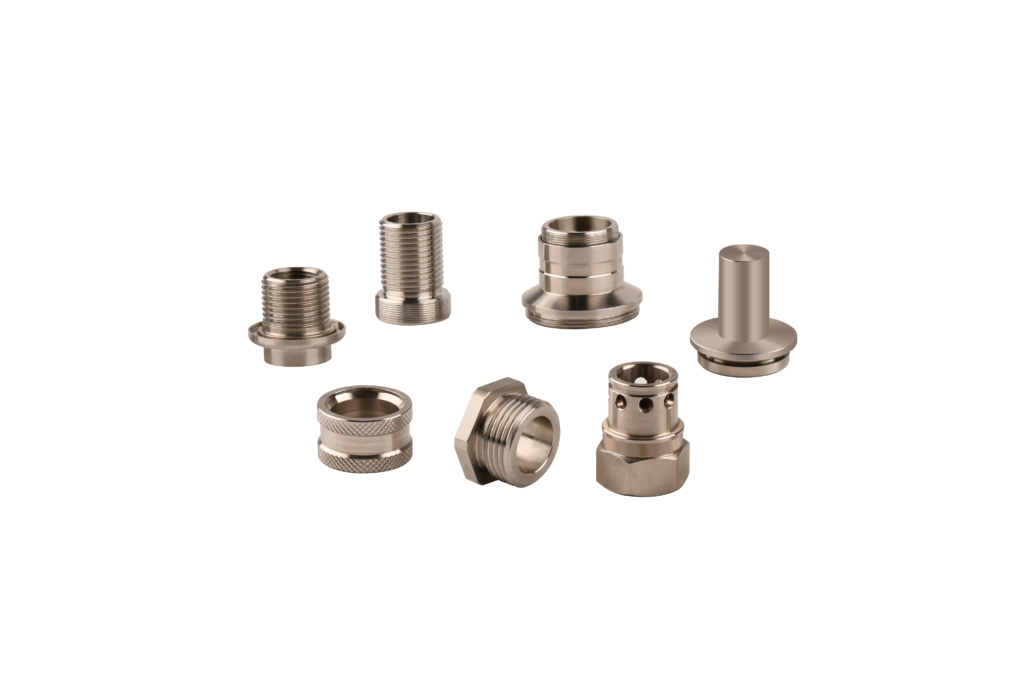
What Are 304 Stainless Steel Fittings?
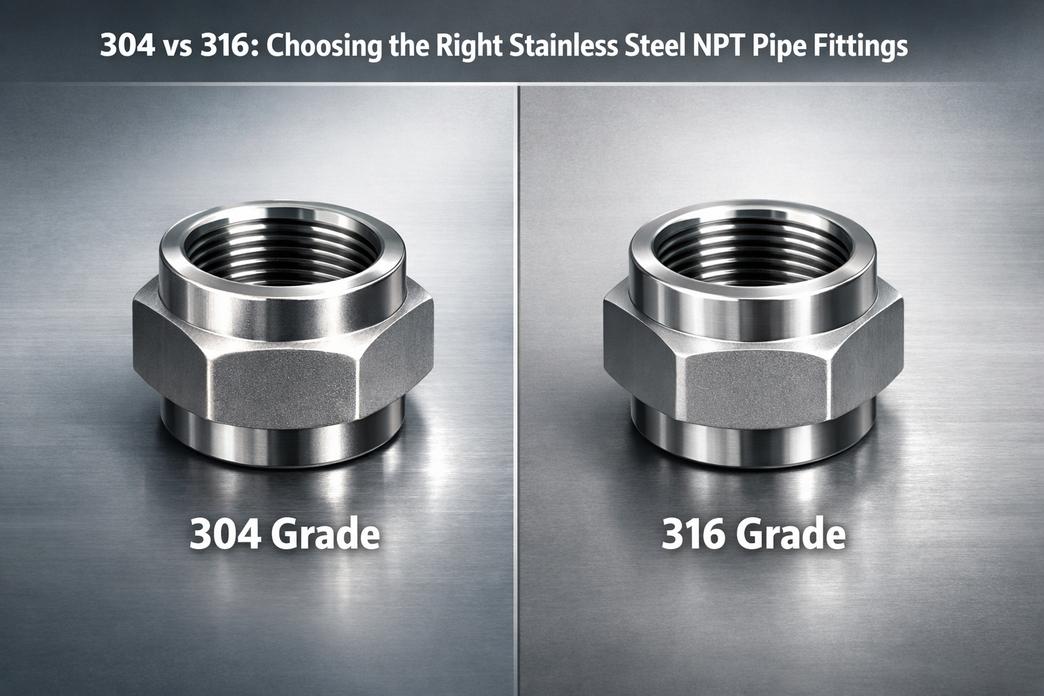
When people talk about 304 stainless steel fittings, they usually mean reliable connectors made from 304 stainless steel. These stainless steel pipe fittings keep systems tight, clean, and corrosion-resistant in daily industrial work.
Composition and corrosion resistance of 304 stainless steel
304 stainless steel fittings are built on a balanced chemical formula that keeps things steady under pressure and moisture.
- Chemical composition
1.1 Core elements
- Chromium (Cr) forms a natural passivation layer that blocks oxygen attack.
- Nickel (Ni) improves toughness and stability.
1.2 Minor elements
- Low carbon content reduces carbide precipitation during welding.
- Unlike 316, it contains no added molybdenum, which affects resistance to chlorides.
- Corrosion behavior
2.1 Surface protection
- The passive film self-repairs when scratched.
2.2 Typical risks
- Pitting corrosion in chloride-rich water.
- Crevice corrosion in tight gaps.
- Rare cases of stress corrosion cracking at high temperature and tension.
- Typical chemical range and performance data
| Element / Property | Standard Range (%) | Function in 304 | Impact on 304 stainless steel fittings |
|---|---|---|---|
| Chromium | 18.0–20.0 | Forms passive film | Improves general corrosion resistance |
| Nickel | 8.0–10.5 | Stabilizes austenite | Enhances ductility and toughness |
| Carbon | ≤0.08 | Controls carbide formation | Supports weldability |
| Corrosion Rate (mild water, mm/year) | <0.01 | Surface stability | Long service life |
This balance is why 304 stainless steel fittings are so common in food lines, water plants, and light chemical systems. Brands like yuhuan hongqian focus on keeping these values tight so every stainless steel 304 fitting performs the same, batch after batch.
Common fitting types: elbows, Tees, reducers, flanges & couplings
In real projects, 304 stainless steel fittings show up in many shapes. Each one plays a simple but key role.
- Elbows change flow direction, usually 45° or 90°.
- Tees split or combine flow in branch lines.
- Reducers adjust pipe diameter.
- Flanges allow bolted connections and easy removal.
- Couplings and Unions connect straight runs.
From a system view:
- Pipe fittings
- Standard pressure lines
- Industrial water loops
- Tube fittings
- Instrumentation
- Food-grade tubing
- Specialty fittings
- Custom bends
- Non-standard wall thickness
Good 304 stainless steel pipe fittings are not just about shape. Wall thickness, tolerance, and clean welding seams matter. yuhuan hongqian supplies elbows and tees that match both metric and ANSI standards, which makes installation less of a headache.
Connection methods: butt-weld, socket-weld and threaded joints
Installing 304 stainless steel fittings usually follows a clear path:
- Prepare the pipe end
- Clean oil and debris.
- Check alignment.
- Choose the joint type
- Butt-weld: full-penetration welding, ideal for high strength lines.
- Socket-weld: pipe sits in a recess before welding, common in high-pressure small-bore systems.
- Threaded joints: also called screwed connections, quick for low-pressure use.
- Apply proper sealing methods
- PTFE tape for threads.
- Controlled heat input for weld zones.
- Inspect mechanical integrity
- Visual check.
- Pressure test if required.
This step-by-step approach keeps stainless steel fittings safe and leak-free.
Surface finish options from pickled & passivated to electro-polished
Surface finish changes both performance and vibe. Some projects want pure function; others want that clean, shiny look.
Pickled and passivated finishes remove scale and boost corrosion resistance.
Mechanical polishing reduces surface roughness and improves the aesthetic finish.
Electro-polished surfaces go even smoother, using controlled chemical action for high-purity systems.
Extra chemical cleaning may follow for food or pharma lines.
For 304 stainless steel fittings, the right finish can mean easier cleaning, less bacterial buildup, and longer life. yuhuan hongqian offers pickled, polished, and electro-polished stainless steel pipe fittings so customers can match finish to real working conditions, not just looks.
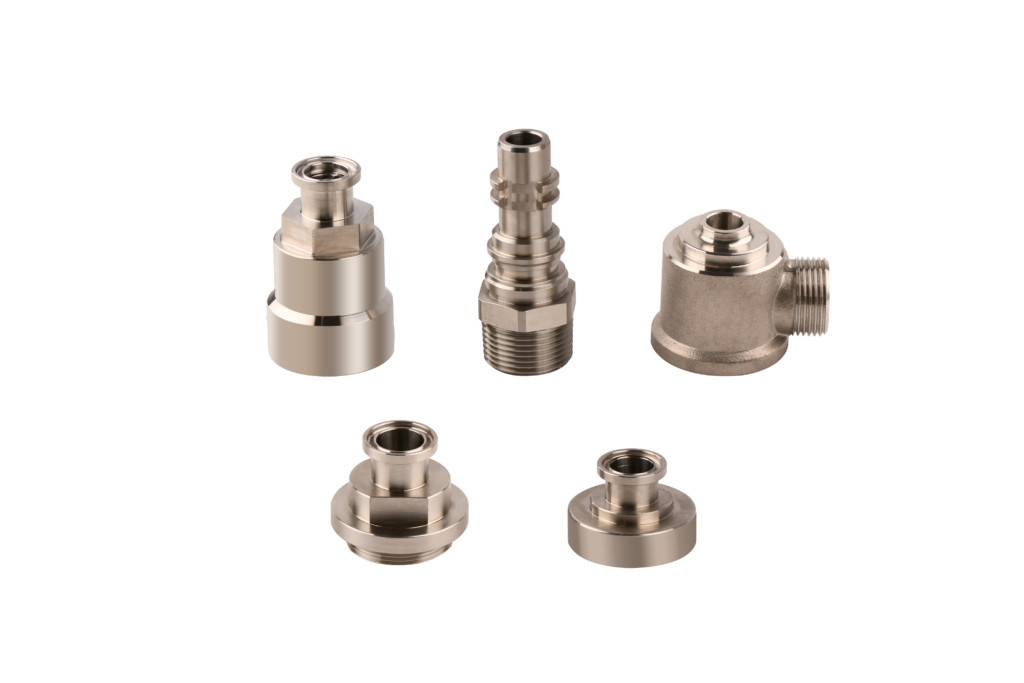
5 Steps to Vet a Fittings Manufacturer
Choosing a supplier for 304 stainless steel fittings isn’t just a pricing game. You’re trusting someone with pressure lines, food lines, maybe even gas lines. A smart check now saves headaches later. Here’s how to size up a maker of 304 stainless steel fittings the right way.
Step 1: Verify material grades – 304 vs. 316L, duplex and super duplex
When reviewing 304 stainless steel fittings, break the check into layers:
- Material Comparison Basics
- 304 stainless steel
- ~18% Cr, ~8% Ni
- Solid corrosion resistance for water and mild chemicals
- Balanced mechanical properties
- 316L stainless steel
- Added Mo (2–3%)
- Better pitting resistance
- Lower carbon for weld stability
- Duplex stainless steel
- Mixed austenitic-ferritic material composition
- Higher strength, improved chloride resistance
- Super duplex stainless steel
- Elevated Cr, Mo, N
- Extreme environments, offshore focus
- 304 stainless steel
- Key Data Snapshot
| Grade | Yield Strength (MPa) | PREN Value | Typical Nickel % |
|---|---|---|---|
| 304 | ≥205 | ~18 | 8–10.5 |
| 316L | ≥170 | ~24 | 10–14 |
| Duplex 2205 | ≥450 | ~35 | 4.5–6.5 |
| Super Duplex 2507 | ≥550 | ~42 | 6–8 |
- Supplier Verification
- Mill test certificates
- PMI checks
- Traceability records
A reliable source like yuhuan hongqian will openly share heat numbers and testing reports for every batch of 304 stainless steel fittings.
Step 2: Confirm manufacturing standards like ASME B16.9 and MSS SP-43
Compliance isn’t optional. It’s survival.
- Dimensional Standards
- ASME B16.9 – factory-made wrought fittings
- MSS SP-43 – light wall stainless fittings
- DIN EN 10253
- JIS B2311
- What to Review
- Stamping and marking
- Dimensional accuracy tolerances
- Alignment with performance specifications
- Audit Trail
- Check inspection reports
- Confirm alignment with industry compliance rules
For buyers of 304 stainless steel fittings, standards mean interchangeability. If dimensions drift, your pipe compatibility is toast.
Step 3: Inspect production processes and surface finishes (bright annealed, mechanical polished)
Quality shows up in the finish.
- Production Flow
- Raw tube inspection
- Cold forming or hot forming
- Heat treatment
- Surface finishing
- Surface Options
- Bright annealed finish
- Mechanical polished finish
- Inspection Points
- Surface quality consistency
- Internal cleanliness
- Smooth weld seams
Clean 304 stainless steel fittings matter in food lines. No roughness. No trapped residue. Makers like yuhuan hongqian focus on controlled manufacturing techniques to keep smoothness tight and repeatable.
Step 4: Review dimension specs – NPS, schedule number and wall thickness
A fitting that doesn’t match the pipe is a costly mistake.
- Core Checks
- NPS alignment
- Correct schedule number
- Verified wall thickness
- Technical Review
- Outside diameter
- Inside diameter
- Acceptable tolerance
- Compatibility Testing
- Trial assembly
- Pressure simulation
- Weld bevel inspection
Precise dimensional specifications ensure your stainless steel pipe fittings connect without forcing. Good 304 stainless steel fittings slide into place like they should—no drama.
Step 5: Assess quality control certifications for food & beverage, oil & gas
Paperwork tells a story.
- Certification Review
- ISO systems
- PED approval
- Industry-specific audits
- Testing Procedures
- Hydrostatic testing
- Chemical analysis
- Material traceability
- Industry Fit
- Food & beverage industry hygiene
- Oil & gas industry pressure tolerance
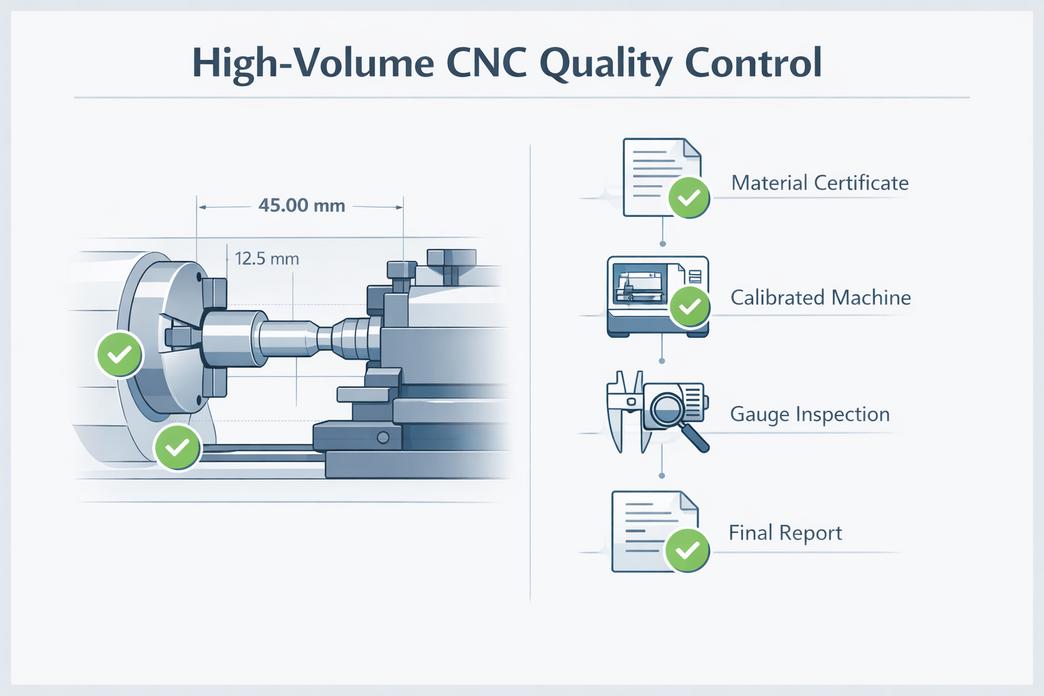
Strong quality control keeps 304 stainless steel fittings reliable in tough service. yuhuan hongqian supports sectors that can’t afford leaks or contamination, backing stainless steel fittings with documented ISO certification and inspection records that are easy to verify.
Choose carefully. Good fittings look simple, but the details separate average suppliers from real partners.
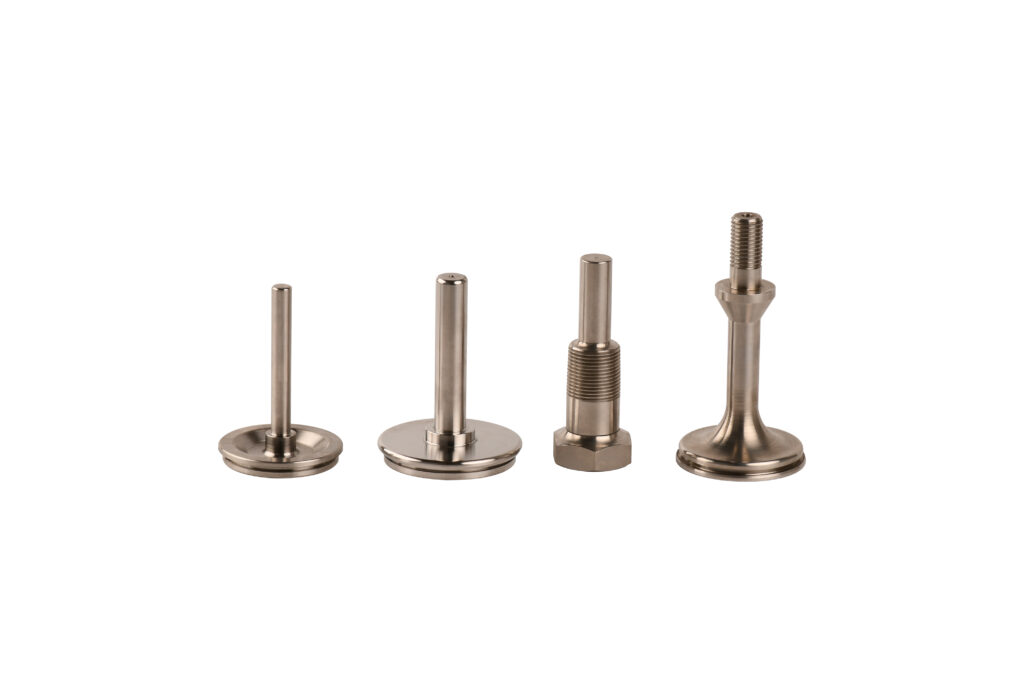
Domestic vs. Overseas 304 Fittings Suppliers
Choosing between domestic and overseas sources for 304 stainless steel fittings is not just about price. It’s about timing, trust, and how smooth your project runs when pressure hits. From stainless steel 304 pipe fittings to custom 304 SS fittings, the supplier you pick can make your day easy—or messy.
Domestic 304 stainless steel fittings suppliers
When sourcing 304 stainless steel fittings locally, buyers often focus on three practical layers:
- Production & Compliance
- Quality Control
- Raw material testing for stainless steel 304 fittings
- In-process inspection of 304 stainless pipe fittings
- Final pressure and dimension checks
- Certifications
- Mill test certificates
- Local code compliance
- Factory Audits
- On-site reviews
- Process traceability checks
- Quality Control
- Project Coordination
- Lead Times
- Shorter production cycles
- Faster replenishment for urgent 304 SS fittings
- Communication
- Real-time updates
- Native-language clarity
- Technical Support
- Drawing confirmation
- Material substitution advice
- Lead Times
- After-Sales Assurance
- Quick claim handling
- Easier returns
- Face-to-face problem solving
Brands like yuhuan hongqian stand out by tightening every link above, keeping 304 stainless steel fittings consistent from raw steel to packed cartons. For oil, gas, and water systems, that peace of mind matters.
Overseas 304 stainless steel fittings suppliers
Going global for 304 stainless steel fittings can trim budgets, especially on bulk stainless steel 304 pipe fittings. Still, it’s a mixed bag.
- Shipping Costs can swing with fuel prices.
- Import Duties add surprise expenses.
- Currency Exchange rates shift fast.
1) Review Supplier Reputation through third-party audits.
2) Lock clear Payment Terms before production.
3) Map out International Logistics timelines in detail.
4) Account for Cultural Differences in negotiation and documentation.
The World Trade Organization noted in its 2025 trade outlook that global goods trade growth remains “moderate but uneven across regions,” urging importers to strengthen supply chain risk checks.
That advice hits home. A low unit price on 304 stainless steel fittings looks great—until delays stall your site. Some buyers split orders: core volumes overseas, urgent 304 stainless steel fittings from trusted names like yuhuan hongqian. Smart move.
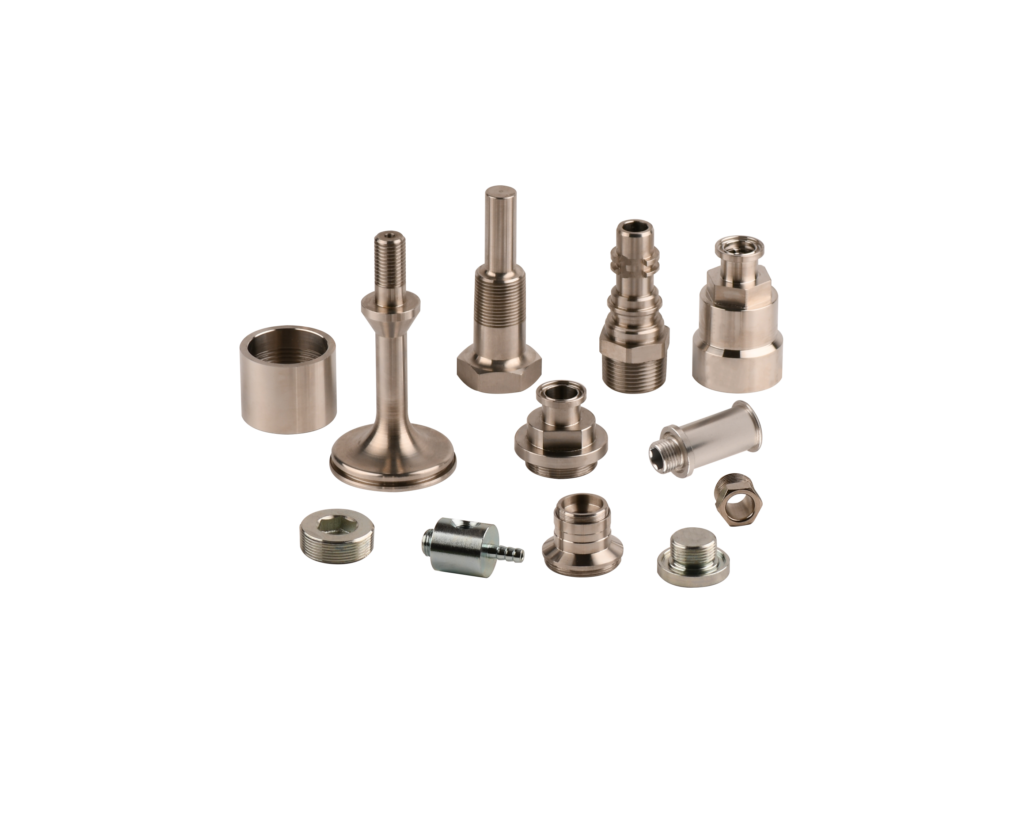
Delivery Delays? Guaranteed Lead Times
Lead time can make or break a project. When you’re sourcing 304 stainless steel fittings, timing matters just as much as specs. From stainless steel 304 pipe fittings in stock to custom high-nickel builds, knowing what ships fast—and what doesn’t—keeps your install on track.
Standard lead times for stock items and high-nickel alloy specials
When ordering 304 stainless steel fittings, delivery depends on material type, production load, and inspection scope. Here’s how stock items compare with high-nickel alloy and other specialty fittings under real-world manufacturing schedules and material availability constraints.
1) Stock 304 stainless steel fittings
1.1 Raw material status
- Austenitic stainless steel 304 coil and bar are widely available.
- Stable material availability shortens procurement cycles.
1.2 Production flow
- Standardized forging or casting molds
- Routine machining and threading
- Basic PMI and dimensional checks
1.3 Resulting standard lead time
- Typically 7–15 working days for common sizes.
2) High-nickel alloy and custom specials
2.1 Raw material sourcing
- Nickel-rich alloys often require mill booking.
- Limited stock means longer manufacturing schedules.
2.2 Processing differences
- Slower machining speeds
- Additional heat treatment
- Extended NDT and documentation
2.3 Resulting lead time
- Commonly 30–60+ days depending on specs.
Typical Lead Time Comparison Table
| Product Type | Material Grade | Avg. Production Days | Inspection Days | Total Lead Time (Days) |
|---|---|---|---|---|
| Elbow – Stock | 304 | 5–7 | 2 | 7–9 |
| Tee – Stock | 304 | 6–8 | 2 | 8–10 |
| Union – Stock | 304 | 7–10 | 3 | 10–13 |
| Elbow – Custom | High-nickel alloy | 20–30 | 7 | 27–37 |
| Flange – Custom | High-nickel alloy | 30–45 | 10 | 40–55 |
For everyday projects, stainless steel fittings in 304 grade move fast. Custom chemistry? Plan ahead.
Expedited production workflows for urgent water treatment orders
When a water plant upgrade can’t wait, expedited production becomes the game plan. For urgent orders involving 304 stainless steel fittings, teams tighten every step of the production workflow.
- Priority material release for stainless steel 304 pipe fittings
- Overtime machining for threaded and welded fittings
- Parallel inspection during fabrication
Here’s how priority processing usually plays out:
- Confirm exact quantities and pressure ratings within 24 hours.
- Lock raw material from in-house stock of 304 stainless steel fittings.
- Assign a dedicated shift for machining and threading.
- Conduct rolling QC instead of end-batch inspection.
- Ship via air freight if timelines are tight.
For water treatment projects, corrosion resistance and hygiene matter. Using 304 stainless steel fittings keeps compliance simple while rush scheduling trims days off delivery. It’s not magic. It’s tight coordination and clear communication.
Securing guaranteed delivery commitments with contractual clauses
Fast talk doesn’t secure guaranteed delivery. Paperwork does. Clear contractual clauses turn promises into measurable delivery commitments.
1) Define milestones
1.1 Production start date
1.2 Mid-process inspection date
1.3 Final dispatch date
2) Embed accountability
2.1 Penalty clauses for late shipment
2.2 Bonus incentives for early completion
2.3 Shared logistics responsibility in supplier agreements
3) Align service expectations
- Include measurable KPIs in service level agreements
- Specify documentation for 304 stainless steel fittings (MTC, PMI, pressure test reports)
- Clarify Incoterms and freight booking ownership
When stainless steel fittings are critical to plant commissioning, vague timelines cost money. Locking terms around 304 stainless steel fittings—clearly, in writing—keeps everyone honest and your project moving.
FAQs about 304 Stainless Steel Fittings
What makes 304 stainless steel fittings a trusted choice for industrial piping?
304 stainless steel balances cost and corrosion resistance, making it a steady performer in chemical processing, food and beverage, and water treatment lines. In daily operation, engineers rely on:
- Fittings such as Elbows, Tees, Reducers, Flanges, Caps for flexible routing
- Connection options including Butt-weld, Socket-weld, Threaded, and Flanged joints
- Compliance with ASME B16.9, ASTM A403, MSS SP-43 for dimensional accuracy
Compared with 316L stainless steel or Duplex stainless steel, 304 suits moderate chloride and temperature conditions while remaining easy to fabricate and weld.
How does 304 stainless steel compare with higher alloy grades?
In selection meetings, the contrast is clear:
- 304 stainless steel – reliable for general corrosion and standard pressure systems.
- 316L stainless steel – better resistance in chloride-rich or coastal environments.
- Duplex stainless steel / Super duplex stainless steel – higher strength for demanding oil and gas or power generation lines.
- High-nickel alloy – chosen when extreme heat or aggressive chemicals threaten system life.
For many plants, 304 fittings offer the right balance between durability and budget, especially where extreme media are not present.
What technical details must be checked before bulk purchasing?
A careful review prevents costly misalignment on site. Focus on two key areas:
1) Dimensions
- Match Nominal Pipe Size (NPS)
- Confirm Schedule number and wall thickness
- Verify outside diameter and inside diameter for smooth flow
2) Surface & standards
Surface finishes such as Pickled and passivated, Mechanical polished, Bright annealed, or Electro-polished influence corrosion behavior and hygiene in pharmaceutical or food and beverage systems. Ensure certification to DIN EN 10253 or JIS B2311 when projects require international compliance.
A small oversight in specification can echo through an entire pipeline—precision at the start protects the whole installation.