In the global manufacturing landscape, CNC turning services are more than just a production method; they are the backbone of critical industries ranging from fluid power to automotive engineering. However, the recurring “pain points” for procurement professionals remain the same: inconsistent quality, hidden costs, and the frustration of delayed lead times.
At Yuhuan Hongqian Machinery Co., Ltd, located in the manufacturing heart of Taizhou, Zhejiang, we’ve seen these challenges firsthand. With over 8 years of specialized experience in pipe fittings and CNC machining, and a facility powered by 80 CNC lathes and 15 truss robots, we have crafted this guide to help you navigate the complexities of precision manufacturing.
1. What is CNC Turning? (Deep Dive into the Process)
If you are looking for rotational symmetry, you are looking for CNC Turning.
The Definition and Core Mechanics
CNC (Computer Numerical Control) Turning is a subtractive manufacturing process where a material bar is held in a chuck and rotated while a cutting tool is fed to the piece to remove material. Unlike CNC milling—where the tool rotates to cut the stationary workpiece—turning rotates the workpiece at high speeds.
This process is ideal for creating:
-
Cylindrical Parts: Shafts, pins, and spacers.
-
Complex Profiles: Tapered surfaces, contours, and intricate grooves.
-
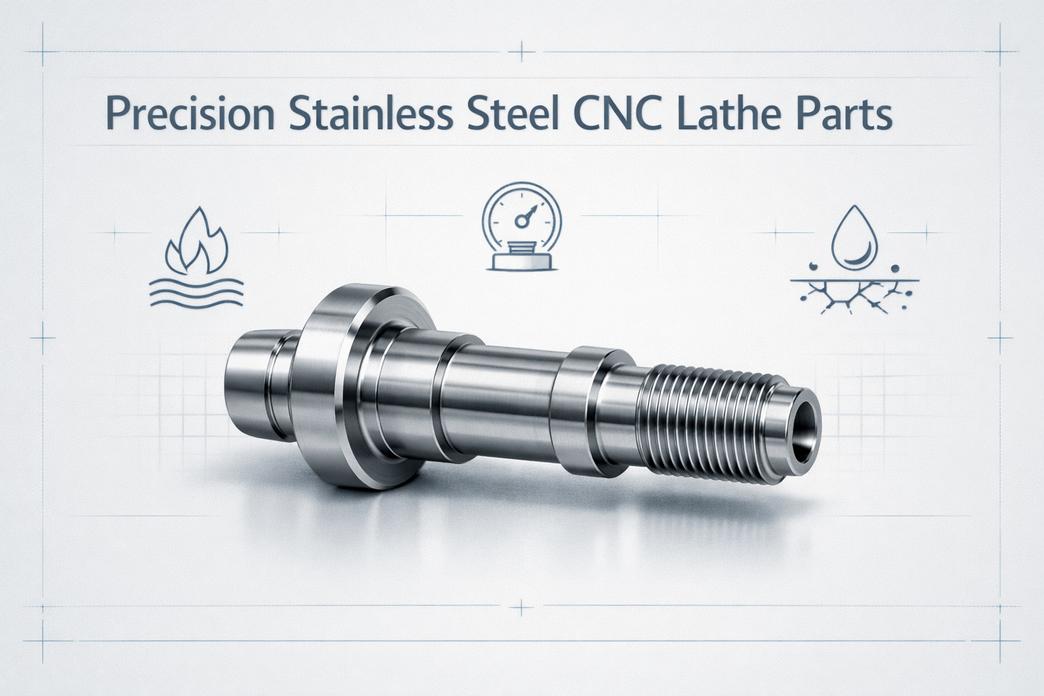
Threaded Components: Custom pipe fittings, connectors, and bolts.
Why It Matters for Your Project
In our Zhejiang factory, we use advanced CNC lathes that allow for multi-tasking. By programming the machine with precise G-code, we eliminate the variance of manual operation. For our clients, this means that the 1st part and the 10,000th part are identical down to the micron.
2. What are CNC Machining Services? (The Scope of a Partner)
When you hire a CNC machining service, you aren’t just “buying a part.” You are investing in a specialized supply chain solution. Professional services encompass the entire lifecycle of a component’s creation.
Beyond Just Cutting Metal
A comprehensive service provider like Hongqian Machinery offers:
-
Technical DFM (Design for Manufacturing) Support: We review your drawings to suggest ways to reduce cost without sacrificing strength.
-
Material Sourcing: Whether it’s Stainless Steel 304, 316, or specialized Carbon Steel, we ensure the raw material is certified.
-
High-Volume Automation: Our 15 truss robots represent the peak of modern CNC machining services. Automation allows us to maintain 24/7 production cycles, ensuring that “mass production” actually means “efficient production.”
-
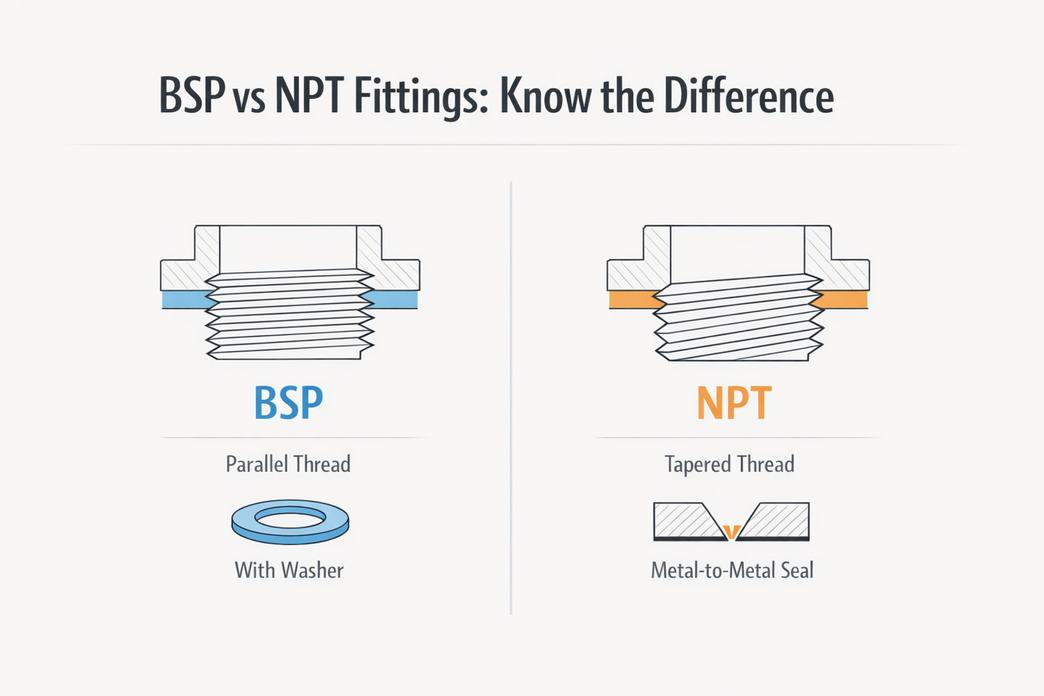
Specialized Expertise: As a dedicated pipe fitting manufacturer, our service includes expert-level knowledge of thread standards like NPT, BSP, and Metric, with a specific focus on the 1:16 taper ratio required for leak-proof connections.
3. How Much Does a CNC Service Cost? (The Breakdown)
Pricing is often the most opaque part of the industry. At Hongqian, we believe in transparency. Understanding how a CNC service calculates costs can help you design more affordable parts.
The Cost Equation
The total price of a CNC turned part is generally divided into four quadrants:
-
Material Cost (30% – 40%): The volume of raw material and its type. For example, Stainless Steel 316 is more expensive than 304, not just in raw price, but because it is harder on the cutting tools (leading to slower machining times).
-
Setup and Programming: This is the “fixed cost.” It includes writing the CNC program and preparing the lathe with the correct fixtures. This is why small batches are more expensive per unit than large-scale production.
-
Machining Time (The “Cycle Time”): Every second the machine runs costs money. Parts with tight tolerances ($pm0.01text{mm}$) or complex surface finish requirements (like Ra 0.4μm) require the machine to run slower, which increases the price.
-
Labor and Automation: By utilizing 15 truss robots, we significantly reduce the “per-part” labor cost. Automation allows us to pass these savings on to our clients, making our Zhejiang factory-direct prices among the most competitive for mid-to-high volume orders.
4-Key Material Standards in CNC Turning
For custom pipe fittings and industrial parts, the choice of material is critical. We ensure:
-
Full Traceability: Every batch comes with a Material Test Report (MTR).
-
Grade Verification: 100% verification of chemical composition.
-
Optimized Selection: We help you choose between 304, 316, or Carbon Steel based on your working pressure and environment.
5. Key Indicators: How to Choose Your CNC Partner
Choosing a manufacturer in China—specifically in hubs like Taizhou or Ningbo—requires a systematic approach. Here is the framework we recommend:
I. Equipment Density and Technology
A shop with 5 machines is a workshop; a factory with 80 CNC lathes is a production powerhouse. High machine density means the factory can prioritize your project without waiting for other jobs to finish. Furthermore, ask about automation. Truss robots ensure that human fatigue doesn’t lead to “Friday afternoon” quality drops.
II. Industry-Specific Experience
If you need pipe fittings, don’t go to a shop that specializes in toy parts. Our 8-year focus on pipe fittings and CNC turned components means we understand the critical nature of pressure ratings, material integrity, and thread precision.
III. Quality Infrastructure
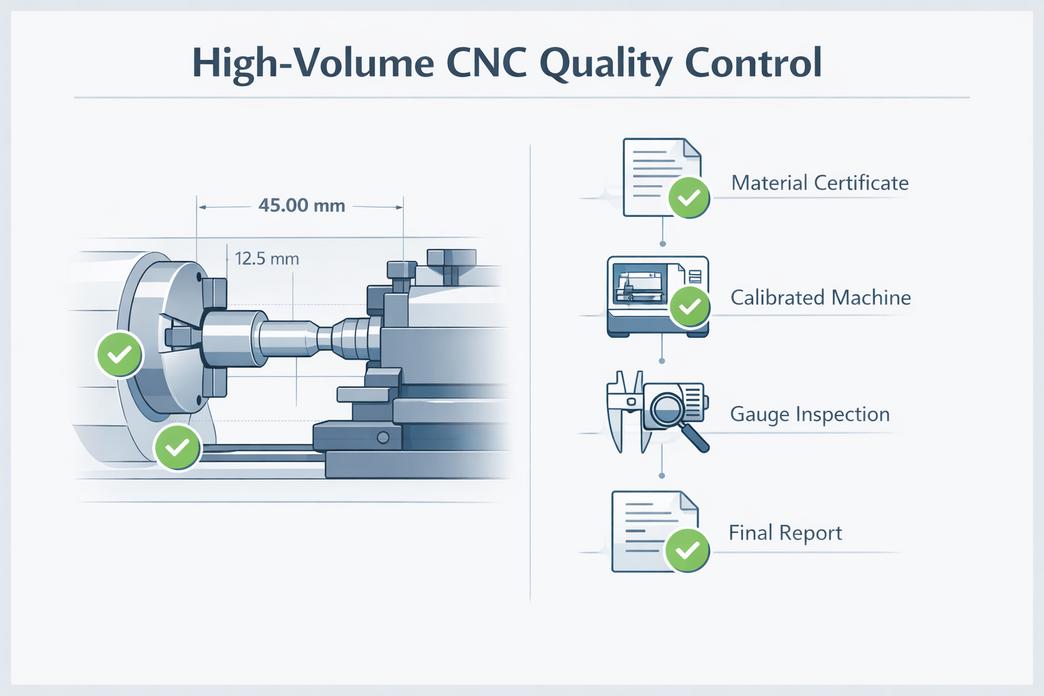
Does the factory have a dedicated QC room? Look for ISO 9001:2015 certification. At Hongqian, we use calibrated metrology tools to verify every batch, providing material certificates and inspection reports as standard.
6. Technical Requirements for Custom Turned Parts
Custom parts often push the limits of standard machining. Here are the core technical points that a reliable partner must master:
-
Material Science: Understanding how different alloys behave under heat. For example, machining 316 stainless steel requires specific coolant pressures and tool coatings to prevent work hardening.
-
Thread Precision: In the world of pipe fittings, a slight error in the 1:16 taper can lead to catastrophic leaks in high-pressure systems.
-
Surface Finish: Many custom parts require post-processing. Our CNC lathes are optimized to achieve high-quality finishes directly off the machine, but we also manage secondary treatments like electropolishing or passivating.
7. Case Study: High-Efficiency Production in Taizhou
One of our recent clients required 50,000 custom stainless steel connectors. Their previous supplier struggled with a 15% reject rate due to thread inconsistencies.
The Hongqian Solution:
-
Automation: We assigned the project to a cell of 10 CNC lathes equipped with truss robots.
-
Consistency: The robots ensured the loading and unloading were perfectly timed, keeping the thermal expansion of the machine tools stable.
-
Result: We achieved a 99.8% pass rate and delivered the project 10 days ahead of schedule. This is the power of combining 80-lathe capacity with robotic precision.
8. Future Trends: The Digital Factory
The future of CNC turning in Zhejiang is digital. We are moving toward “Lights-Out Manufacturing,” where our 15 robots and 80 lathes can operate with minimal human intervention. This shift not only reduces costs but also increases the safety and reliability of the manufacturing process.
FAQ: Everything You Need to Know About CNC Turning Services
1. What is CNC turning?
CNC turning is a precision manufacturing process where a cylindrical workpiece is rotated at high speeds while a stationary cutting tool removes material to create the desired shape. It is the most efficient method for producing rotational symmetric parts like shafts, bushings, and custom pipe fittings. By using computer-controlled programming, it ensures extreme accuracy (up to $pm0.01text{mm}$) and repeatability.
2. What are CNC machining services?
CNC machining services are professional manufacturing solutions provided by third-party factories (like Yuhuan Hongqian) to produce custom parts based on client-provided CAD designs. These services include material procurement, programming, multi-axis machining, and quality inspection. For B2B buyers, these services provide a way to access high-end equipment (like our 80 CNC lathes) and technical expertise without investing in their own machinery.
3. How much does a CNC service cost?
The cost of CNC services is calculated based on:
-
Material: The price of raw metals (e.g., 304 vs. 316 Stainless Steel).
-
Machining Time: Complexity of the design and the required tolerances.
-
Order Volume: Bulk orders are more cost-effective. At our factory, the integration of 15 truss robots significantly lowers labor costs for high-volume runs, allowing us to offer more competitive pricing.
-
Tooling & Setup: Initial programming and machine calibration fees.
4. What are the common thread standards for CNC turned pipe fittings?
As a specialized pipe fitting manufacturer, we frequently handle NPT (National Pipe Thread), BSPP (British Standard Parallel Pipe), and BSPT (British Standard Taper Pipe). We strictly adhere to the 1:16 taper ratio for tapered threads to ensure zero-leak performance in industrial fluid systems.
5. How does automation (truss robots) benefit my order?
Our 15 truss robots ensure that your parts are manufactured with 24/7 consistency. Unlike manual loading, robots do not suffer from fatigue, which means the precision of the last part is exactly the same as the first. It also speeds up production by 20-30%, ensuring faster delivery for urgent procurement needs.
6. Can your factory handle both Stainless Steel and Carbon Steel?
Yes. In March 2026, we optimized our production lines into specialized categories for Stainless Steel (304/316) and Carbon Steel. This prevents cross-contamination and ensures that the surface treatment and structural integrity of the material are maintained throughout the CNC turning process.
7. Why should I choose a manufacturer in Taizhou, Zhejiang?
Taizhou is a world-class hub for pipe fitting and valve manufacturing. By choosing Yuhuan Hongqian Machinery, you benefit from a complete local supply chain—from high-quality raw materials to advanced surface treatment facilities—all within a 50km radius. This location advantage reduces logistics costs and shortens lead times.
8. Do you provide material certifications and inspection reports?
Absolutely. We provide MTRs (Material Test Reports) and full dimension inspection reports (including thread gauge tests and surface roughness measurements) with every shipment to ensure full traceability and compliance with ISO 9001 standards.
Summary: Your Path to Precision
Selecting a CNC turning service provider is a strategic decision that affects your product’s performance and your company’s bottom line. By focusing on a partner with factory-direct scale (80+ machines), proven automation (15+ robots), and niche expertise (pipe fittings), you ensure a low-risk, high-reward partnership.
Ready to start your next project?
Get a free technical consultation and a precision quote from the experts at Yuhuan Hongqian Machinery Co., Ltd. We specialize in turning your complex designs into perfect metal components.
-
Address: Yuhuan, Taizhou, Zhejiang, China
-
Experience: 8+ Years in CNC Turning & Pipe Fittings
-
Equipment: 80 CNC Lathes / 15 Truss Robots
-
Contact us today for a 24-hour quote!
Disclaimer: All technical data provided is based on our current factory capabilities in Zhejiang. We recommend a full DFM review for all new custom designs.