When deadlines hiss and leaks lurk, brass pipe fittings made by OEM CNC machining keep your supply chain cool and your profits drier.
Factories hum, deadlines glare, and brass pipe fittings sit at the center like the unsung hero of a pressure test. One bad thread can snowball into leaks, callbacks, and awkward calls with finance. Buyers want parts that show up right, work right, and don’t spark drama on the shop floor.
OEM CNC machining is the calm in that storm. Automated cuts hit the same mark every run, scrap drops, schedules behave, and customization doesn’t feel like a gamble—it feels planned.
A quick gut check from standards bodies says it plain. ASME’s B1 thread standards stress consistency as the backbone of safe fluid systems. Stick around—we’re about to crack open how precision at scale turns supply chains into smooth operators.
5 Reasons Oem Cnc Matters For Brass Pipe Fittings
When it comes to brass pipe fittings, details make or break performance. From raw brass to finished pipe connectors, OEM CNC keeps every brass fitting sharp, tight, and ready for real-world pressure.
Precision Cutting Reduces Material Waste
In brass pipe fittings production, cnc machining changes how brass is shaped and saved.
- Material Control
- Toolpaths are programmed for exact precision cutting.
- Minimal overcut means less material waste.
- Tight tolerances improve efficiency.
- Scrap rates drop, leading to real cost savings.
- Toolpaths are programmed for exact precision cutting.
- Dimensional Stability
- Each brass pipe connector is cut to spec.
- Outer diameter
- Inner bore
- Thread start point
- Each brass pipe connector is cut to spec.
The result? Brass pipe fittings that use only what’s needed—no extra shaving, no sloppy margins. For manufacturers like yuuhuan hongqian, that efficiency directly supports competitive pricing without cutting corners.
Faster Turnaround Than Conventional Methods
Speed matters in bulk brass pipe fittings orders.
- Digital programming shortens setup time.
- Automated cnc manufacturing reduces manual adjustment.
- Stable cycles boost production speed.
Compared with casting or older conventional methods, CNC cuts down turnaround time and drives serious lead time reduction. Brass fittings move from drawing board to shipment fast, keeping supply chains smooth. That’s a big win for distributors who can’t afford delays.
Consistent Thread Quality for Leak-Free Joints
Threading defines sealing strength in brass pipe fittings.
- Thread Geometry
- Controlled by cnc precision
- Uniform pitch
- Accurate depth
- Clean flank angles
- Controlled by cnc precision
- Performance Outcome
- Stable thread quality
- Strong joint integrity
- Improved sealing performance
With reliable dimensional accuracy, every brass pipe connection seats properly. No guesswork. No uneven torque. Just leak-free results under pressure.
Flexible Batch Sizes from Prototypes to Mass Production
OEM CNC keeps brass pipe fittings adaptable.
- Small Runs
- Quick prototyping for custom pipe fittings.
- Medium Orders
- Balanced batch sizes for testing markets.
- Large Volume
- Seamless shift to mass production.
Thanks to oem cnc systems, scaling happens without expensive retooling. This level of production flexibility helps brands like yuuhuan hongqian serve both niche projects and high-volume buyers with the same steady quality.

Enhanced Surface Finish Minimizes Post-Processing
Surface quality isn’t just about looks; it affects sealing and plating.
- Controlled cutting speed in cnc machining
- Stable tooling improves machining quality
- Fine feeds enhance surface finish and smoothness
Better surfaces reduce extra grinding and polishing, cutting post-processing time and lowering finishing requirements. Clean, smooth brass pipe fittings leave the machine nearly ready to install. And in busy plumbing or industrial systems, that kind of readiness just makes life easier.
Top 4 Brass Pipe Fittings Customization Options
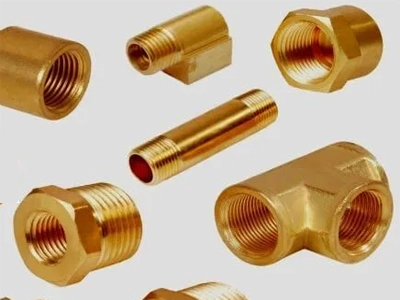
Brass pipe fittings sit at the core of fluid control systems, from home plumbing to industrial lines. When brass, pipe, and fittings come together through precision machining, performance gets real. Custom brass pipe fittings help match pressure ratings, layout limits, and design goals without cutting corners or wasting time.
Thread Types: NPT, BSP, and Custom Profiles
Choosing the right thread for brass pipe fittings is not guesswork. It’s about matching standards and making sure every brass fitting seals tight and runs smooth.
- Standard Thread Options
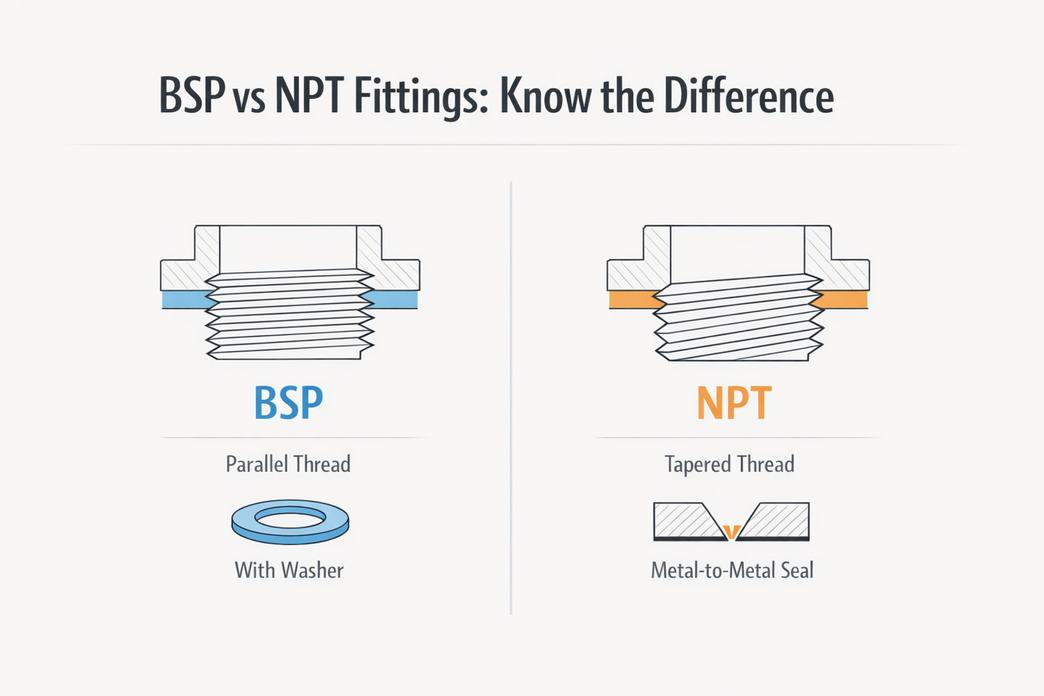
- NPT thread
- Designed for tapered sealing
- Requires strict thread specifications
- Demands high thread accuracy
- BSP thread
- Parallel or tapered forms
- Common in European pipe fittings systems
- Controlled through precise thread machining
- NPT thread
- Custom Thread Profiles
- Built around special equipment needs
- Engineered from exact thread specifications
- Verified for repeatable thread accuracy
- Pitch control
- Depth calibration
- Gauge inspection
For brass plumbing fittings in mixed global projects, flexible thread solutions keep installation simple. Brands like yuuhuan hongqian focus on precision CNC processes that protect sealing integrity while keeping brass pipe fittings consistent batch after batch.
Surface Treatments: Polishing, Plating, and Anodizing
Surface finish changes how brass pipe fittings look and last.
- Core Finishing Methods
- Brass polishing
- Smooth surface finish
- Cleaner flow path
- Nickel plating
- Added corrosion resistance
- Industrial-grade shine
- Chrome plating
- Decorative durability
- Anodizing service
- Enhanced wear protection
- Brass polishing
- Performance Goals
- Improve corrosion resistance in humid spaces
- Upgrade visual appeal for exposed brass fittings
- Extend lifecycle of pipe connectors under pressure
Well-treated brass pipe fittings handle moisture, chemicals, and daily wear without losing edge.
Dimensional Variations: Length, Diameter, and Wall Thickness
Precision defines serious brass pipe fittings.
- Length Control
- Custom length options
- Installation-specific trimming
- Diameter Flexibility
- Variable diameter for flow tuning
- Matching legacy pipe systems
- Wall Engineering
- Strict wall thickness control
- Enhanced pressure capacity
Under CNC supervision, precision machining ensures tight dimensional accuracy and stable tolerance control. This keeps brass connectors aligned, reduces leak risk, and avoids rework on site.
Special Features: Flanges, Elbows, and Tees
Complex shapes make brass pipe fittings more than simple connectors.
- Integrated Components
- Brass flanges
- Stable mounting
- Even load distribution
- Elbow fittings
- Smooth angle transitions
- Reduced turbulence
- Tee fittings
- Balanced branch flow
- Brass flanges
- Custom Shapes
- Built for tight layouts
- Engineered as durable assembly components
- Machined for accurate complex geometries
For systems that demand fewer joints and cleaner layouts, custom brass pipe fittings from yuuhuan hongqian reduce assembly time and raise reliability. Less hassle. Better fit. Longer service life.
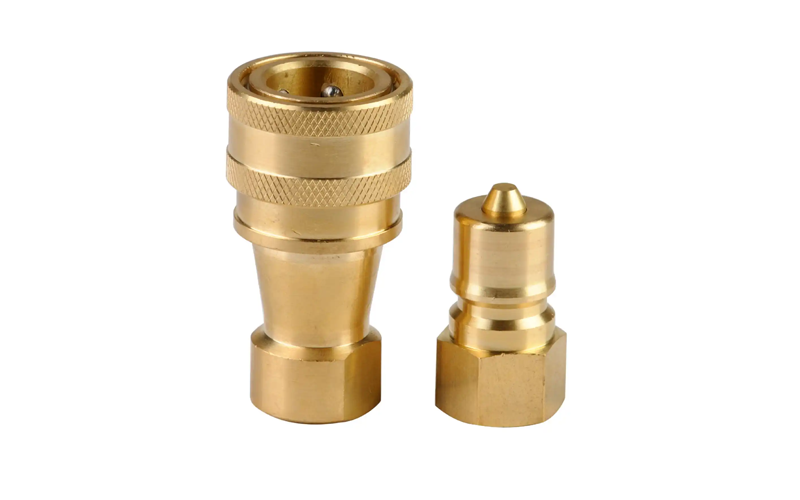
Oem Cnc Vs. Traditional Manufacturing: A Comparison
When choosing how brass pipe fittings are made, the process shapes everything—cost, speed, and long-term reliability. From small brass connectors to complex brass plumbing fittings, production style matters more than most buyers think. Let’s break down how OEM CNC compares with traditional methods, especially for high-demand brass pipe fittings projects.
OEM CNC
OEM CNC production of brass pipe fittings runs on advanced technology and serious automation, and it shows in the final product.
- Core Capabilities
1.1 Precision machining
- Tight tolerances down to microns keep brass fittings consistent.
- Ideal for threaded brass pipe fittings used in gas or water systems.
1.2 Complex geometries
- Intricate valve bodies and custom brass connectors are cut cleanly.
- No excessive material removal, so waste stays low.
1.3 Customization
- Fast prototyping for new brass plumbing fittings.
- Smooth shift from sample to batch production.
- Operational Advantages
2.1 Efficiency
- Shorter lead times for bulk brass pipe fittings.
- Stable output across small and large runs.
2.2 Repeatability
- Every brass fitting matches design specs.
- Less rework, fewer headaches on-site.
According to a 2025 Deloitte manufacturing outlook, precision CNC adoption continues to rise as “manufacturers prioritize automation to improve quality consistency and cost control in metal components.”
Brands like yuuhuan hongqian apply this model to ensure each brass pipe fitting meets export-grade standards without guesswork.
Traditional Manufacturing
Traditional production of brass pipe fittings relies on established methods and a highly skilled workforce, but the trade-offs are real.
- Production Characteristics
1.1 Labor-intensive processes
- Manual adjustments increase variability in brass fittings.
1.2 Higher tooling costs
- Casting molds for mass production of simple brass pipe fittings can be expensive.
1.3 Limited complexity
- Best suited for simpler designs, not tight-tolerance brass connectors.
- Practical Impact
2.1 Lead Time
- Longer preparation for molds and setup.
2.2 Consistency
- Slight dimension shifts between batches of brass plumbing fittings.
2.3 Waste
- Extra trimming increases scrap during material removal.
For basic, high-volume items, traditional methods still hold ground. Yet for modern brass pipe fittings demanding accuracy and repeatability, OEM CNC—trusted by yuuhuan hongqian—keeps things sharp, clean, and dependable.
From Design To Delivery: Brass Fittings Workflow
Getting brass pipe fittings right takes more than cutting metal. It’s a steady flow—from screen to spindle to shipping dock. For brands like yuuhuan hongqian, every brass pipe, brass fitting, and pipe connector starts as data and ends as a sealed carton, ready to move without drama.
Conceptual CAD Modeling for Exact Specifications
The workflow opens inside CAD software, where ideas turn into precise 3D brass pipe fittings.
- Design Definition
- Built through 3D modeling aligned with customer design parameters.
- Wall thickness, thread pitch, and sealing faces are tuned for brass pipe connectors and pipe fittings brass applications.
- Engineering Control
- Detailed technical drawings outline dimensions and tolerances.
- Smart tolerance analysis checks interference risks before machining.
- Careful material selection ensures the right brass grade for pressure and corrosion needs.
- Documentation Output
- Clean specification sheets guide production of every batch of brass pipe fittings.
- Files integrate directly with CNC programs to reduce manual edits.
At yuuhuan hongqian, this digital prep work keeps brass fittings consistent long before chips start flying.
Prototype Machining to Validate Fit and Function
- Raw brass stock is loaded and aligned for CNC machining.
- Initial prototype parts are shaped using refined machining processes and dedicated tooling.
- Operators verify dimensional accuracy against drawings.
- Samples undergo functional testing under real pressure conditions.
- Engineers review material properties and sealing results before approving full runs of brass pipe fittings.
It’s hands-on, practical, and honest. If a brass pipe joint feels off, it gets fixed here—not later.
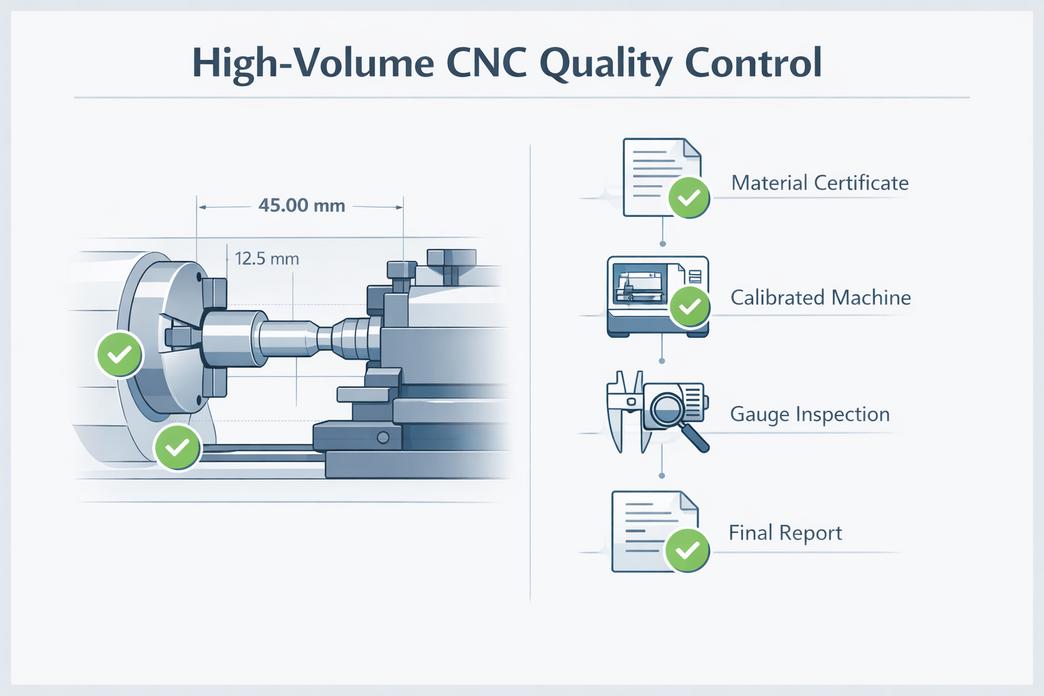
Quality Inspection with Automated Measurement Tools
For every shipment of brass pipe fittings, inspection runs deep.
- Measurement Systems
- Advanced quality control integrates automated inspection lines.
- Coordinate machines and optical measurement tools handle tight dimensional verification.
- Surface and Thread Checks
- Surface finish is scanned for irregularities.
- Threads are reviewed for burrs and defect detection flags anomalies instantly.
- Accuracy Assurance
- Routine calibration keeps gauges trustworthy.
- Reports trace each brass pipe connector back to its batch.
This is how yuuhuan hongqian keeps brass fittings dependable, not just good-looking.
Secure Packaging and Just-In-Time Shipping
- Packaging materials are selected based on size and weight of brass pipe fittings.
- Each unit gets protective wrapping to avoid scratches during handling procedures.
Then the rhythm shifts:
1) Cartons are labeled for smooth shipping logistics.
2) Orders sync with inventory management systems.
3) Dispatch aligns with strict delivery schedules.
Transit matters. Smart transit protection keeps brass pipe fittings, brass pipe connectors, and other brass fittings safe until they reach the job site. Yuuhuan hongqian keeps timing tight, stock lean, and customers moving without delays.
Oem Cnc Service Faqs For Brass Fittings
When sourcing brass pipe fittings, details matter. From small trial runs to mass production, every order affects cost, timing, and thread fit. Here’s a straight-talking guide to CNC service for brass fittings, pipe connectors, and custom brass pipe fittings.
What Minimum Order Quantity Is Required?
When ordering brass pipe fittings, the minimum order often depends on production volume and machining complexity.
- For prototypes
- 1) Sample-level batch size
- 2) Flexible order requirements
- 3) Fast material prep for brass fittings
- For small runs
- Standardized tooling setup
- Tool calibration for brass pipe connectors
- Thread program verification
- Controlled quantity scaling
- 100–500 pcs typical trial production volume
- Standardized tooling setup
- For mass production
- Optimized cycle time
- Stable raw material sourcing
- Planned minimum order based on long-term contracts
At yuuhuan hongqian, low-volume custom brass pipe fittings are welcome, and scaling up later won’t be a headache.
How Do You Ensure Thread Accuracy Every Time?
Thread fit on brass pipe fittings is serious business. Poor threads mean leaks.
- Precision control system
- Machine level
- CNC with micron-level tolerance standards
- Real-time spindle monitoring
- Tooling level
- Certified taps and dies
- Scheduled replacement cycle
- Machine level
- Inspection process
- 1) In-process gauge check
- 2) Final GO/NO-GO verification
- 3) Random sampling with digital measurement tools
- Quality backbone
- Documented quality control records
- Thread profile comparison
- Continuous precision machining review
This keeps thread accuracy consistent across every batch of brass pipe fittings.
Can You Handle Custom Surface Finishes?
Yes, and not just the basic stuff.
For brass pipe fittings, finishing isn’t only about looks. It protects the metal and boosts performance.
- Popular custom finishes include:
- Nickel plating options
- Chrome coating
- Industrial polishing
- Protective coating services
Surface flow usually follows: cleaning → pre-treatment → selected surface treatment → thickness check → final inspection.
If you need decorative shine or corrosion resistance for brass plumbing fittings, yuuhuan hongqian adjusts the finish to match pressure rating and usage.
What Lead Times Should I Expect?
Lead time depends on drawing clarity, material stock, and manufacturing duration.
- Quotation stage
- Drawing review
- Thread spec check
- Brass grade confirmation
- Estimated production schedule
- Drawing review
- Production stage
- 1) Raw brass cutting
- 2) CNC machining
- 3) Thread forming
- 4) Surface finishing
- 5) Final inspection
- Delivery stage
- Packed by batch
- Confirmed delivery timeline
- Tracked turnaround time
For standard brass pipe fittings, the project completion window is often shorter than traditional casting routes. That’s why many buyers stick with yuuhuan hongqian when repeat orders of brass pipe fittings come around again.
FAQs about Brass Pipe Fittings
What advantages do OEM CNC services offer for brass pipe fittings production?
OEM CNC machining keeps brass pipe fittings precise and consistent, especially at the thread level where leaks often begin.
- Tight thread tolerances for NPT and BSP standards
- Stable repeatability in bulk orders
- Faster shift from prototype to mass production
In daily factory practice, calibrated CNC systems and automated measurement tools reduce manual error. The result is fittings that screw in smoothly, seal firmly, and look clean straight off the machine.
How does CNC machining reduce waste when manufacturing brass pipe fittings?
Material control is where CNC truly earns its value.
- Controlled cutting paths remove only the required brass.
- Optimized tool movement lowers scrap rates.
- In-process inspection avoids batch rejection.
Instead of excess trimming or rework, each fitting is shaped with intention. This keeps material utilization high and production costs steady—especially important in large-volume plumbing and industrial orders.
Can thread types be customized for different systems?
Yes. CNC programming allows accurate control of pitch, depth, and profile.
Common options include:
- NPT (National Pipe Thread)
- BSP (British Standard Pipe)
- Custom thread designs for specific pressure systems
For clients managing multiple markets, custom threading ensures compatibility without forcing redesigns. Each brass pipe fitting is checked for alignment and gauge accuracy before shipment.
What surface treatments improve the durability of brass pipe fittings?
Surface finish affects both appearance and lifespan. A smooth finish reduces friction and buildup inside the connection.
| Treatment | Key Benefit | Typical Use |
|---|---|---|
| Polishing | Cleaner look, smooth seal | Plumbing |
| Plating | Added corrosion resistance | Industrial |
| Protective coating | Extended service life | Outdoor systems |
Attention to detail matters. In some workshops, ignoring inspection data can lead to system alerts like “Undefined array key ‘candidates’” or “str_replace(): Passing null to parameter #3 ($subject)”—a reminder that precision in machining and precision in data handling both prevent costly mistakes.
Contact us for your brass pipe fittings projects with directly factory .